


The Senate on Thursday approved a permanent pension and benefits scheme for people living with disabilities, following years of protests against cuts imposed by President Javier Milei’s government.
Milei's government bowed to pressure and backed the initiative, which will benefit 1.1 million people and has the support of the Catholic Church, the opposition and some allied sectors of the ruling coalition.
The new scheme was approved unanimously by the 71 senators present. The lower house had already backed the law in October.
“If we are debating this bill today, it is not thanks to the ruling party’s willingness, but to the constant mobilisation of people with disabilities and their families, and the persistence of the opposition,” opposition Peronist Senator Martín Soria said during debate.

The law establishes a pension equivalent to 70 percent of the minimum state retirement benefit. Including supplementary payments, that amounts to around US$300 a month.
According to official statistics, an adult needed US$348 in October to avoid being classified as living in poverty.
The legislation also allows beneficiaries to receive their pension while working, provided their income does not exceed twice the minimum wage, among other benefits.
'Starting point'
Opening the debate, La Libertad Avanza Senator Agustín Monteverde, president of the Senate's Budget and Finance Committee, defended the decision to establish a permanent regime rather than extend the disability emergency law for another year, as some campaigners had demanded.
“The only way to move beyond the disability emergency is through stable rules that provide predictability. This bill creates a regime that guarantees the continuity of services, pensions, coverage and their compatibility with employment,” he argued.
Opposition Peronist Senator Alicia Kirchner, a former governor of Santa Cruz Province, said the legislation could not undo the damage already inflicted.
“No law can restore the rights that have been violated; at best, this is a starting point,” she said. “Today we are providing a very important response, but not a definitive one.”
Senator Lucía Corpacci, a Peronist from Catamarca, was more critical of the government, saying Milei had shown through his policies that he was not interested in people with disabilities.
“This law exists because society as a whole, led by disability organisations, took to the streets,” she said, adding that although the legislation had shortcomings, it at least maintained existing rights.
“But if we do not change the Budget, none of this will be worthwhile,” she warned.
Emergency into law
The initiative incorporates virtually all the benefits established under the 2025 emergency legislation, which Milei initially attempted to veto, then sought to suspend, before eventually implementing it only partially following a court ruling.
The new law removes the emergency and temporary status of those provisions, establishing them as a permanent framework. It also preserves a unified system for setting fees for disability services and guarantees automatic, periodic adjustments to payments to providers, linked to the pension mobility index and inflation.
Beneficiaries will retain basic healthcare coverage through the federal Incluir Salud programme. The law also establishes that the Health Ministry's budget allocation cannot fall below the previous year's level in real terms.
A system of periodic audits will cross-reference information held by the National Social Security Administration (ANSES), the tax and customs authority (ARCA), the National Tax and Social Identification System (SINTyS) and the National Registry of Persons (RENAPER), with safeguards for beneficiaries' rights and due process.
A transitional clause also establishes a timetable for paying outstanding compensation owed to service providers, while the government has 30 days to issue regulations implementing the law.
Protest point
Cuts to disability services and pension schemes have been one of the main sources of protest against Milei’s austerity drive since he took office in December 2023.
Spending in the sector fell by 26 percent in real terms over the past three years, according to the CEPA (Centre for Argentine Political Economy) thinktank.
Protests intensified in August 2025, when audio recordings attributed to the then-head of the ANDIS national disability agency referred to an alleged bribery scheme. The scandal implicated officials close to Presidential Chief-of-Staff Karina Milei, the President’s sister, though she has not been formally charged.
Milei's government has alleged irregularities in the granting of disability pensions, whose number rose from 76,000 to 1.2 million between 2003 and 2023, and has encouraged audits across the sector.
However, complaints persist over delayed payments and pensions suspended without justification.
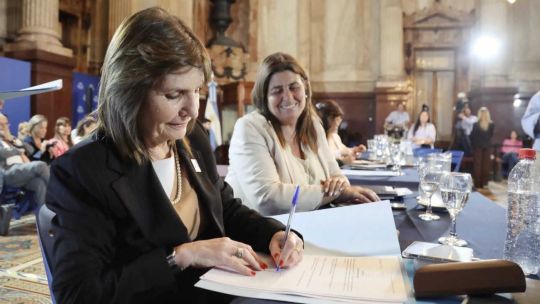
Patricia Bullrich, head of the ruling La Libertad Avanza party's Senate caucus, described the legislation as “a social agreement and a political agreement."
“We are proposing to move beyond an emergency and create transparency, predictability and stability for families who have been caught up in this dispute,” she said.
Bullrich also argued that the new legislation offered more appropriate benefits than the previous emergency measures and established where the money to fund them would come from.
Other senators also welcomed the move towards a permanent framework. PRO caucus leader Martín Goerling Lara said the dignity of people with disabilities and the peace of mind of their families could not depend on an emergency measure due to expire on December 31.
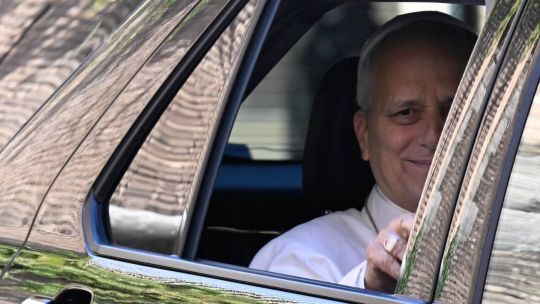
During his recent visit to Argentina, Pope Leo XIV also spoke in support of the rights of people with disabilities.
“A nation's progress is also measured by the welcome it knows how to extend to all people with disabilities,” the pontiff said on November 9 at the Cottolengo Don Orione, a charitable care home near Buenos Aires.
Patents and US ties
The Senate also approved Argentina’s accession to the Patent Cooperation Treaty (PCT), which facilitates the international registration of inventions through a single application.
Until now, inventors, research centres and companies have had to apply for patents separately in each country.
Argentina had committed to joining the PCT as part of a trade agreement negotiated with the United States government this year.
Milei is one of US President Donald Trump’s closest allies in the region.
“This Patent Cooperation Treaty allows companies and developments from the provinces to access new markets,” Misiones Senator Sonia Rojas Decut, from a bloc allied with the government, said.
Opposition Peronist Senator Jorge Capitanich questioned the initiative.
“Its consideration does not stem from a domestic need; it has clearly been imposed as part of a trade agreement with the United States,” he said.
The trade agreement between Argentina and the United States, which includes plans to reduce tariffs on certain products, has yet to be submitted to Congress for formal ratification.
– TIMES/AFP/NA/PERFIL













Comments