


Argentina’s government has sent Congress its much-anticipated National Sovereignty Defence Bill, a proposal that would toughen sanctions against individuals and companies that exploit natural resources in and around the Malvinas (Falkland) Islands without previous Argentine authorisation.
The bill was submitted to the Chamber of Deputies and establishes a regime covering activities involving renewable and non-renewable resources in the archipelago and nearby South Georgia and the South Sandwich Islands, as well as the surrounding maritime and island areas. It was signed by President Javier Milei, Cabinet Chief Diego Santilli, and ministers Pablo Quirno, Carlos Presti and Luis Caputo.
One of the main changes is to replace the sanctions regime in force since 2011, which focused on hydrocarbon activities, with a system covering different forms of natural-resource exploitation.
Individuals or companies carrying out prohibited activities could face fines equivalent to between 4,000 and 500,000 barrels of oil, as well as the suspension or cancellation of permits.

The bill would also increase the maximum prison sentence for offences covered by the legislation from 15 to 20 years. It establishes disqualifications lasting between five and 20 years and provides for tougher penalties when activities involve the exploration or exploitation of non-renewable natural resources.
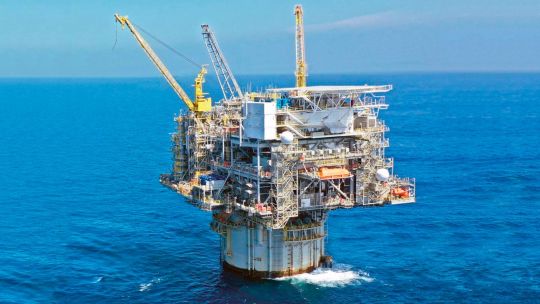
The legislation comes as Argentina steps up legal action over activities in the waters around the islands. On Wednesday, an Argentine judge ordered the suspension of the Sea Lion oil project being developed by British company Rockhopper and Israeli-controlled Navitas, which plans to begin producing crude in 2028.
The United Kingdom does not recognise Argentine jurisdiction over the Malvinas and rejects Buenos Aires' claims to sovereignty. The bill itself acknowledges the difficulties of enforcing sanctions in the disputed territory and proposes allowing trials in absentia.

Argentina and the United Kingdom have disputed sovereignty over the islands for decades. The islands have been under British control since 1833. While under a military dictatorship Argentina attempted to retake them by force led to the 1982 war, which ended with British forces re-establishing control.
The United Nations has for decades recognised the sovereignty dispute and called on both parties to avoid unilateral actions concerning the territory.
Prioritise
Milei, who said the bill would “protect the sovereign rights of the Argentine Republic,” is seeking swift approval. In a statement, he called on “all political leaders to pause other debates” and give the initiative “the highest priority and speed” in its consideration.
In a statement, the President’s Office argued that Argentina needs “a comprehensive and coordinated regulatory framework” to defend its sovereignty and strengthen its institutional capabilities in the face of current threats. It said measures implemented to date had been “insufficient and ineffective.”
“We cannot afford to allow those who usurp our territory to avoid working together on the recovery of our Malvinas Islands, which are and will remain Argentine,” said the President.
The Casa Rosada said the initiative rests on three pillars: punishing those who exploit natural resources illegitimately, creating incentives for such activities to cease, and providing the state with tools to respond to external threats.
The bill also proposes repealing the regime established by National Law No. 26,659, passed in 2011, and replacing it with a tougher framework.
It would increase criminal penalties for those conducting business illegitimately in territory claimed by Argentina, as well as for their shareholders and suppliers.
The bill would also allow offenders to suspend criminal proceedings against them if they cease the prohibited activity and either pay a fine or commit to investing in Argentina.
The initiative also establishes a National Security System, to be overseen by a National Security Council. The body would be responsible for coordinating diplomatic, economic, defence, legal and intelligence functions, as well as protecting critical infrastructure and national sovereignty.
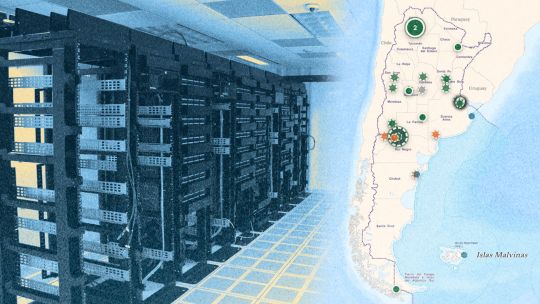
The proposed council would have a role in safeguarding critical infrastructure in sectors including energy, healthcare and data centres.
The initiative also establishes procedures for responding to aircraft deemed hostile and provides for various measures to be taken in maritime, river and lake environments.
In the case of vessels, the bill provides for measures ranging from warnings and manoeuvres to intercept them to warning shots and disabling action, once less harmful alternatives have been exhausted.
Sinking a vessel would be reserved as an exceptional military measure against a hostile ship and would require presidential authorisation. The bill prohibits using such action against civilian vessels as a sanction or policing mechanism.
Key points from the draft National Sovereignty Defence Bill
The National Sovereignty Defence Bill would establish a new regime for sanctioning the unauthorised exploitation of resources on the Malvinas Islands and in areas claimed by Argentina, including its continental shelf. The bill would also create a National Security Council and regulate state action in response to external threats.
The initiative amends the National Defence Law, introduces measures to protect Argentine airspace and maritime territory, tightens rules against foreign influence in Argentine politics and gives legal status to the Public Register of Individuals and Entities Linked to Acts of Terrorism and its Financing (RePET).
1. Tougher penalties. Current Law 26,659 would be replaced and prohibition and punishments would be expanded. They would no longer apply solely to hydrocarbons but to any unauthorised exploitation of renewable and non-renewable natural resources on the Malvinas Islands, their maritime and island areas and the Argentine Continental Shelf. Suppliers, partners, shareholders and controlling parties of the companies involved could also be covered. The proposed penalties include prison sentences of up to 20 years, compared with a current maximum of 15 years, as well as fines and disqualifications.
2. Sanctioned companies barred from operating in Argentina. Disqualification would prohibit companies from conducting economic activities in the country, revoke licences, end tax or social-security benefits and terminate contracts. There would also be a public register of offenders, with the state and private parties prohibited from contracting with those listed. The bill also introduces trials in absentia for offences covered by the new law. Offenders could suspend criminal proceedings if they cease the prohibited activities and comply with financial or investment conditions set out in the legislation.
3. Creation of a National Security Council. This would be headed by the President and permanently include the Cabinet Chief, the ministers of Foreign Affairs, Defence and Economy, the State Intelligence Secretariat (SIDE) and the Secretariat of Legal and Technical Affairs. It would be responsible for the strategic coordination of diplomatic, economic, military, legal, cyber and intelligence affairs, as well as involvement in the protection of critical infrastructure.
4. Use of force to protect airspace and maritime territory. In the case of an aircraft deemed hostile, the bill establishes a sequence ranging from identification and warnings to a show of force and, as a last resort, the use of force by express order of the President, who could delegate that authority to the Defence Minister. For vessels, it provides for a series of measures including pursuit, inspection, warning shots and disabling action. Sinking would be exceptional and require presidential authorisation, and would be prohibited as a sanction against a civilian vessel or simply to prevent it from escaping.
5. Measures against states or foreign actors that threaten national security. The National Security Council could order urgent measures in response to a serious and imminent threat, including restrictions on foreign-exchange and financial operations, the temporary freezing of funds and assets, the suspension of authorisations or contracts, restrictions on imports and exports, and temporary increases in customs duties. Such measures would have to be justified, be subject to a defined time limit and cease once the circumstances that prompted them had disappeared.
6. New offences and restrictions on foreign influence. Foreign nationals without permanent residency and foreign legal entities would be prohibited from making contributions to political parties and election campaigns. The bill would also introduce offences for revealing secrets to foreign states or intelligence services, materially assisting clandestine intelligence operations, and carrying out – on behalf of or with foreign funding – actions aimed at altering electoral processes or manipulating public opinion through coordinated mass disinformation campaigns, as well as promoting or financing acts of violence or sabotage against the Argentine state or its inhabitants.
The provisions on disinformation and political influence have already drawn criticism from some lawmakers, who argued that they could be used against political opponents.
The bill also completes the framework with a redefinition of National Defence in response to external threats from both state and non-state actors, and incorporates the RePET into law. The register provides for the freezing of assets and a ban on economic or financial transactions with individuals and entities listed because of their links to terrorism or its financing.
– TIMES/PERFIL













Comments