

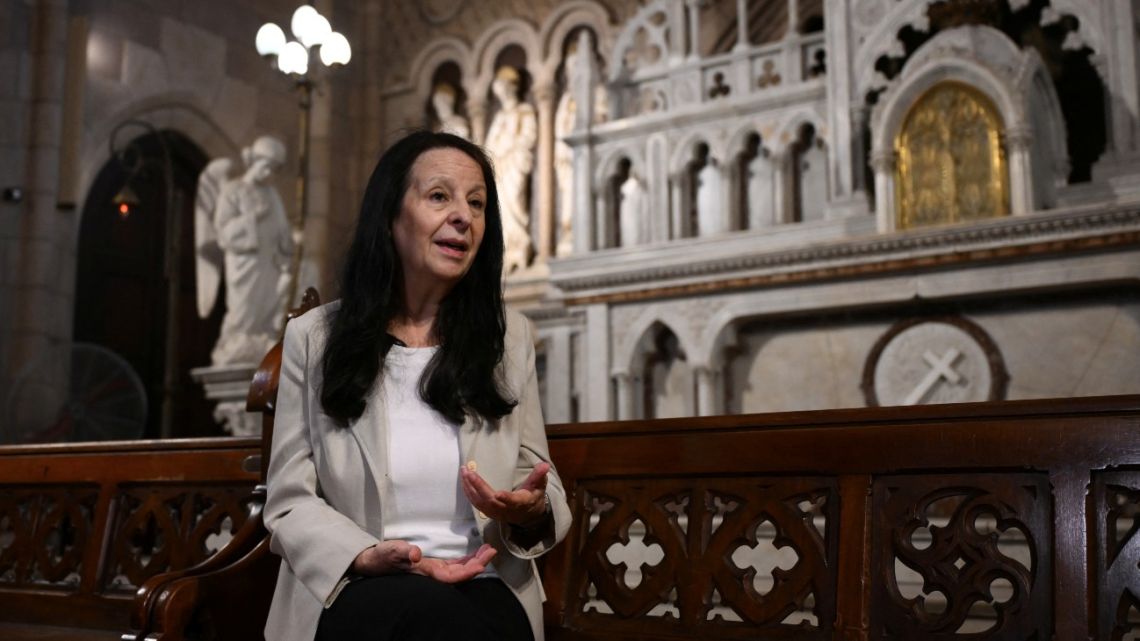
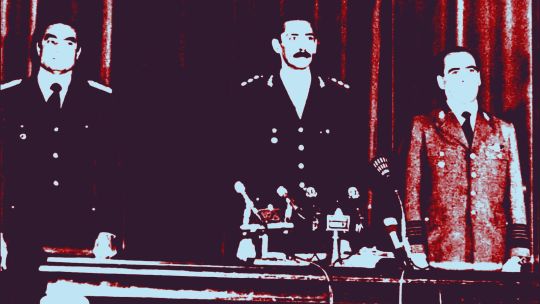
A pregnant teenager, a secondary school student and a young university student who survived Argentina’s last military dictatorship are revisiting their stories of torture, death and exile, 50 years after the coup d’état.
Today they are representatives of a decimated generation. Each of the three was held at one of the 600 different clandestine detention centres that operated during the 1976-1983 dictatorship, which was responsible for around 30,000 disappearances, according to the estimates of human rights groups.
Since the return of democracy, the trio’s testimonies helped convict the perpetrators of genocide and reconstruct what happened at sites such as the ex-ESMA Navy Mechanics School, a clandestine detention centre in Buenos Aires, through which around 5,000 kidnapped detainees passed and barely 1,000 survived.
They also helped prove the systematic theft of babies and the practice of the so-called “death flights,” in which military officers threw drugged prisoners into the sea.
Sixteen years old, pregnant
When the coup took place on March 24, 1976, “the feeling was ‘It’s here.’ We heard the announcement of the state of siege on the radio. There were searches, buses were being stopped,” said Ana Careaga, a 64-year-old psychologist.
“I was kidnapped on June 13, 1977. They took me to a place, stripped me naked and started torturing me,” she recalled. “They stripped me of my identity. I was no longer Ana, I was [prisoner] K04.”
“I wanted to die. They told me ‘We’re going to keep you alive so we can keep torturing you.’ And that’s what they did for four months,” said Careaga.
Speaking or crying was punished with torture. “The hunger was desperate. I counted the seconds, until they turned into minutes and hours, waiting for food, but they brought it boiling hot and took it away before it cooled enough.”
At first she hid her pregnancy. “I thought that because of the intensity of the torture, it would have died. Once, lying chained to a platform, it began to move in my belly. It was victory in the midst of death,” said Careaga.
It was the only time she cried in captivity.
After her release she went into exile in Sweden, where her daughter was born.
Days later she learned that her mother had been kidnapped along with other leaders of the newly formed Madres de Plaza de Mayo after leaving a church where they met – the same one where she spoke for this interview
Tortured at the ESMA, they were thrown alive into the sea along with two French nuns. The sea later returned their bodies, their hands and feet bound. They were identified years later and buried in the same church, “where they had been free for the last time.”
Eighteen years old, student
Pablo Díaz, today a 67-year-old businessman, was just a teenager when he was kidnapped in 1976 during raids on student leaders who were demanding a subsidised school transport fare.
The infamous episode is known as “Noche de los Lápices” (“The Night of the Pencils”) and was made into a film in 1986 that recounted the kidnapping of seven of them. Only Díaz survived.
Hunted by the authorities, he took refuge at a friend’s house but returned to his family home at his father’s request, who believed he would be safe.
“I went back and that same night they kidnapped me. They stole jewellery while they were at it,” he said. They were looking for “subversive material, weapons, but the only thing they found was a Playboy magazine under my mattress. They laughed, but took me anyway” to a clandestine centre under the control of Buenos Aires Province police chief Miguel Etchecolatz, who was later sentenced to nine life terms for crimes against humanity and died in 2022.
“I learned there were concentration camps when I was in one, and that there was torture when they tortured me,” he summarised.
His torturers pulled out his fingernails, applied electric shocks with cattle rods, deprived him of food and subjected him to mock executions.
During three months in captivity he formed a love story with Claudia Falcone, aged 16. “I promised her that when we got out we would be boyfriend and girlfriend. She told me she had been raped,” he recalled.
His captors assigned him to care for kidnapped pregnant women. “I witnessed three births,” he said. The babies were stolen at birth. “Two were found many years later,” he said.
Falcone and the other students were executed, Díaz was transferred to a legal prison. In 1985 he testified at the historic Trial of the Juntas, declaring: “Society only learned then that children and teenagers had also been disappeared.”
Nineteen years old, university student
Miriam Lewin, a 68-year-old journalist, was 19 when the coup took place. As a member of the Peronist Youth movement, she quickly went underground.
“We didn’t think the repression would be so massive and ruthless,” she admits today.
Lewin was kidnapped in 1977 and held captive for two years, the last of which at ESMA, where she alternated between periods torture and slave labour.
“It was an extermination centre,” she said.
Recalling the death flights, she said prisoners were told they were being taken to a ranch in the south. In their naivety, some asked to go “because they couldn’t stand being hooded any longer, eating rotten food surrounded by rats.”
Lewin’s testimony helped to secure criminal convictions for three pilots.
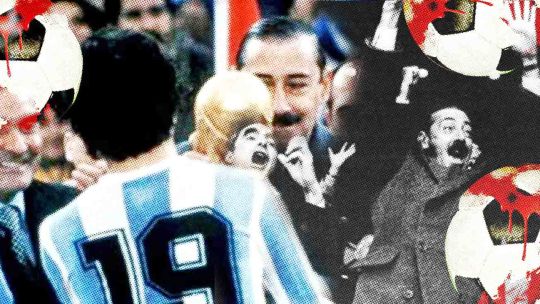
In a demonstration of the impunity the military enjoyed, she was even taken along with other prisoners to mingle among Argentines celebrating the 1978 World Cup victory after the final played at River Plate stadium, next to the ESMA.
“Pale, motionless in that sea of overflowing people, I thought, ‘This is going to last another 40 years.’”
It would not be so long. In 1982, the dictatorship began to crumble, eventually declaring war on the United Kingdom over the disputed Malvinas (Falkland) Islands. A
Argentina lost the war, but in 1983 the country returned to democracy.
related news
by Sonia Avalos, AFP






Comments