

With her short pink hair and almond-shaped eyes, Lila stands out among the young people she is dancing with. The cheerful teenager becomes the vehicle through which director Cecilia Kang explores her South Korean roots and the memory of this small community in Argentina in Hijo mayor (released in English as Eldest Son).
Kang, who has several documentaries to her name, tackles a deeply personal subject in her first fiction feature: her South Korean origins.
Hijo mayor, which is competing this week at the Cinelatino festival in Toulouse, France, tells the story of Lila, born in Argentina to South Korean parents, and how she navigates her dual heritage in a country far removed from her family’s homeland.
Through her memories, she also retraces her father’s journey from Korea to Paraguay and then to Argentina, where he eventually settled.

The film is inspired by “my own experiences, my own memory, and what I decided to ‘steal’ from my dad’s, mum’s and sister’s memory,” the 40-year-old filmmaker told AFP, while stressing that the story is not autobiographical.
The film helped Kang “answer the question, ‘Who am I?’,” which inevitably leads to where she comes from and requires her to delve into her origins, her parents and her family.
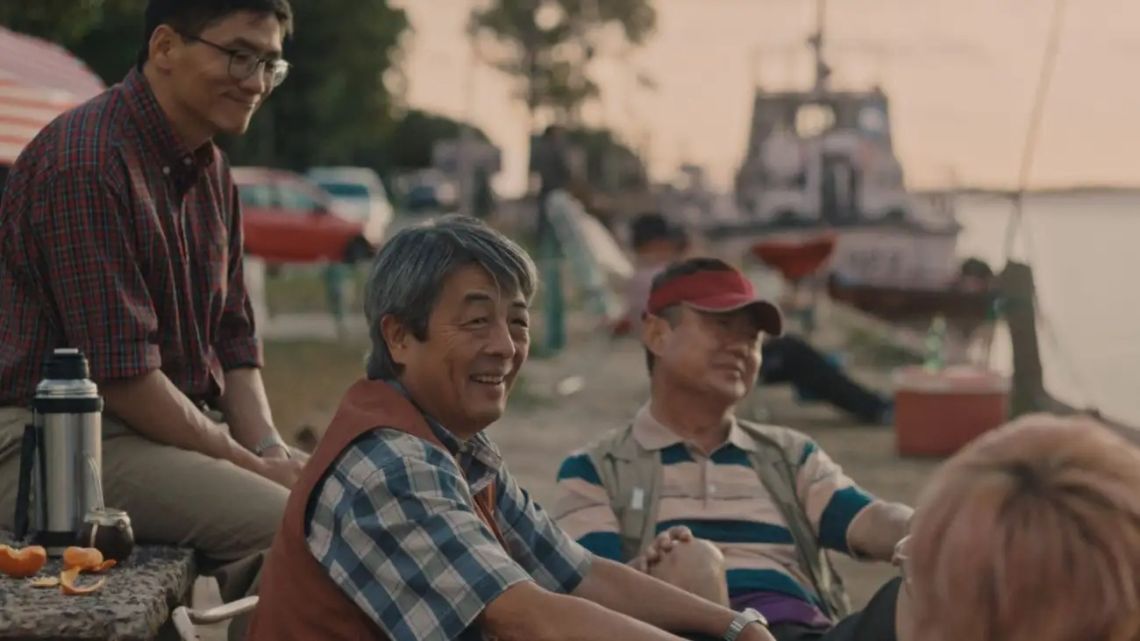
In Hijo mayor, Lila joins her father and his friends on a fishing trip. During the outing, the older men joke, eat and reminisce. At one point they try to speak to a nearby couple, but eventually keep to themselves, speaking Korean.
“The Korean community in Argentina, like any young diaspora, tends to be more closed and conservative … as a reaction to being uprooted,” the director said of this minority, far less well known than Argentines of Italian or Spanish descent, for example.
Coming from a country as distant as South Korea, “the only way of connecting and feeling you’re somehow at home is by being as Korean as possible,” she commented.
For Kang, the film is also a way of giving “visibility” to a part of society that may lack representation in the mass media or in cinema more broadly. And although it is not the film’s main theme, she also touches on racism, present in Argentine society and on a more global level.
“It’s such a current issue even today,” she said, adding that the film contributes to “building a society where diversity can exist and thrive.”
Kang is the only Argentine director among the 11 filmmakers competing in the fiction category at Cinelatino, something she said reflects the country’s current situation in the film industry and in culture more broadly.
“There being a single Argentine film speaks clearly about what’s happening in our country’s situation, in film in particular, but also in culture as a whole, in education, public healthcare, with pensioners,” she noted.
“There’s a government which is precisely launching an onslaught,” she sid, referring to President Javier Milei’s government and its spending cuts.
“We’re talking about a film that talks about memory,” Kang said emotionally during the interview, which took place on March 24, Argentina’s Day of Memory, Truth and Justice, which commemorates the 1976 coup and seeks to ensure such dictatorships never happen again.
“It’s very important, today more than ever, to stand firm and say: we’re here, we exist,” she said.
– TIMES/AFP











Comments