

Argentina’s economy posted a slight expansion in January following a quarter of weaker-than-expected growth for President Javier Milei.
Economic activity rose 0.4 percent from December, according to government data published Thursday. From a year ago, the gross domestic product proxy grew 1.9 percent, matching the median estimate of economists surveyed by Bloomberg.
Compared to January 2025, 10 sectors recorded improved activity, with fishing soaring 50.8 percent.
The agriculture sector led growth, rising 25.1 percent year-on-year, while retail and manufacturing fell. In total, five sectors declined, including utilities and gas, which dropped four percent.

Economy Minister Luis Caputo described the economy’s January performance as “a new all-time high.”
“In year-on-year terms, the indicator recorded growth of 1.9 percent and stood 8.3 percent above January 2024 levels,” said the minister.
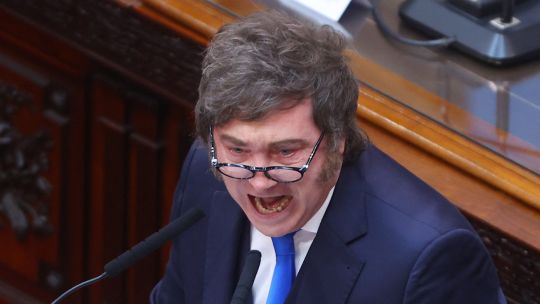
President Milei posted on X that “the economy continues to grow!”

Monthly inflation, which Milei vowed to slow below one percent this year, came in closer to three percent in February and last slowed in May. It’s still a significant improvement from the crisis Milei inherited, but his disinflation campaign has lost momentum. The president’s approval rating this month hit its lowest since he took office to 36 percent, according to LatAm Pulse, a survey conducted by AtlasIntel for Bloomberg News.
“Solid Argentine activity in January put first-quarter growth on robust footing, yet continued to flag uneven strength across productive tradable sectors and most of the rest of the economy. That’s a risk for growth ahead – and for markets more immediately if that undermines political support for the current macroeconomic programme,” said Jimena Zúñiga, Argentina economist for Bloomberg Economics.
Gross domestic product rose 0.6 percent in the fourth quarter compared to the three months through September, below economists’ estimates, while the economy expanded 2.1 percent in the quarter.

Exports led growth, followed by private consumption, as public spending and capital investment declined. Unemployment climbed to 7.5 percent in the same quarter, the highest fourth-quarter since the Covid-19 pandemic.
Economists estimate Argentina will grow 3.4 percent this year and inflation will slow to 26 percent this year, according to the Central Bank’s February survey.
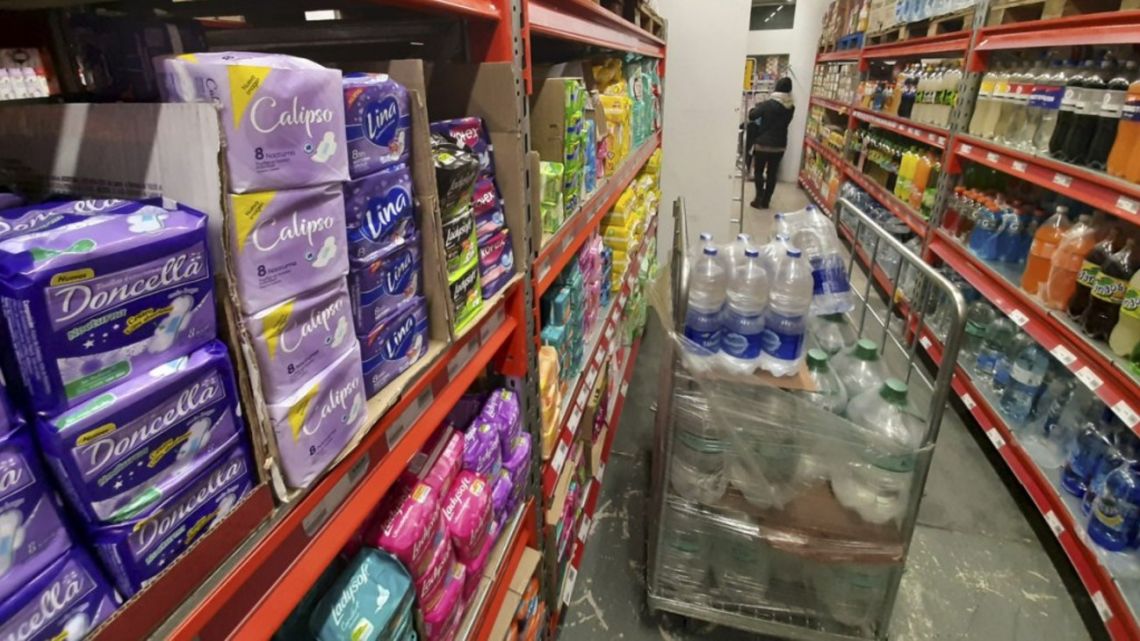
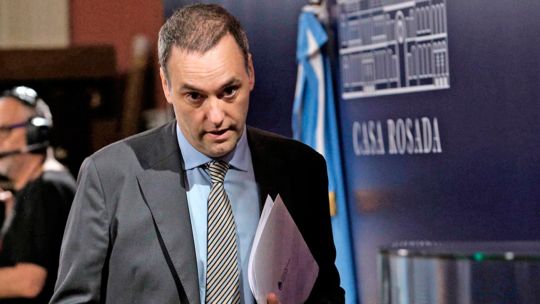
A top official in the national government has denied there is a domestic consumption crisis, declaring boldly that he “doesn’ t think there are many people worse off” than when Milei took office.

Finance Secretary Federico Furiase on Thursday promised a steep fall in inflation as from April, which he said would improve credit and the purchasing power of wages.
“I don’t think there are many people worse off,” the official assured a television news channel, underlying that “many people have been doing very much better in a short time.”
Consulted about repeated statements by businessmen and retailers highlighting plunging consumption, Furiase minimised the situation: “Those are individual stories. They don’t talk about the other side of the coin.”

“Gross domestic product has grown 10.3 percent since 2023 while private consumer demand is at record levels but changing because now they are buying consumer durables like cars, housing and domestic appliances or taking trips abroad,” he maintained.
Along those lines he affirmed that “there has been a recovery of credit boosting consumer durables.”
Furiase admitted that high inflation would continue this month due to seasonal factors. He singled out the higher petrol prices due to the war in the Middle East, education with the return to classes, the updating of public utility billing and beef.

Nevertheless, Furiase underlined that between April and May inflation would fall steeply due to the macro-economic conditions.
The official maintained that the economy has been stabilised “as reflected in people’s pockets due to lower inflation,” thus allowing economic decisions more leeway.
“We have taken over 12 million people out of poverty so I don’t think many people are worse off. In less than two years we have established macro-economic stability while doubling credit for families and companies. This will improve as those sectors not now feeling this pull will be able to see,” he insisted.

Faced with this scenario Furiase assured: “You would not have had midterms with 40 percent [voting for us] if everybody was doing badly.”
– TIMES/NA/PERFIL/BLOOMBERG










Comments