

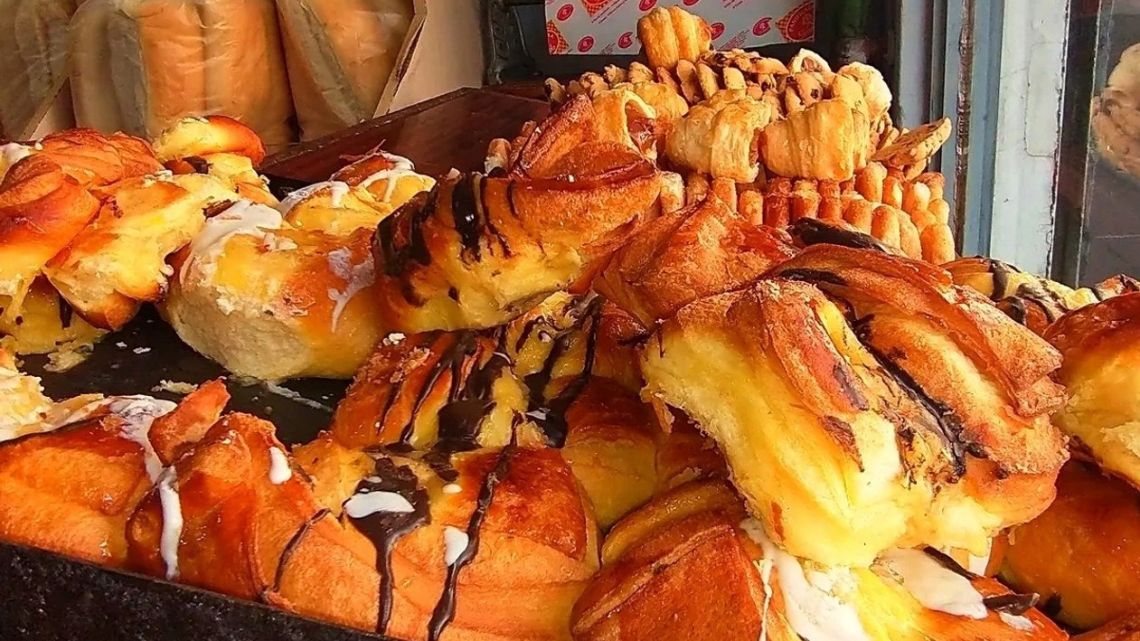
The traditional weekend ritual of buying a dozen factura pastries to share with the family has become a luxury and display counters at bakeries across Argentina are looking increasingly bare – not because of booming sales, but because less is being produced to avoid unsold goods going to waste.
According to the industry figures compiled by the baking sector, the collapse in sales has reached historic proportions. Cakes, confectionery and traditional factura pastries have recorded an 80 percent year-on-year decline, while purchases of traditional bread have fallen by 55 percent over the past two years.
He explained that “sales of pastries, miga sandwiches and everything people usually buy for events or birthday celebrations have collapsed. We used to sell around 150 cakes a week, and today we're happy if we sell 15 or 20.”
Bread, meanwhile, is “the only product holding up, because people often use it as a substitute for meals,” although Mora confirmed that sales have fallen by 50 percent, with demand concentrated almost exclusively on traditional loaves and baguettes.

Mora also pointed to sharp increases in the cost of ingredients. “A box of margarine has gone from 40,000 to 45,000 pesos to more than 120,000 pesos, before settling at between 85,000 and 90,000 pesos. Eggs have risen from around 35,000 to 72,000 pesos a crate, while a sack of flour has gone from 9,000 pesos to 18,000 pesos,” he said.
“On top of that, we have energy bills and rent, so we're in an extremely difficult position,” added Mora.
Juan Carlos, who runs a bakery in the Almagro neighbourhood of Buenos Aires City, likewise agreed that sales of facturas were in a critical state. “Selling a dozen is almost impossible these days. At most, people buy three to share,” he said.

He and other bakers are turning to emergency measures to stay in business. According to a survey conducted at bakeries across the Buenos Aires Metropolitan Area (AMBA), several shops are selling the previous day's pastries at half price to avoid throwing them away.
In an effort to recoup at least the cost of the raw ingredients, businesses are selling off this remaining stock at reduced prices, while trying to retain customers on lower incomes and drastically cutting the number of batches baked each day.
Some have also opted to diversify or add alternative services, such as selling takeaway coffee, to capitalise on passing workers and generate a little extra income.

The brutal contraction in demand has radically changed the purchasing habits of regular customers, who have almost entirely abandoned buying bread and pastries by the kilo or by the dozen. Bakers say customers now tend to buy in small quantities, spending a fixed amount in pesos or purchasing individual items. Increasingly, people come in asking for “two small bread rolls” or “1,000 pesos' worth of bread” for immediate consumption.
Older customers, particularly pensioners, are increasingly absent from bakeries, as their incomes barely cover the cost of basic food items.
The financial squeeze on bakeries is not solely the result of lost customers. It also reflects mounting fixed costs that continue to rise unchecked. Shopkeepers face electricity bills averaging 800,000 pesos a month, sums that are unaffordable for family-run businesses and force them to enter debt-restructuring schemes while running up outstanding balances on their credit cards.

Adding to the burden are increases of 30 percent in the cost of essential ingredients such as flour, fat and yeast. These rises cannot be fully passed on to customers through higher prices for fear of driving away the few buyers who remain.
Representatives from the Cámara de Industriales Panaderos business chamber said that businesses are now operating at a loss, with profit margins effectively wiped out, simply to keep their doors open. Over the past 24 months, around 2,000 bakeries have closed permanently across the country, resulting in the loss of more than 16,000 direct jobs in an industry traditionally recognised as an important source of employment in local communities.
related news




by Francisco Nutti, Noticias Argentinas














Comments