

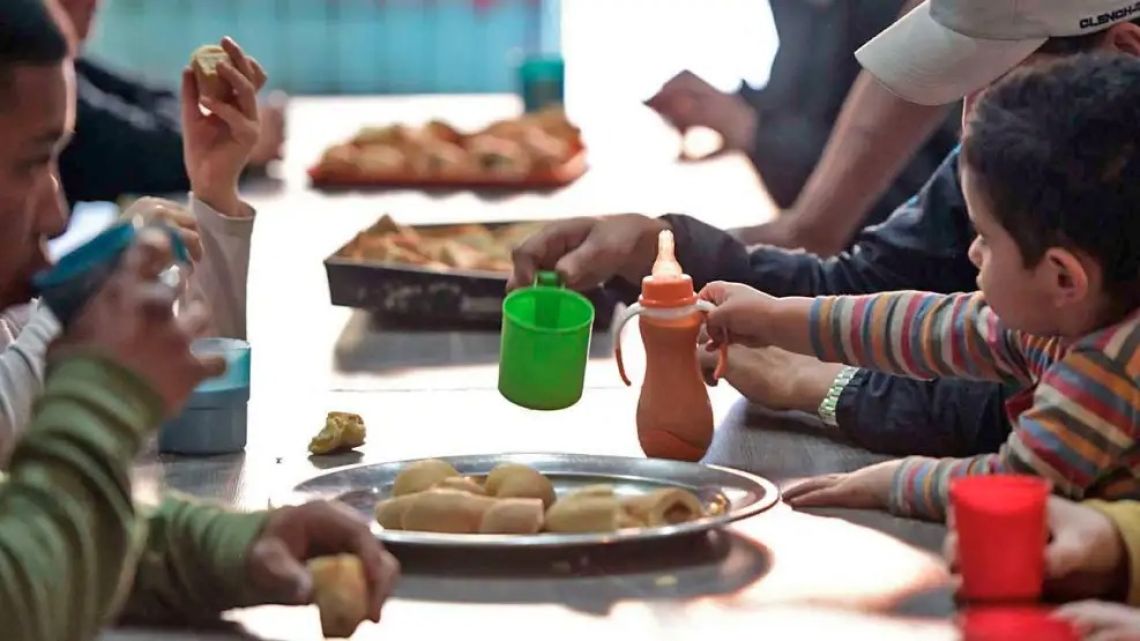
Poverty in Argentina is growing, rising four points over the last six months to affect almost a third of the population, with 1.2 million new poor created.
Official data released by the INDEC national statistics bureau on Thursday showed that 32.3 percent of people were living in poverty in the first half of the year (January-June), up 4.1 points from the 28.2 percent recorded at the end of 2025. In the annual comparison, poverty rose 0.7 points.
A total of 9.7 million people were classified as living below the poverty line in the 31 urban areas covered by the statistics institute in its survey. Extrapolating the figure to the whole country would increase it even more.
Extreme poverty rose 1.2 points to reach 7.5 percent of the population – equivalent to around 2.2 million people in urban areas, said INDEC, which said 5.6 percent of households faced destitution.

The news is a blow for President Javier Milei’s government, which made serious headway in tackling poverty at the beginning of his administration.
INDEC said that smaller regions were affected more greatly. “In urban areas with 500,000 or more inhabitants, poverty rose by 3.9 percent compared with the second half of 2025. Meanwhile, in areas with fewer than 500,000 inhabitants, the increase was 4.9 percent percentage points over the same period,” said the report.
The bureau’s official data for the second half of 2025 had recorded 8.47 million people living in poverty and 1.88 million in extreme poverty.

At the end of the first half of the year, a family of four needed at least 1.53 million pesos to avoid being classified as poor, ot 690,000 pesos for extreme poverty.
Reversal

The latest figures mark a reversal from the sharp decline recorded since the first half of 2024, when poverty affected 52.9 percent of the population, coming off the back of runaway inflation at the end of ex-president Alberto Fernández’s government.
Boosting Milei’s government, the rate then subsequently fell throughout the remainder of 2024 and 2025, dropping to just over 28 percent in the second half of last year – the lowest level since 2018.
The latest data breaks with that trend, partly due to rises in the cost of the “Total Basic Basket” INDEC uses to measure poverty.

Private estimates had anticipated an increase during the first half of this year, with experts noting that household incomes have struggled to keep pace with the rising cost of basic goods and services. The Torcuato Di Tella University had predicted a rate of 31.6 percent.
“While the poverty and extreme poverty rates rose by 4.1 percentage points and 1.2 percentage points respectively compared with the previous half-year, both rates recorded a sharp fall compared with the first half of 2024,” said Economy Minister Luis Caputo in a post on X.
Most affected
INDEC’s data shows that children and adolescents are among those most affected.
Of those aged 0-14, 10.8 percent live in extreme poverty and 33.7 percent in poverty, with the group representing 44.5 percent of all those considered to be poor.
Among those aged 15 to 29, poverty reached 36.9 percent, dropping to 28.8 percent for those aged 30 to 64 and 14.8 percent for those aged 65 and over.
The worst affected region nationwide is Concordia, in Entre Ríos Province, where 56.2 percent of the population was classified as poor at the end of June 2026. It was followed by Gran Resistencia, Chaco Province, with 48.6 percent and Posadas, Misiones Province, on 42.2 percent. By contrast, the lowest rate was recorded in Greater Buenos Aires, the area surrounding the nation’s capital.
Prior to the release of INDEC’s data, the respected Social Debt Observatory at the UCA Catholic university had forecast a poverty rate of around 30 percent in the first quarter of 2026, with extreme poverty at 6.5 percent, followed by an increase for both in the second quarter.
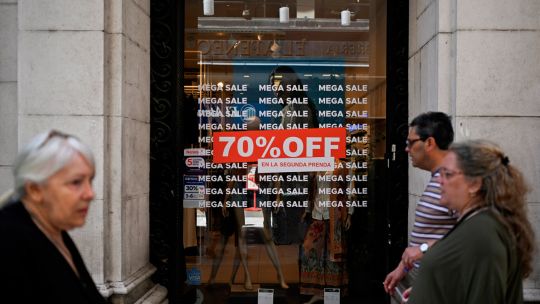
Evidence that Argentines are struggling to make ends meet is apparent when looking at additional economic indicators. Consumer spending continues to depreciate – supermarket sales fell 2.1 percent year-on-year in July and were down 2.7% percent in general over the first seven months of the year. Sales at wholesale self-service stores fell 1.1 percent year-on-year in July, also recording a 2.7-percent decline over the January-July period.
According to the UCA experts, the downward trend in poverty that began in the second half of 2024 has now run its course. It attributes the earlier improvement during the Milei administration to a partial recovery in real incomes and a favourable evolution in relative prices, with food and the basic-needs baskets used to determine the poverty and indigence thresholds rising more slowly than overall inflation.
That situation changed towards the end of 2025. Since then, the baskets have begun to rise faster than headline inflation, while the recovery in household incomes has lost momentum, warns UCA.
– TIMES/PERFIL










Comments