


Chile just inaugurated a right-wing president who will quickly signal his intention to bring the copper-rich country into closer alignment with the administration of US head of state Donald Trump.
José Antonio Kast, 60, was sworn in just past midday on Wednesday, replacing leftist Gabriel Boric.
Early on Thursday, his first full day in office, Kast’s administration plans to sign broad agreements with the United States to boost cooperation on critical minerals and security matters, according to people familiar with the program who were not authorised to speak publicly.
Kast’s press office didn’t reply to requests for comment, and a press officer for Chile’s incoming economy and mining minister declined to comment. The White House also didn’t immediately respond to a request for comment.

Trump’s administration is strengthening ties with Chile at a time when it’s trying to make the US less dependent on China for critical minerals. When it comes to metals, Chile is a global heavyweight that’s both the world’s largest copper producer and also holds about a third of the world’s lithium reserves.
Chile is set to become the latest nation to sign a minerals accord with the United States. At a summit in Washington last month, Trump’s government inked similar agreements with 11 countries including Argentina, Peru and Ecuador.
At the same time, Thursday’s accords point to a growing departure from Chile’s longtime balanced relationship between the US and China – its two largest trading partners – even though the Asian giant is the biggest buyer of the country’s commodities. The South American nation is also shifting toward Trump at a time when US-Israeli military strikes in Iran are hurting the pocketbooks of Chileans who are consequently now paying more for oil and gas.
‘Reset’ relations
During what is normally a staid transition from one administration to the next, Kast publicly clashed with Boric this month over a Chinese fibre-optic cable project that is vehemently opposed by the US, alleging that outgoing authorities had not disclosed key information about the sensitive plans.
The US imposed visa restrictions on three outgoing Chilean government officials, alleging a broader threat to regional security. The Boric administration denied withholding any information about the initiative, which is still pending approval.
At the time, China’s Embassy in Chile accused the US of showing “obvious contempt for Chile’s sovereignty, dignity and national interests.”
The US delegation to Kast’s inauguration ceremony includes Deputy Secretary of State Christopher Landau. Joseph Humire, acting assistant secretary of Defense for homeland security and the Americas, will also be present.
Ahead of the inauguration, the US Embassy in Chile said in a statement that Landau would meet with Kast and senior Chilean officials “to reset the US-Chile relationship and lay the foundation for progress on shared priorities, including upgrading our security partnership, securing supply chains, and expanding commercial ties to attract US investment.”
Kast, an arch conservative father of nine and son of Bavarian immigrants, won election in December after campaigning on a platform to crack down on clandestine migration and organised crime, while reinvigorating the sluggish economy. After his election, he travelled abroad to visit allies including El Salvador’s President Nayib Bukele and Hungarian Prime Minister Viktor Orbán.
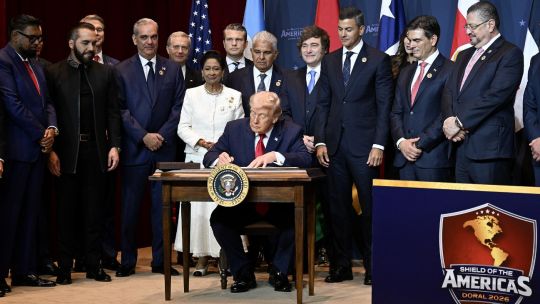
Most recently, Kast attended a summit of like-minded Latin American leaders in Florida. The so-called “Shield of the Americas” event reinforced the Trump administration’s effort to reassert sway over the region, where several right-wing leaders have swept into power amid an anti-incumbent wave.
related news
by Patricia Garip & James Attwood, Bloomberg







Comments