

Two Peruvian right-wing candidates looked set on Monday to advance to a presidential run-off, after an election marred by logistical foul-ups and deep voter anger.
With voting still ongoing in parts of the capital, Lima, a day after the election began, Keiko Fujimori, the 50-year-old daughter of disgraced ex-president Alberto Fujimori, led the field with 17 percent of the vote.
She was followed by Rafael López Aliaga, a wealthy former Lima mayor who has vowed to hunt down migrants, drawing comparisons to US President Donald Trump. López Aliaga commanded 15 percent of the vote.
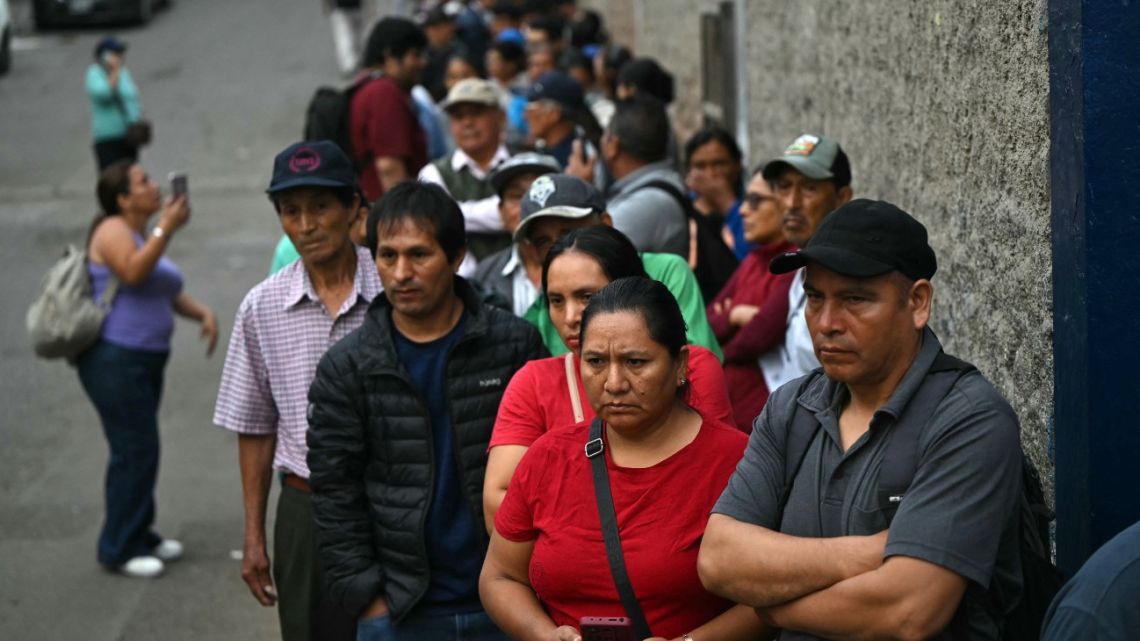
Voting is still underway at around a dozen polling places in Lima, where ballot materials failed to arrive on time for Sunday's election.

The police said they had detained an election official over the delays, which prevented tens of thousands of people from casting their vote.
Several of the 35 presidential candidates could yet make a late surge to snatch a runoff spot.
But Fujimori already claimed the partial results on Sunday night as a victory for the right, which, she said, had vanquished the leftist "enemy."

Peruvians had hoped Sunday's election would end the political chaos that has brought eight presidents in a decade and a surge in violent crime.
But the election saw more tumult, with missing election materials preventing many polling centers from opening on time.
"The authorities are so incompetent," said 56-year-old domestic worker Nancy Gómez, who was among voters queued around the block in Lima for a second day.

Police and prosecutors raided the headquarters of the National Office of Electoral Processes in an effort to find out who was to blame.
They also raided a private subcontractor blamed for failing to deliver ballots, boxes and other materials on time.
López Aliaga had initially claimed "grave electoral fraud" and called on supporters to take to the streets in protest.

But as he emerged in second place, his supporters' cries of fraud were more muted.
Piero Corvetto, head of the election commission, admitted to a "logistical problem," but said there was "no possibility" of election fraud.
"There is full assurance that the results will faithfully reflect the popular will," he said.
Crime and punishment
Violent crime and corruption dominated the run-up to the vote.
Peru's homicide rate has more than doubled in a decade, while reported extortion cases jumped from 3,200 to 26,500 over the same period.
On the eve of the election, frontrunner Fujimori, daughter of scandal-tainted ex-president Alberto Fujimori, told AFP that she would "restore order" in her first 100 days by sending the army into prisons, deporting undocumented migrants and strengthening borders.
In an exclusive interview, Fujimori said she would seek a united front with conservative leaders in the United States, Argentina, Chile, Ecuador and Bolivia.
"We will ask for special powers," she said, including to modernise the police force. "We will expel undocumented citizens," she added.
This is Fujimori's fourth bid for the Presidency. Her father died in 2024 after serving 16 years in prison for crimes against humanity, including directing death squads, as well as bribery and embezzlement.
During the campaign, she has leaned on newfound nostalgia for his strongman rule.
"I believe that time and history are giving my father the place he deserves," she told AFP.
Incumbent President José María Balcazar, in office for less than two months, was barred from running.
More than 90 percent of Peruvians say they have little or no confidence in their government and parliament, according to Latinobarometro, a polling organisation.
Despite the turmoil, Peru remains one of the region's most stable economies.
related news



by Carlos Mandujano, AFP












Comments