
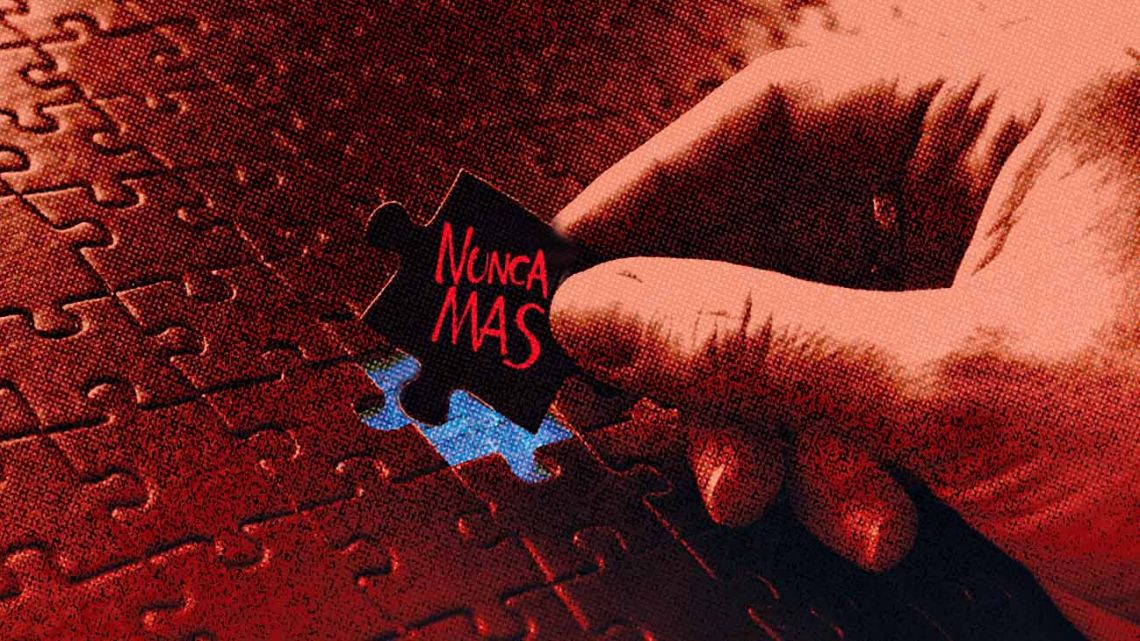
If the government’s denialist tendencies coming to the fore around Tuesday’s Memory Day have generally been met with confrontation and criticism from those repudiating the military dictatorship starting half a century ago, this column would like to try out a slightly different approach along the lines of the “constructive engagement” with pre-1994 South Africa.
Far from pouring scorn on the concept of “complete memory,” it should be welcomed to the debate as a long overdue supplement to two decades of a Kirchnerism long on justice and short on memory and truth, airbrushing the victims of guerilla violence while glorifying the revolutionary ideals of a “marvellous youth” – even the worst extremes of this new revisionism straying into denialism are at least a counterbalance. Extending the time frame from the 1976-1983 years of the military dictatorship to the entire decade between 1973 and 1983 is also valuable for adding context – even if some would date the spiral of violence as far back as Juan Domingo Perón’s “cinco por uno” (“five deaths for every one of ours”) in 1955 or the Montonero kidnap-murder of ex-president Pedro Aramburu in 1970.
So far, so good but “complete memory” also needs to live up to its name. One not so small detail here – in that pre-coup 1973-1976 period of which “complete memory” reminds us, the victims of the right-wing Peronist paramilitary Triple A totalled 1,100 deaths between murders and disappearances while the revolutionary organisations claimed almost 800 lives. On this basis, shifting the focus from state terrorism to other victims of political violence does not especially favour the far right. But rather more importantly, this should tell us that death squads even with only covert government backing are already more lethal than guerrillas, whatever the training and logistical support given the latter by Cuba – how much more unequal the battle, the firepower and the damage when the full state monopoly on violence is applied by a military régime.
The result after 1976 made Perón’s “cinco por uno” more like 25 for one – this monstrous disproportion between state terrorism and revolutionary groupings should be the elephant in the room for any “complete memory.” The differences are as much qualitative as quantitative – while terrorists in the normal sense are criminal by definition and not doing anything beyond their job description, state terrorism is the ultimate oxymoron with the guardians of the law resorting to illegal killing in a contradiction hugely magnifying the burden of their guilt while shattering their legitimacy and moral authority.

So our response to the Javier Milei government should be: “Thank you very much for introducing the concept of complete memory including other victims but please do ensure that it is complete,” giving pride of place to state terrorism while not crowding everything else out.
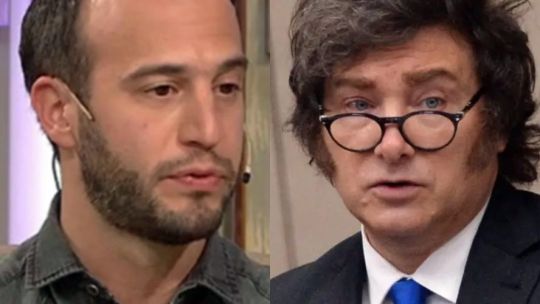
Not a few marchers last Tuesday were directly equating Milei with the dictatorship – if on the 40th anniversary of the coup, many were chanting: “Macri basura, vos sos la dictadura” (“Macri trash, you’re a dictator”), how much more are they not going to sing and think the same about Milei on the 50th? Nevertheless, the reality is rather more complex than this facile comparison. Milei himself seems to be overreacting to Kirchnerism rather than being a junta fan. When interviewed by The New Yorker journalist Jon Lee Anderson and asked (perhaps provocatively) what he thought of 1976 coup leader Jorge Videla, Milei replied quite simply: “A bloodthirsty dictator.” A libertarian enthusiast for dictatorship would be an oxymoron on a par with state terrorism and this would seem to rule Milei out, no matter how dictatorial the discipline within La Libertad Avanza often seems.
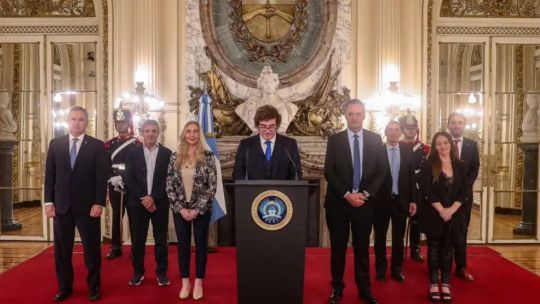
It is also striking that the embattled Cabinet Chief Manuel Adorni used the famous phrase “never again” in the first sentence of his spiel on the anniversary in Wednesday’s press conference. It should thus be well within the means of libertarians (at all odds with dictatorship in theory at least) to challenge the denialist tag often placed on them and one wonders why they do not make more effort to do so while their critics might consider some “constructive engagement” to encourage them in that direction instead of polarising the issue.

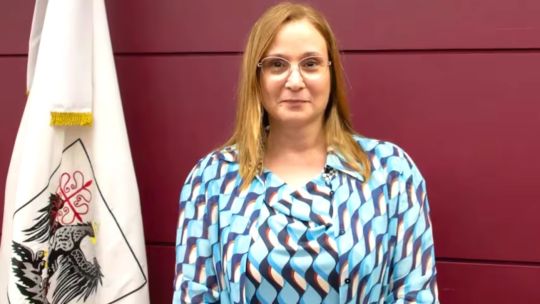
Yet such “constructive engagement” would seem to have a long way to go if Tuesday’s pathetically one-sided government video is any indication – anything but “complete memory” rubbishing the “biased and vindictive” Kirchnerite concept of human rights rather than making any effort to complement it. Yet even such crude propaganda can contribute to the debate. The case of babysnatching victim Miriam Fernández delivers a reality check against all those stories of the 140 forcibly adopted grandchildren restored to their true families, which do and should warm our hearts. Without entering into her case or accepting her critique of the Mothers and Grandmothers of Plaza de Mayo, it is sadly quite conceivable that children born into poor, working-class families struggling against social injustice and then entering into a privileged upbringing in far more opulent households might come to the conclusion that their adopted parents suit them much better – there could be more such cases than one would like to think.
Finally, a sequel to last week’s column which wrote: “To this day this columnist has been unable to decide whether the ‘Process of National Reorganisation’ was more a case of dictatorship or anarchy.” Everything surfacing around this week’s 50th coup anniversary has removed all such doubts – from Ceferino Reato’s book and other sources, it has become quite clear that there was a master plan to bypass mass executions shocking the world with disappearances. This does not exclude spontaneous death squad activities alongside this plan from both lower- and higher-ranking officers (Admiral Emilio Massera can be legitimately suspected of employing the same methods adopted to eliminate enemies of the state in order to solve some personal problems of his own), there was a mix of dictatorship and anarchy, but there can be no doubt of the crimes against humanity being the product of a plan which should not monopolise but utterly dominate any “complete memory.”







Comments