

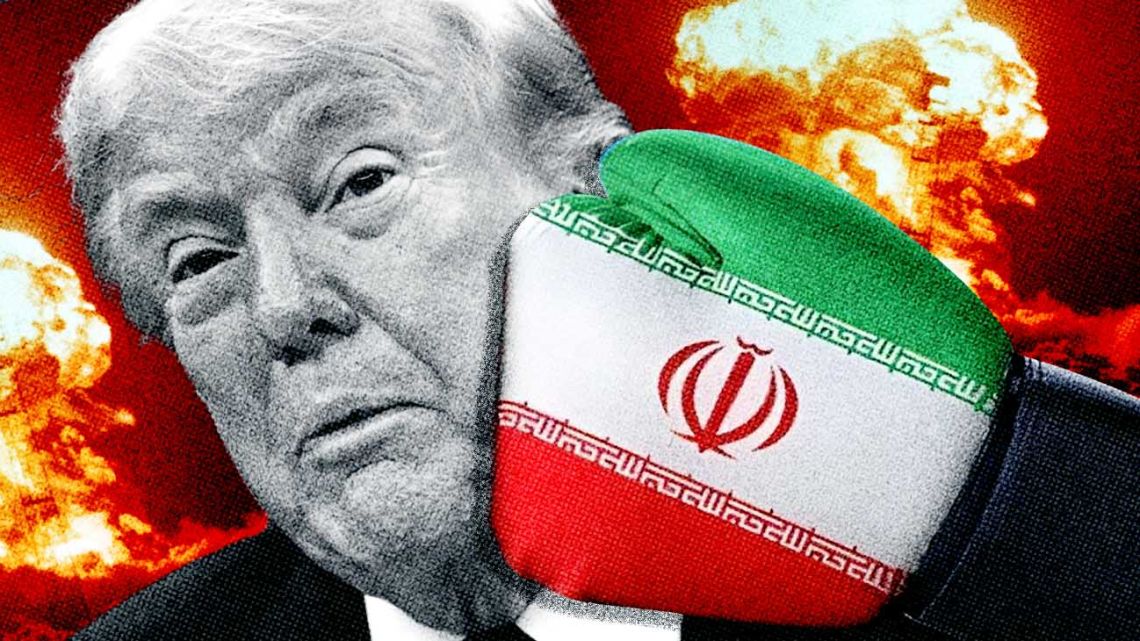
Along with many good things, technological progress is providing more and more people with the means to cause a phenomenal amount of damage. The United States and Israel are waging a war against the Islamist regime in Iran because their leaders agree that it would be utter folly to let what Marco Rubio calls a bunch of lunatics get their hands on a nuclear bomb. He is surely right, but it would seem that much of the world worries more about the economic pain being inflicted by those lunatics who have a stranglehold on the Strait of Hormuz through which about a fifth of the world’s oil supplies have to pass, than about the threat they pose to humanity.
Another cause for serious concern is the headlong development of Artificial Intelligence which, according to Elon Musk, could “kill us all” rather more rapidly than population decline, which he says will have terrible consequences for the world. Many have taken to warning us that AI will soon give even relatively unsophisticated evildoers the means to wreak havoc worldwide by sabotaging energy grids, communication networks and much else besides. Equally alarming is the proliferation of cheap death-dealing drones that are just as effective as missiles that cost millions of dollars. The Ukrainians use them to drive back the Russians who have invaded their country; it is reported that well over 90 percent of the 40,000 or so Russian soldiers who die every month on the battlefield are being killed by drones.
Until not that long ago, the ability to bring down civilisations was the preserve of a few powerful countries. It is now in the process of being democratised. If so inclined, a minor tyranny such as Iran’s can blackmail the rest of the planet. It can get away with this because its rulers are able to endure more pain than those trying to discipline it are willing to inflict.
Almost half a century ago, it was taken for granted that the Iranians would never have dared to treat Russians as they did the North Americans by holding 52 diplomats and others hostage for over a year because, faced with a similar problem, the Soviet Union would have rounded up Iranian representatives stationed in their country and, if that did not do the trick, it would have gone on to flatten Teheran. Donald Trump may like to think he has little in common with the late Jimmy Carter when it comes to applying hard power, but the Iranian dictatorship sees his reluctance to put “boots on the ground” as a lifeline which could ensure its survival.

The implications of this state of affairs are ominous. Ever since World War II, the US and its allies have been trying to construct a humane international order based on a distinction between what is considered permissible to do when armed conflicts arise and what should be forbidden, with stringent legal penalties for leaders who do things in the traditional ways. Though it has always been evident that such rules could be flouted with impunity by Russia, China, North Korea, Iran and other countries, many in the West cling to the hope that, somehow or other, they will eventually prevail throughout the entire world.
However, as existential threats continue to multiply, people who fear for their own future are demanding that their governments take a sterner approach towards their enemies. In the US and much of Europe, awareness that the world has become a far more dangerous place than many had grown accustomed to assuming has widened the divide separating the until recently dominant progressive elites from what their defenders label the extreme right, people who are keen on national sovereignty, looking after one’s own and other allegedly fascistic concepts that deserve to be consigned to the dustbin of history.
None of this can be considered surprising. When hardly a day goes by without a plausible new risk appearing on the horizon, it is natural for people to want to huddle together with others of their kind for protection as they have been doing for thousands of years. This is happening in Europe, where ethno-nationalistic attitudes are once again making themselves felt, and in the US, where doubts about the long-term intentions of activists who wave the flags of foreign countries and on occasion burn that of the one they are living in is becoming an issue. Attitudes that seemed appropriate when it was assumed that advanced Western nation states had nothing to fear from outsiders are being replaced by others that, for many centuries, had been taken for granted by almost everybody.

The inability of the US and Israel to finish off the Iranian regime despite virtually eliminating its Armed Forces may please the many who loathe Trump and have no time for Benjamin Netanyahu or his country, but it should disturb many of them by reminding them that murderous fanatics devoted to an ideological or religious cause can hold out against enemies that, in military terms, are far more lethal, but are unwilling to take full advantage of their material superiority.
As a result of the apparent stand-off that has been reached, Trump is openly playing with the idea that it would be worth his while to offer the ayatollahs and their brutal enforcers “a deal” in which they would remain in power as long as they solemnly promised not to go nuclear. Needless to say, that would simply restore the status quo that prevailed before the present round of hostilities got underway, with the Islamic Republic conserving parts of its nuclear programme, remaining a threat to its neighbours, maintaining its proxies and sponsoring terrorist cells throughout the world. Of course, it would be desperately short of money, but it would continue to dispose of more than enough religious passion which, in the long term, is a far more valuable asset.
For a large majority of Iranians, such an outcome – with Trump taking an “off-ramp” to get away from a conflict that seems bound to cost the Republican many votes – would be an absolute disaster. They want regime change and, what is more, late last year Trump promised them he would help bring it about when tens of thousands of protestors were being butchered in the streets, in their homes and in hospitals not just by the Revolutionary Guard Corps and the Basij militia but also by imported Jihadists. Violent Islamists, of which there are many, are already preparing to celebrate the mere survival of the Iranian dictatorship as a glorious victory over the unbelievers and, emboldened by the retreat of the US, they are certain to redouble their attacks against targets in Western countries.
















Comments