

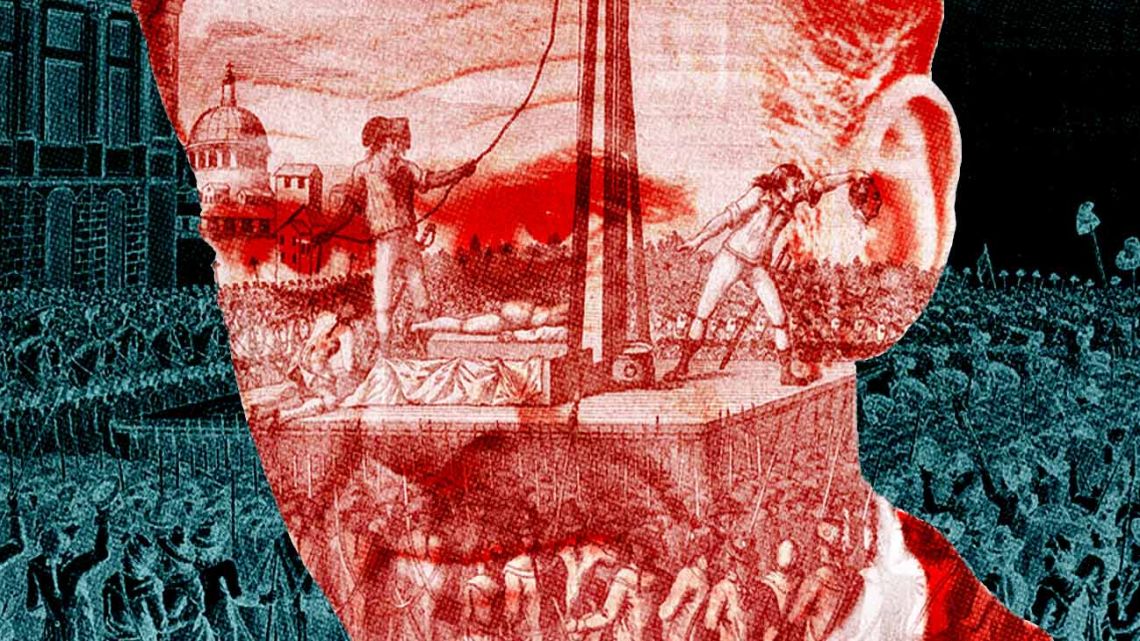
In most Western countries, the elderly already outnumber the young who, in the battle for resources and attention, feel they are getting pushed aside. Though some openly accuse previous generations of deliberately hogging an unfair share of the available wealth, most are reluctant to demand that something be done to reform pension systems that are eating up a rapidly increasing chunk of the available financial resources. Presumably, they suspect that if raising the retirement age becomes routine, as is now the case in some jurisdictions, they will not get anything until they approach 90, a prospect that seems to worry today’s teenagers.
Many among them, the tens of thousands who have been rioting in France, Spain and other European cities, do not attribute the problems they face to those who came before them but to heartless capitalism or to the villainous selfishness of people wielding power. Even so, unlike their forerunners who made 1968 a year to remember, few malcontents seem to have much faith in any of the allegedly revolutionary solutions that appealed to their counterparts of over half a century ago. Needless to say, the resulting inability to imagine a hypothetical way out of the situation they find themselves in does nothing to make it more bearable. On the contrary, it is breeding a mood that is akin to nihilism, a strong desire to lash out and tear everything down.
The sense of betrayal that has overcome a considerable proportion of youthful Westerners, a category that these days includes many who are now in their late 30s, is easy enough to understand. They were raised in communities in which they were told that, providing a person studied, worked hard and obeyed the rules, he or she would eventually move up in the social hierarchy, only to find out that many, perhaps most, of the academic diplomas they managed to acquire were worth little and that the decent jobs they had in mind continued to get scarcer. As a result, the countries that are regarded as developed because they boast a high GNP now have a surplus of relatively bright youngish people who assumed that the future was theirs for the taking but who, to get by, have to perform tasks that they think are beneath them.
Perhaps this was always bound to happen. The increases in the number of university students that took place in the latter part of the 20th century and the start of the 21st was accompanied by grade inflation which automatically devalued the achievements of many who imagined they were en route to getting incorporated into their country’s elite. They have also been hit by accelerating technological progress which, with the arrival of Artificial Intelligence, is eroding the earning power of all but the members of a shrinking minority. Somewhat ironically, among those now getting displaced are people who thought they could take advantage of the digital boom by learning to code; unfortunately for them, it soon became clear that AI can do it far better, so they are getting swept away, a fate that no doubt awaits many who occupy more senior positions.

The initial victims of the changes that are taking place have included large numbers of graduates in the humanities. In addition to the often explicitly politicised “grievance studies” programmes that were foisted on universities by activists, courses in traditional subjects that had enjoyed prestige for over 2,000 years have also suffered. In the view of many politicians, businessmen and civil servants, learning about history and literature serves no practical purpose and therefore has to be downgraded in favour of “STEM” subjects – Science, Technology, Engineering and Mathematics – that would help increase a country’s overall productivity. It would appear that, in today’s world, an interest in old-fashioned humanities should, like religion, be considered a private hobby that does not deserve to receive any public support.
Once upon a time, such an attitude would have been considered utterly barbaric. Today, some conservative defenders of the traditional approach suspect that their opponents are trying to destroy the cultural heritage of their particular country in order either to shoehorn it into the one-world globalist project that until recently fascinated many plutocrats or, if they are bold enough to defy the progressive consensus, to make it more vulnerable to a take-over by Islamists who are happy to admit that this is precisely what they are determined to do. However, though some attribute the attack on the humanities to an anti-Western conspiracy, others see it as merely another symptom of decadence in societies which, while claiming to be meritocratic, have effectively resigned themselves to the triumph of egalitarian mediocrity.
According to Donald Trump, the unrest afflicting France is due to mass immigration by Muslims seeking “to take over a once great country,” not to students protesting against crumbling school buildings, a lack of teachers, and new regulations that make it harder for them to get into university. Though Trump’s comments have been derided by people determined to blame the violence on the shortcomings of the French educational system, he did have a point: what began when students in a seedy Parisian district staged a demonstration outside a dilapidated school quickly morphed into an uprising led by extreme left-wingers attached to Jean-Luc Mélenchon’s France Unbowed party and large numbers of Islamists who yelled “Allahu Akbar” after setting schools ablaze and then, waving the now ubiquitous Palestinian flag plus those of Morocco and Algeria, went on to do battle with the police.

While none of this mayhem has much to do with the bleak outlook facing so many young people in countries that are struggling to keep up appearances and will certainly not help make their prospects any better, the resentment so many feel means that there are plenty of vigorous men and women who are willing to take part, if only for a day or so, in violent demonstrations. Both the leftists and their current Islamist allies understand this very well. They can be relied on to make the most of the opportunity circumstances have given them in an effort to ensure that the coming Northern Hemisphere winter becomes unseasonably hot.













Comments