

This weekend will feel most unusual. Stadiums across the country will be devoid of fans, their stands silent, with no form of football being played whatsoever. Some unkind observers may point out that for certain clubs the difference may be imperceptible. But the industrial action prepared in the coming days is almost unprecedented and a statement in these sensitive political times.
There have been several strikes carried out in the long and often turbulent history of Argentine football, crucial moments often accompanied by sweeping changes in the way the game is played and administered.
The first great industrial action by players took place in 1931 in response to the 'padlock law' restricting movement between clubs. After several years of conflict, including the holding of parallel league competitions, and the intervention of de facto president José Félix Uriburu, by 1934 a resolution was found that saw all of Argentina's clubs join a single professional league under the auspices of the Argentine Football Association (AFA).
Less than two decades later the sport downed tools once more. In the infamous 'big strike' of 1948-1949 a newly formed players' union demanded official recognition and greater rights. The upshot was the biggest exodus of talent ever seen in Argentine football, with stars like Alfredo Di Stefano, Adolfo Perdernera and Néstor Rossi among dozens of top players who fled to destinations like Colombia to continue their careers, fuelling that nation's golden era for its clubs – debilitating the local game for years to come.

The strike also led to Argentina's refusal to play the 1950 World Cup, a tournament which would have been eminently winnable for the Albiceleste and its rebellious aces.
Those stoppages were far from the end of tensions. Further major strikes would occur in 1971 and 1985, not counting many more minor or threatened actions, most recently in 2017 over the payment of television money.
This one, however, is curious in a very particular way. Almost all of the previous strikes have pitted players, the workers of the game, against the 'fatcats' in the boardroom and the AFA; but this weekend, footballers are hanging up their boots in solidarity with the paymasters and rulemakers.

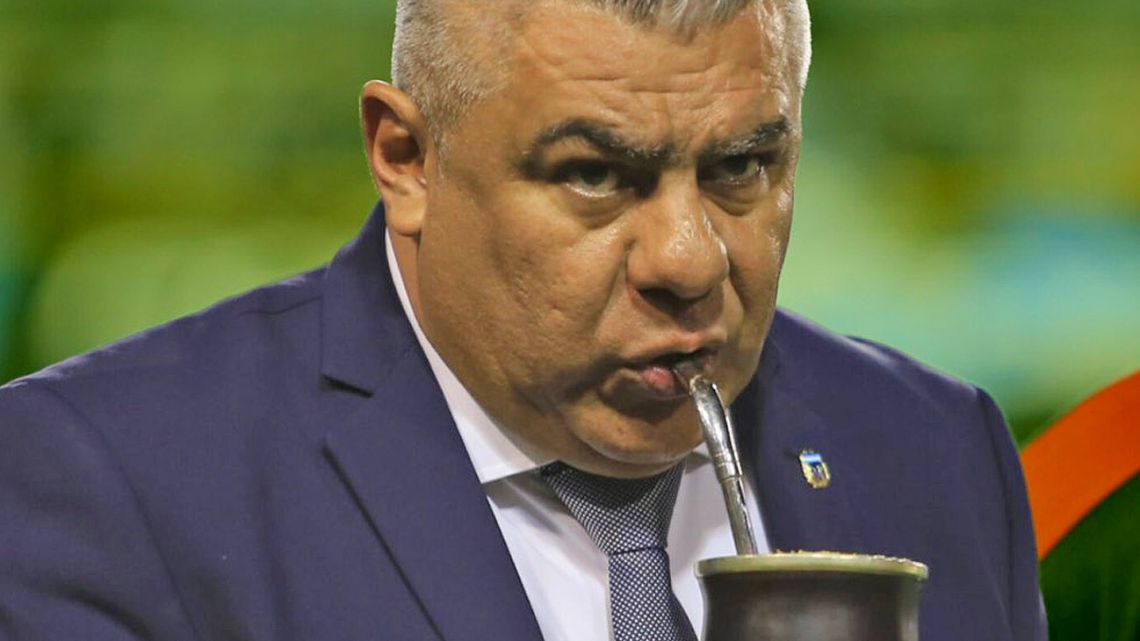
Claudio ‘Chiqui’ Tapia's legal issues, specifically on charges brought against the president by the ARCA tax agency, are the reason behind this strike.
Last week, most of the Liga Profesional de Futbol clubs – Estudiantes, unsurprisingly, being a rare exception – took to the pitch wearing shirts with the legend “stop persecuting us – all of us clubs are the AFA” in support of the under-fire supremo.
Tapia, meanwhile, played his own ace in the hole on Sunday night, revealing that the AFA had helped liberate long-time Border Guard detainee Nahuel Gallo from Venezuelan custody minutes before Javier Milei gave his speech for the opening of Congress, making us all wonder if we had not in fact gone totally insane and were imagining these surreal events.

This story clearly has plenty of twists left in it before any sort of satisfactory resolution is possible, but it is clear at least for now that Chiqui retains the ironclad support of almost all of Argentine football during these tough times – and worst-case scenario, he might have a promising career as a hostage negotiator to fall back on.
Chacho's back

One consequence of the unexpected break is that Eduardo Coudet will have to wait to make his debut on the River Plate bench. 'Chacho' was unveiled on Wednesday as Marcelo Gallardo's successor, and his first game in charge is now likely to come next Thursday when the Millonario take on Huracán in Parque Patricios.
Coudet is a popular, indeed almost universal choice for the job. An affable yet astute figure, he came to prominence as a coach at Central before lifting the 2018-2019 Superliga title with Racing Club. Outside of Argentina, Chacho's career has taken him to various clubs in Mexico, Spain and Brazil, where he was best known for Internacional's trip to the Libertadores semis in 2023 and for his glorious portuñol-laced press conferences.
As Gallardo eloquently showed during this last abortive spell, no coach – no matter how lauded – holds the key to guaranteed success. But Coudet has a lot going for him. He is a popular figure at the Monumental thanks to his four years as a player there around the turn of the millennium, and showed at both Central and Racing that he can handle himself and compete for silverware in the cut-throat world of Argentine football.

After the frustration of the last 18 months for River, this could well prove a match made in heaven.




Comments