

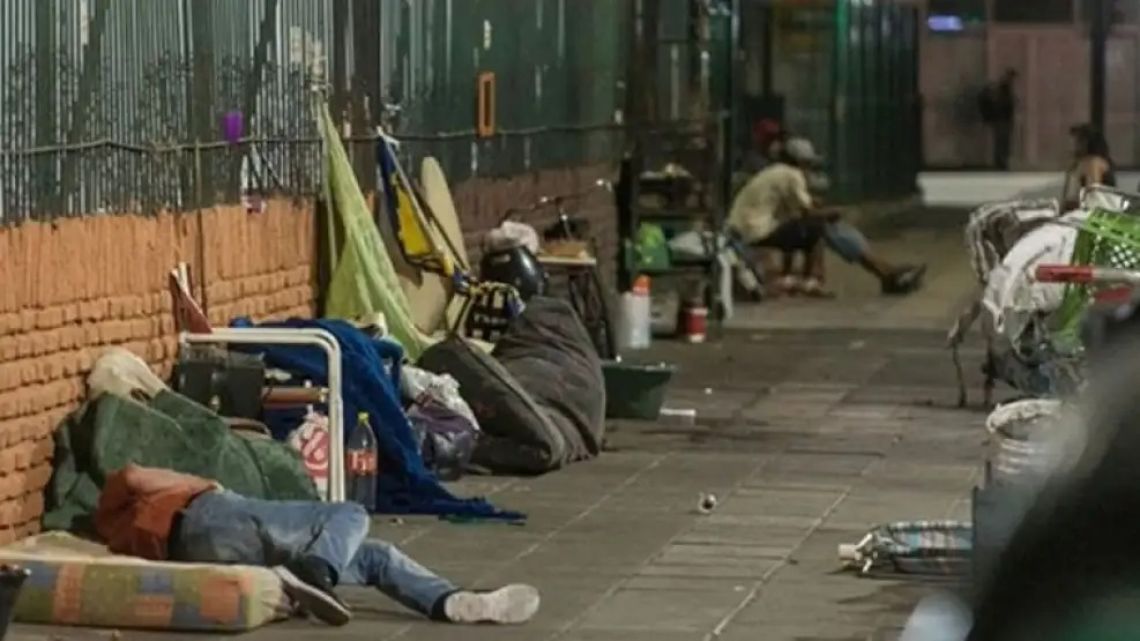
A government-led count has found 9,421 people living on the streets across 19 provinces in Argentina, with the homeless population overwhelmingly male.
The Human Capital Ministry’s first national survey of people in street situations, overseen by the National Childhood, Adolescence & Family Secretariat, conducted more than 7,800 interviews at public spaces – including streets, squares and central or outlying areas – and at temporary accommodation sites, such as shelters and hostels, to find out more about Argentines living on the streets.
It found that 83 percent of those living on the streets were male, with the resulting 17 percent female. By age, 92 percent were aged 18 or over, with six percent classified as minors.
Of those quizzed, 32 percent had been homeless for more than two years. Denying them access to public services, 10 percent did not hold a national identity document (DNI).

Fifty-two percent of respondents had completed primary school but did not finish secondary education. Some 53 percent regularly carry out some form of work, while 56 percent receive welfare payments, 30 percent have pensions and eight percent reported other sources of income.
The Human Capital Ministry said in a statement that its survey complied with Law No. 27,654, which mandated the creation of a federal programme to investigate those living on the streets or those at risk of becoming homeless, with the aim of drawing up policies to improve their wellbeing.
The data collection process was the result of coordinated political and technical work carried out jointly with provincial and municipal authorities, said the portfolio.

In its report, the Ministry highlighted the complexity of the issue, pointing to profiles of individuals with ID documents, informal employment and insufficient incomes, but also broken family ties, prolonged exclusion and health or substance abuse problems.
Separate data from Buenos Aires City also shows a sharp rise in homelessness. According to a survey conducted by City Hall’s statistics agency and its Human Development & Habitat Ministry, the number of people living on the streets rose 27 percent over a 13-month period.
Between April 2024 and May 2025, the figure increased from 3,560 people to 4,522.

Social organisations published preliminary findings in July from the third popular census of people living on the streets in Buenos Aires City, using their own methodology, estimating the total to be 11,980 – significantly higher than the official number.
Since June last year, the national government has transferred responsibility for addressing homelessness to provincial and municipal authorities, limiting its role to setting general policy guidelines.
– TIMES/NA/PERFIL














Comments