

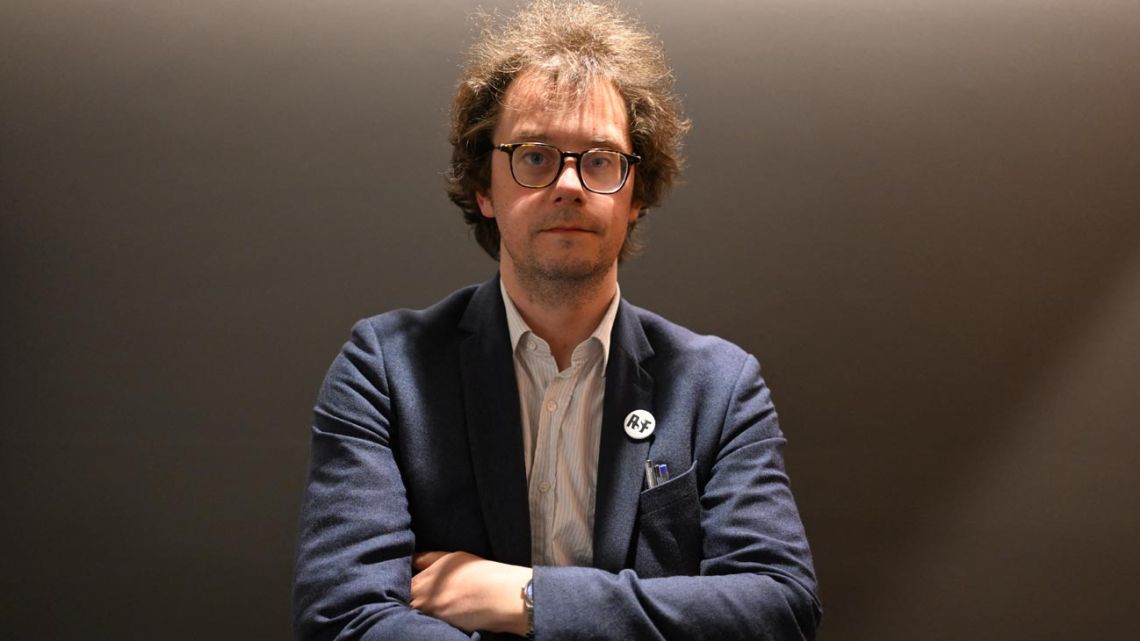
Thibaut Bruttin, The Director-General of Reporters Without Borders (RSF) press watchdog, is sounding the alarm abour the “danger” posed to journalism in Latin America by several presidents following Donald Trump’s “playbook,” which is “hostile” towards the press.
In an interview with the AFP news agency during a visit to Guatemala that began on Monday, Bruttin lamented that the “Trump approach” has become an “example” for presidents such as El Salvador’s Nayib Bukele, whom RSF has accused of systematic attacks on critical media outlets.
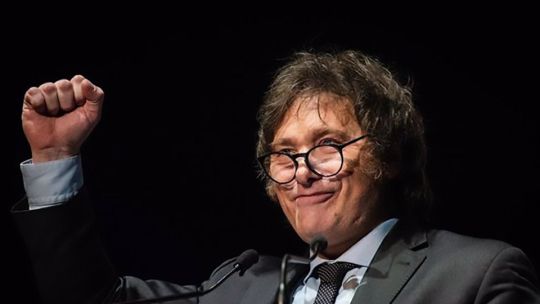
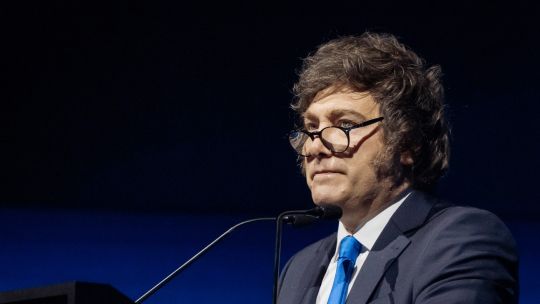
In a regional report, Reporters Without Borders also accuses Argentina’s President Javier Milei of stigmatising journalists.
Bruttin lamented that journalists continue to be targets of criminal violence and are forced into exile by authoritarian governments, and he expressed concern about the impact of Artificial Intelligence (AI) on the press.
How do you assess press freedom under Trump’s government?
Donald Trump is more a consequence of information deserts than their cause.
He is attempting to restrict media access, to turn hostile rhetoric towards the media into a weapon, and to strip media outlets of funding.
His example is inspiring other leaders on a global scale, whether intentionally or simply because it has been successful.
Whom does he inspire?
There are political shifts in Latin America, with individuals being elected who are more aligned with Trump’s approach to public debate.
There is no need to mention Bukele in El Salvador, but it is also evident that José Antonio Kast in Chile is giving a new direction to the situation.
The idea is that you can be elected not in spite of the media, but because you verbally attack the media.
Those who align themselves with Trump do so because of shared values, but also because of a method that is hostile to the press. And the Trump playbook is a dangerous one for journalists.
What should be done in response to this “playbook”?
It is necessary to stand up to Trump.
It is clear that his behaviour seriously worsens the situation for the press and seeks to push people away from the media.
That is why it is important to restate the obvious to the public, to remind them what a free press can contribute in terms of added value to society, that facts are not opinions, and that without access to journalism, people are deprived of their right to know.
What other concerns does RSF have in Latin America?
Latin America is undergoing significant deterioration. In some situations, journalists are killed, as we have seen on a large scale in Mexico in recent decades, or with renewed violence in Ecuador, for example.
We are concerned about violence against journalists, and no country is immune. But sometimes what dies is journalism, not the journalists.
More than 200 journalists have gone into exile from Nicaragua, and we are seeing journalists leaving Honduras. Journalists in Guatemala also fear being subjected to legal proceedings and have chosen to move to other countries.
How can exiled journalists be helped?
Journalists are not just any migrants. They want to resume their work as soon as possible.
In Nicaragua, many journalists have gone to Costa Rica. They need legal status in order to continue working.
We also have to address the issue of security, as they sometimes face transnational repression.
It is a tragedy when journalists are forced into exile. We can help with funding, sometimes with administrative assistance to obtain visas, and help them to relocate.
How does AI impact journalism?
With ChatGPT and other large language models, AI is truly striking at the core of the profession, which is content production. There is a sense of panic and it is legitimate.
I do not believe AI will replace journalism, but journalists who use AI will replace those who do not.
That is why we believe it is necessary to adopt this new technology responsibly, so that it can be used for the benefit of reliable information.
related news

by Edgar Calderón, AFP






Comments