

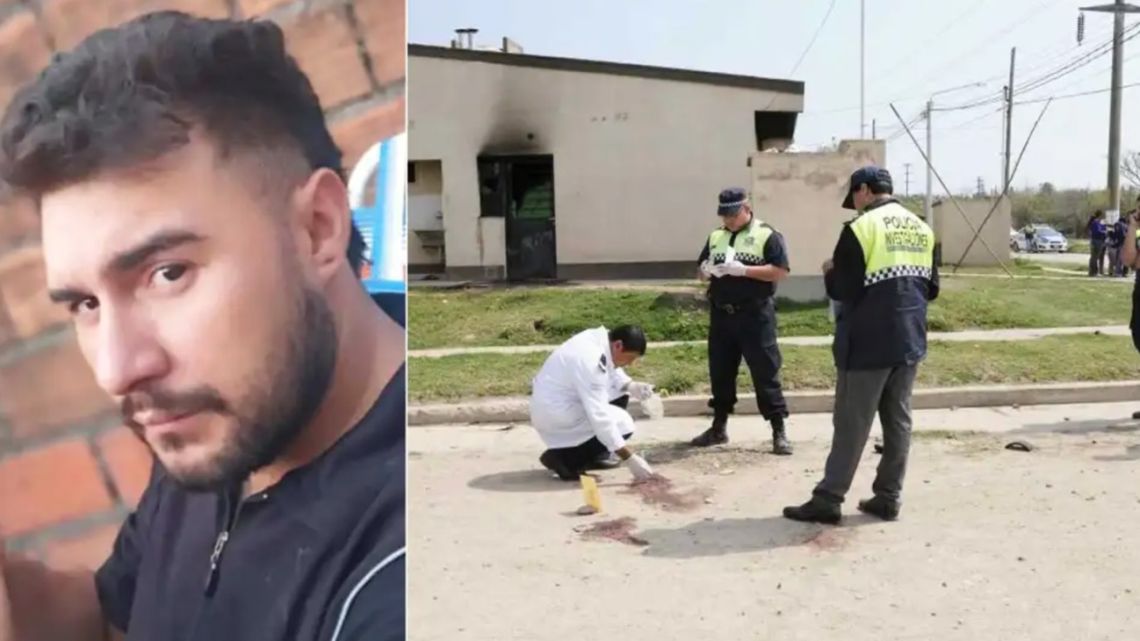
Bruno Vildoza, 25 years old, left his home on a Friday night to make a quick purchase at a local store. Minutes later, he was caught up in a robbery and was shot, fatally. The case took place in San Miguel de Tucumán, one of the most violent cities in the country, according to data from the 2025 Insecurity Ranking, compiled by the Verisure Security Observatory Barometer.
According to this report, Argentina ended the year with a 20 percent increase in “security incidents” compared with the previous period. The figure is alarming in itself. But it takes on another dimension when the distribution of that growth is examined: it is not uniform, it is not concentrated in a single territory and it paints a new map of crime in Argentina.
“The year-on-year increase of 20 percent shown by the barometer points to a more complex and fragmented scenario, in which each province presents its own risk patterns,” said Carlos Beltrán Rubinos, Director of Operations at private security firm Verisure Argentina, in an interview.
Along the same lines, Beltrán Rubinos said that “these indicators help us better understand how insecurity is evolving and where it is necessary to strengthen prevention and response strategies.”

Tucumán Province appears at the top of the ranking, with a 65 percent increase in recorded incidents. The provincial capital accounts for the highest number of cases and confirms a trend that has intensified over the past year: the north of the country has ceased to be a statistical exception and has become one of the main areas of security concerns.
Unlike the national average, Tucumán has its own dangerous days and time slots, with higher incidences on Mondays, Wednesdays and Thursdays, especially between 4am and 6am.
In second place is Córdoba, with an increase of 50 percent in security incidents. In the region, growing crime is no longer confined to the provincial capital – it extends to departments such as Colón and to other areas in the interior. The phenomenon marks an expansion of crime beyond the traditional major urban centres and mirrors the national pattern in terms of days and times: weekends, often between midnight and 4am in the morning.

Provincial data reinforce this trend. According to the regional government’s Observatory for Security and Coexistence, more than 92,000 allegedly criminal incidents were recorded in Córdoba Province in the first half of 2025 – over 65 percent of which were crimes against property, such as robbery and theft.
The report warns that while Córdoba City accounts for the largest volume of complaints, sustained growth is also being detected in towns in the region, increasing pressure on police and judicial systems outside the metropolitan area.
Mendoza ranks third, with a 40 percent increase, mostly concentrated in the provincial capital, Godoy Cruz and Guaymallén. Greater Mendoza thus consolidates a sustained dynamic of rising crime in its main urban centres.

The Atlantic coast, with an increase of 30 percent, highlights Mar del Plata as the regional epicentre of concern, albeit with a particular feature: most incidents take place earlier, between 9pm and midnight.
Buenos Aires Province appears further down the list, with a 15-percent increase, but the figure is misleading when analysed in detail. A report by the Fundación de Investigaciones en Inteligencia Financiera (“Foundation for Research in Financial Intelligence”) indicates that violent robberies in Greater Buenos Aires increased by more than 500 percent over the past decade, rising from 411 recorded incidents in 2015 to 2,917 in 2024. The survey indicates that the so-called ‘Conurbano,’ the ring of municipalities that surrounds the capital, accounts for more than half of all violent robberies committed nationwide, with particular impact along the western and southern corridors.
The Verisure study details that 11 of the 24 municipalities in Greater Buenos Aires have double the national rate of violent robberies, with districts such as Quilmes, Merlo and Lanús among the most affected. The combination of high population density, night-time movement and increasingly violent criminal methods reinforces the centrality of the Conurbano on the national map of insecurity, even when its overall growth rate is lower than that of other provinces.

Alongside these territorial increases, national indicators show a more complex dynamic of crime.
According to the latest records from the National Criminal Information System, Argentina’s intentional homicide rate stood at 3.8 per 100,000 inhabitants – the lowest level in the past two decades.
This figure coexists, however, with sustained growth in other crimes, particularly robberies and violent incidents in urban areas, reinforcing the idea of a fragmented scenario in which not all indicators move in the same direction but nonetheless have a direct impact on public perceptions of insecurity.

Hard data finds counterparts in social perception rankings. Seventy-four per cent of Argentines cite insecurity as their main concern, cutting across all socio-economic levels, according to the Verisure report.
Violence in public spaces dominates collective fears, while concern within the home weighs more heavily among middle-income groups, who are particularly sensitive to robberies and break-ins.
In Greater Buenos Aires, nine out of ten residents in the western and southern zones identify street insecurity as one of the central problems in their area. More than half of those surveyed believe their locality is now more unsafe than it was a year ag

When causes are examined, the diagnosis is clear. Most respondents point to a lack of effective political measures and insufficient training of security forces. Although these mentions have declined slightly compared with last year, they continue to top the ranking of factors that the majority associate with rising crime.














Comments