


While US President Donald Trump reprimands Washington's allies for getting closer to China, Javier Milei – his great ideological partner in Latin America – is in an awkward position.
Argentina has a key trading and financial link with Beijing. That dilemma was once again exposed when Milei stated in early January that he plans to travel to China this year.
The trip comes at a time when Trump is pushing to impose his supremacy over the Americas.
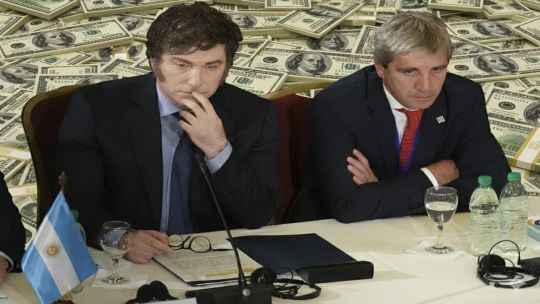
During the campaign that led him to the Presidency in 2023, Milei promised he would not “do business with China” or “any other communist.” Yet since being elected, he has adopted a more pragmatic stance.

His U-turn was consolidated following the renewal in 2024 and 2025 of an activated section of the currency swap with China, worth around US$5 billion.
China is Argentina’s second-largest trading partner after Brazil. It has invested billions of dollars in energy, lithium and infrastructure in the country.
Trade with China is rising too – last year, the Asian giant accounted for 23.7 percent of imports and 11.3 percent of exports from Argentina, according to data from the INDEC national statistics bureau.

Since his decision to renew the currency swap in 2024, Milei has pointed out several times that he was planning to visit China. But at present, the President’s Office and the Chinese Embassy in Buenos Aires have not commented on the possibility of this trip.
In parallel, the self-proclaimed anarcho-capitalist maintains a staunch alignment with Trump’s United States, who seeks to drive the Chinese away from the region.
“This total alignment with the United States and Israel, which is a position that is virtually unique worldwide, obviously comes into conflict with furthering relations with China," said Patricio Giusto, the director of the Observatorio Sino-Argentino.
Under Trump, the United States is attempting to reassert its regional hegemony through a reinterpretation of the Monroe Doctrine – a policy that has been dubbed the “Donroe Doctrine.” According to its thinking, Washington will increase its influence and region may intervene in Latin America if it deems its interests are threatened.
“Argentina is a key state in the hemisphere, not only in the continent, [but] in this quest for legitimisation of leadership Donald Trump is on,” said Florencia Rubiolo,the director of Insight 21, an analysis centre at the Universidad Siglo 21.
In recent weeks, Milei has praised the US military action in Venezuela that led to the capture of Nicolás Maduro and signed up as a founding member of Trump’s new “Board of Peace,” a body the US president wants to replace the United Nations.
In October, Argentina received a huge line of financial aid to the tune of US$20 billion from Washington – strong backing that came amid a political and foreign exchange crisis prior to the October midterm elections, which Milei’s party won.
“We don't want another failed state or one led by China in Latin America. Stabilizing Argentina is a priority for the United States,” said US Treasury Secretary Scott Bessent in October 2025.
During Milei’s time in office, two heads of the US Southern Command have visited Argentina and travelled to the nation’s Integrated Naval Base in Ushuaia, the country’s southernmost city.
Last week, a group of US lawmakers also arrived in Ushuaia. The trip comes at a time when China is increasing its presence in the South Pole.
The US delegation also visited the enormous Vaca Muerta field in Neuquén, the second largest reserve of non-conventional gas and fourth-largest shale oil reserve in the world, with executives from Argentina’s state-owned oil company YPF.
“Milei is attempting to separate the economic relationship, especially the trading link with China, from its total geopolitical alignment with the US. The dilemma is whether this separation can be sustained over time, especially if Trump starts to also impose conditions on the trade side as well,” said Giusto.
Argentina’s President said in Davos last month that “China is a great trading partner” which offers “a lot of opportunities to expand markets.” He said the relationship is “not in conflict” with his alignment with the United States.
“I govern for 47.5 million Argentines and I make the decisions that most favour Argentines,” he said. “I want an open economy.”
According to Giusto, the relationship with China has advanced due to the “mere momentum” between both countries and their ability to complement each other’s economies.
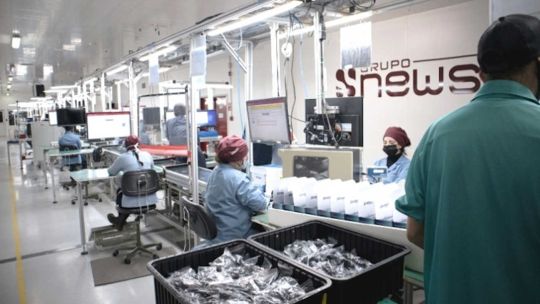
According to INDEC, 70 percent of Argentine exports to China in 2025 were either soy, beef and lithium. Meanwhile, the openness of the Milei government to imports has led to the country being flooded with Chinese consumer products.
In 2025, door-to-door imports (with giant firms Temu and Shein heading them) grew by 274.2 percent, according to official data. Another example was the entry in January of some 5,000 BYD electric cars of Chinese make.
“For Argentina, cutting the link with China is absolutely impracticable. China is not replaceable as a partner," said Rubiolo.
by Nicolás Biederman, AFP








Comments