

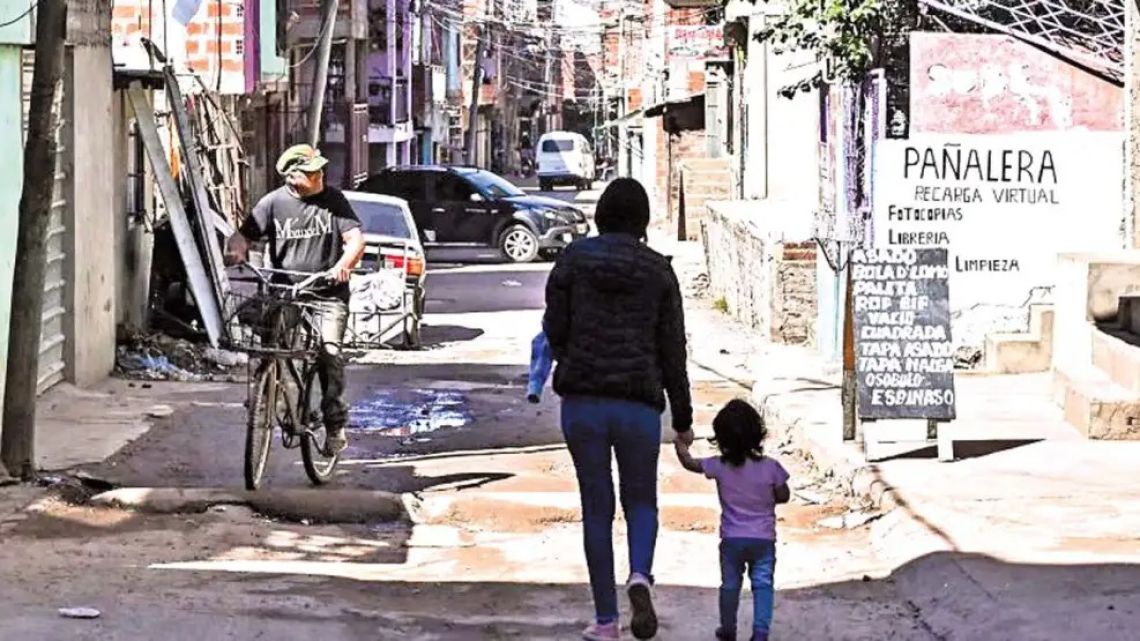
Child poverty in Argentina fell to 42.3 percent last year, reaching its lowest level since 2018, according to UNICEF Argentina.
In a report published Tuesday, the Argentine chapter of the UN agency for children reported that 5.1 million children and adolescents were living in poor households by the end of 2025, compared with 6.3 million in 2024.
The organisation's figures correspond to the second half of 2025 and show that four in every 10 children and adolescents in Argentina – 42.3 percent of all kids – were living in poor households, while 9.4 percent were living in extreme poverty, according to the UNICEF report based on government data.
However, UNICEF warned that the downward trend compared with the same period in 2024 could reverse during the first half of 2026, projecting that child poverty may have risen to around 44.4 percent.

According to the report, factors like changes in household incomes, the cost of basic goods and services, labour market conditions and social transfers will play a decisive role in determining whether the recent improvement can be sustained.
Of the 5.1 million children and adolescents living in poverty, 1.1 million were living in extreme poverty, according to UNICEF. The number of children in extreme poverty fell by 52.7 percent compared with the second half of 2024, said the body.
The report also highlights educational inequality as a key driver of social disparities. In households with low levels of educational attainment, child poverty reaches 68 percent, rising to 74.8 percent when the main household earner is unemployed.

UNICEF Argentina also found that child poverty affects 52.8 percent of households headed solely by women.
Meanwhile, seven in 10 households with children reported having relied at some point on strategies to supplement their income, including borrowing money, selling personal belongings or purchasing goods on credit.
Another concerning finding was that 42.8 percent of children experience at least one non-monetary deprivation, including shortcomings related to housing, sanitation, access to water, living conditions, education or social protection.

The ‘Pobreza Monetaria y privaciones vinculadas a niñas y niños’ report also states that extreme poverty among children would be six percentage points higher in the absence of cash transfer programmes.
Finally, the study confirmed that poverty affects children and adolescents more severely than the population as a whole. While overall poverty stood at 28.2 percent in the second half of 2025, the rate among children and adolescents reached 42.3 percent. A similar gap was recorded for extreme poverty, which affected 6.3 percent of the total population compared with 9.4 percent of minors.
These findings led UNICEF to warn of a potential increase in child poverty during the first half of 2026, arguing that the economic recovery has yet to become firmly established.
– TIMES/NA











Comments