

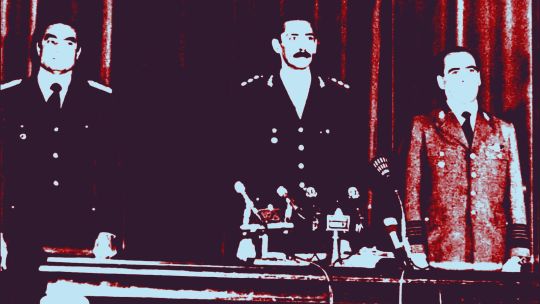
On March 24, 1976, the clock of Argentine democracy was stopped by the weight of military jackboots, beginning a systematic process of extermination that turned the state into a machinery for disappearance, torture and death. Silence was forcibly imposed on every corner of the country, while thousands of citizens were dragged from their homes in order to be ushered into the darkness of clandestine detention centres.
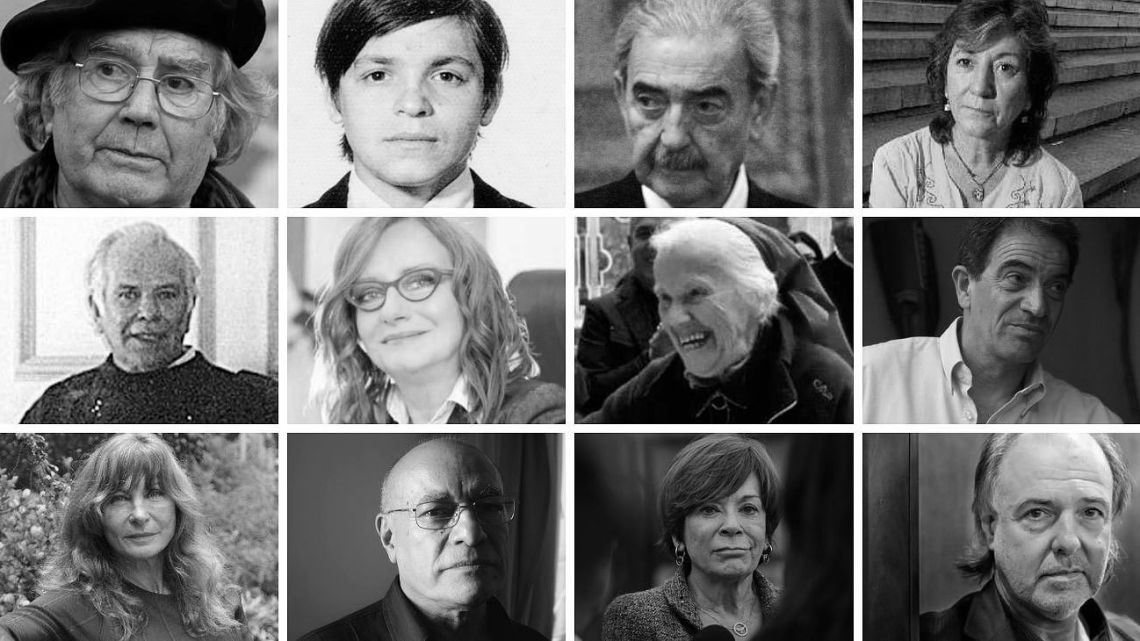
Today, half a century after that institutional rupture, the wounds remain open, but the voices of those who returned from the abyss resound with unusual potency. These men and women not only survived physical and psychological torment, they assumed the commitment of telling the unspeakable. Their testimony has been and continues to be the keystone for reconstructing historical truth in the courtrooms.
Adolfo Pérez Esquivel: Nobel Prize winner who survived ‘death flight’

Adolfo Pérez Esquivel, the SERPAJ (Servicio Paz y Justicia) spokesman, was abducted in 1977 and transferred to the Unidad 9 prison in La Plata. During captivity, he was taken aboard an aircraft for what was clearly intended to be a "death flight." Nevertheless, a last-minute order – presumably due to the international pressure surrounding his figure – saved him from being tossed into the sea, keeping him on a "standby flight" circulating for several hours until he landed.
Pérez Esquivel recalled that crunch moment in his testimony at the Trial of the Juntas: "I was on a death flight. We were up in the air for a long time and I knew that those who got on those planes would not be seen again." His subsequent release, before winning the Nobel Peace Prize in 1980, were devastating blows to the international image of the military dictatorship.
Geneviève Jeanningros: Niece of the missing French nun
Geneviève Jeanningros was seized in 1977 and taken to the fourth police precinct in Avellaneda. She is the niece of Léonie Duquet, one of the French nuns abducted in Santa Cruz church by an ESMA taskforce. Geneviève survived cramped prison conditions and torture, carrying the weight of witnessing the military cruelty to the religious sectors linked to social assistance.
In witness statements, Geneviève said: "In my cell I heard the screams of others and could only pray although they [her captors] were saying that God was on their side." Her testimony was fundamental for both French and Argentine courts when reconstructing the itinerary of the task force which snatched the nuns and the founders of the Madres de Plaza de Mayo.
Juan Gelman: Poet who sought his granddaughter
Although Juan Gelman was in exile, his story of survival is one of persistence in the face of family anguish. His son Marcelo and his pregnant daughter-in-law María Claudia were seized and taken to the ‘Automotores Orletti’ clandestine detention centre. Gelman dedicated decades to investigating the trail of his granddaughter born in captivity, facing a systematic brick wall from the Argentine and Uruguayan states while the laws of impunity lasted.
Gelman wrote in his famous open letter to the junta commanders: "My granddaughter must be somewhere, with her identity stolen, but with our blood." Finally, in the year 2000, he found his granddaughter Macarena in Uruguay, eventually confirming that she was born in Montevideo Military Hospital after the illegal transfer of her mother in the framework of the ‘Plan Cóndor.’
Miguel Ángel Estrella: Pianist whose hands they wanted to break
Miguel Ángel Estrella, a prestigious pianist from Tucumán, was kidnapped in Uruguay in 1977 as part of the Plan Cóndor scheme and transferred to Libertad Prison. The torturers took it out cruelly on his hands, bashing them and applying electric shocks, telling him that he would never play again. The pressure of international artists, headed by American-born British and Swiss violinist Yehudi Menuhin, was key to his not being murdered in the darkness of a Uruguayan dungeon.
According to Estrella’s raw narrative: "They told me: 'We’re going to cut your hands off because you are a lefty pianist.' They wanted to destroy my capacity to create."
After his release, he dedicated his career to defending human rights and bringing music to the most vulnerable sectors of society via the organisation Música Esperanza.
Mercedes Carazo: Survivor who faced enforced Stockholm syndrome
Mercedes Carazo was abducted and taken to ESMA detention centre in 1976. Her case became emblematic for the perverse system of "recovery" applied by the Navy – she was obliged to work for her captors while maintaining a forced relationship with one of the officers in a bid to demonstrate that they could "convert" the militants into collaborators via extreme psychological pressure.
Carazo explained in court: "Survival at ESMA was not a free choice, it was a daily negotiation with horror where they even took away the notion of who you were." Her narrative permitted an understanding of the deeper psychological layers of torture seeking the total disintegration of the personality of the captive before their physical elimination or release.
Silvia Labayru: Giving birth among sailors
Silvia Labayru was abducted in 1976 while pregnant. She gave birth at the ESMA Navy Mechanics School in a room guarded by officers who later grabbed her daughter to hand her over to her own family – a rare "privilege" in that context since it was not snatched for forced adoption.
Labayru was later obliged by the naval officer Alfredo Astiz to accompany him posing as his sister to deceive and infiltrate the Madres de Plaza de Mayo.
At her trial, Labayru detailed how cold and calculating the “repressors” were: "Astiz used me as a shield and familiar face to gain confidence among the Mothers while he marked out those to be snatched." Her testimony was vital in convicting Astiz for the disappearance of the Santa Cruz group, exposing the Navy’s methodology of infiltration and deceit.
Daniel Tarnopolsky: Only survivor of a missing family
Daniel Tarnopolsky survived because on the day the military assaulted his house, he wasn’t there. His father, his mother, his two brothers and his sister-in-law were all seized and went missing. Daniel went from being a young student to the only one left to make claims for his entire family, facing the absolute solitude of a home completely devastated by state terrorism in just 24 hours. As Tarnopolsky testified: "I’m what remains of a family wiped off the map just for thinking."
His legal struggle has resulted in Argentine civilian courts sentencing the former junta commanders to compensate their victims economically, setting a precedent for the financial responsibilities of the state and those who perpetrated abuses.
Jorge Julio López: Witness who was disappeared twice
Jorge Julio López survived the dictatorship after being abducted in 1976 and passing through several clandestine centres known as the "[Ramón] Camps Circuit." His testimony in 2006 was fundamental for convicting Miguel Etchecolatz.
But on the day the verdict was read, López disappeared for the second time in the midst of democracy, becoming a symbol of the debts still pending in the security system.
In his 2006 statement, López described with surgical precision: "Etchecolatz personally directed the torture sessions with cattle prods; he loved seeing how we broke down." His second disappearance shocked the country, serving as a reminder that the residual structures of dictatorship retained their capacity for damage many years after the return of democracy.
Pilar Calveiro: Intellectual who analysed camps from inside
Political scientist Pilar Calveiro was seized in 1977 and sent to ESMA, the Quinta de Funes and a detention centre in Rosario. Her survival was not only physical but also intellectual – she used her experience to write one of the deepest analyses of the logic of the clandestine centres. Her outlook permitted an understanding of these camps as not an excess but as a central piece in the social reorganisation of Argentina.
In her book Poder y desaparición, Calveiro points out: "The missing person is a silent place produced by the state to terrorise the rest of society." Her testimony in the trials contributed a structural dimension for understanding how the network of clandestine centres operated as an integrated system of social and political control.
Surviving ‘La Perla’ – the story of Piero Di Monti
Piero Di Monti survived the ‘La Perla’ concentration camp in Córdoba, which was directed by General Luciano Benjamín Menéndez. At that secret detention centre, known as "the university of torture," Di Monti witnessed the mass shootings in the neighbouring camps. He managed to survive after being selected for maintenance work, which permitted him to observe the movements of the trucks transporting the detainees to their fate.
Di Monti later told a Córdoba court: "In La Perla the silence was only interrupted by the motors of the trucks and the distant gunshots. We knew that every time a motor started, somebody would cease to exist." His memory of the names of his comrades and the layout of the camp was crucial for identifying the mass graves found years later.
Adriana Calvo de Laborde: Giving birth in a police car
Physicist Adriana Calvo was abducted in February, 1977 in the stages of an advanced pregnancy. Her time at the Pozo de Banfield detention centre was marked by the moment when she entered into labour while being transported blindfolded and handcuffed. Despite her screams, her guards mocked her. Her daughter Teresa was born in the back seat of a police car, falling to the floor amid the indifference and incompetence of her captors, who refused to cut the umbilical cord.
In the 1985 Trial of the Juntas, her testimony proved devastating. Calvo narrated: "I was blindfolded with my hands tied behind my back. My daughter was born, dropped off the seat and was left dangling from her [umbilical] cord. I screamed and they laughed." Her valour in denouncing that the repressive system had no mercy even on the newborn was fundamental for making the baby-snatching programme and the infrahuman conditions of captivity visible.
Pablo Díaz: Only survivor of the ‘Night of the Pencils’
At the age of 18, Pablo Díaz was abducted in La Plata during a raid on secondary students calling for cut-price student bus fares. He was transferred to the clandestine centre of Arana and then Pozo de Banfield, where he shared captivity with his fellow-militants, who are still missing to this day Díaz suffered mock firing-squad executions and constant electric shocks while the repressors tried to break his youthful will.
His narrative allowed the world to know the fate of the La Plata adolescents. During his court statement, he declared: "We were the kids of the pencils who kept writing. They wanted to strip us of our identity but they could not take away our dreams." Pablo has dedicated his life to keeping the names of his friends alive, becoming a symbol of the struggle of a generation decimated by state terrorism.
Miriam Lewin: ESMA horrors and airborne transfer
Journalist Miriam Lewin survived spells at the the Virrey Cevallos detention centre and ESMA (Escuela de Mecánica de la Armada), one of the most atrocious hidden sites kept by the dictatorship. There she saw how her comrades were selected for the "death flights."
Lewin was obliged to perform slave labour within the camp, monitoring the international press under the constant vigilance of officers who perversely alternated her days of torture.
Regarding psychological manipulation, Lewin detailed in her book Ese Infierno (“|That Hell”: “At ESMA, death was something which walked with us all the time. They made us believe we were alive thanks to their generosity"
Her photographic memory and her capacity for analysis permitted her to identify numerous criminals who acted under pseudonyms, contributing key evidence in the megacases trying the naval crimes decades afterwards.
Víctor Basterra: Forbidden photos which conquered silence
Víctor Basterra was detained in 1979 and taken to ESMA due his work as a printer. The Navy used him to forge documents and identification cards for security and military officers. Risking his life every day, Basterra began to conceal copies of the photographs of the detained and their captors within his clothing or among the papers of the workshop, awaiting the moment to take them out of the clandestine centre.
After the end of the dictatorship, he handed in a photographic file which was crucial for identifying the genocidal generals. In court, he affirmed in 1984: "I took the photos because I wanted somebody to know that we were there, that we were not ghosts." His images transformed themselves into irrefutable proof of the existence of a systematic plan of disappearances, breaking the pact of impunity which the military tried to seal after the return of democracy.
Miguel D’Agostino: Doctor who assisted childbirth in captivity
Miguel D’Agostino, a militant dentist, was apprehended and transferred to the ‘El Vesubio’ detention camp. Due to his medical training, the guards obliged him to assist the detained who had arrived destroyed by torture. Amid absolutely precarious conditions and the ever-present smell of blood, D’Agostino tried to provide a mínimal humanity to those sharing his cells, becoming an involuntary witness of the death throes of many who never returned.
His testimony supplied details of the chain of command at ‘El Vesubio.’ He recalled to the judges: "The most difficult part was not the pain as such but hearing the screams of the others and not being able to do anything more than clear their wounds with a rag." (Causa Vesubio, Tribunal Oral Federal N° 4). His technical and human tale permitted the centre’s layout and the identity of various guards operating with total impunity in the zone of La Tablada to be reconstructed.
Graciela Daleo: Woman who was taken out to dinner by her torturers
ESMA survivor Graciela Daleo had one of the strangest experiences under the repressive machinery: being obliged by her abductors to go out to dinner at a fancy restaurant while legally figuring as missing. This strategy of "recovery" sought to break down the detained morally, showing them a fictitious normality while their comrades were dying in the basement of the Officers’ Canteen.
At the Trial of the Juntas, Daleo described that feeling of absolute alienation: "Seated in that restaurant, I was not a person but a war trophy which they flaunted to demonstrate their total power over our lives." After her release, she became an active human rights militant, rejecting any attempt at reconciliation not including the trial and condign punishment of all those responsible for genocide.
Mario Villani: Physicist who repaired torture instruments
Mario Villani spent almost four years in different clandestine centres, including ‘Club Atlético’ and ‘El Banco.’ Due to his technical knowhow, he was forced by the military to repair the equipment used for the torture sessions, like electric cattle prods. This situation plunged him into a devastating ethical dilemma, where his survival depended on keeping operational the instruments causing pain to others.
Villani managed to sabotage the equipment to reduce the voltage at the risk of discovery. In his testimony, he narrated: "They obliged me to fix the cattle prod.I fixed it while making it hurt less and the guards did not notice" (Desaparecido: Memorias de cautiverio, Editorial Planeta). His story reflects the moral complexity and extreme perversion to which the detained were submitted.
Lidia Papaleo de Graiver: Stripped of Papel Prensa under torture
Lidia Papaleo, the widow of businessman David Graiver, was abducted in 1977 with the aim of obliging her to yield the shares of the newsprint company Papel Prensa to the newspapers Clarín, La Nación and La Razón. During her captivity at Puesto Vasco, she suffered extreme physical and psychological indignities from the security forces who sought to strip her of her business assets under the direct supervision of the military high command.
Her case demonstrated the civilian and business complicity with the dictatorship. Papaleo testified years later: "They tortured me to make me sign. They told me that if I didn’t, my daughter would not live to tell the tale." Her testimony was fundamental for understanding that the coup not only had ideological objectives but also an economic backdrop benefitting the concentrated sectors of domestic media.
Ana María Careaga: Snatched at 16
Ana María Careaga was barely an adolescent when taken to a clandestine detention centre. She was pregnant and suffered daily torture for months.
Her mother, Esther Ballestrino de Careaga, was one of the founders of the Madres de Plaza de Mayo and sought her daughter tirelessly until Ana was freed and sent into exile. Shortly afterwards, Esther was seized by the Navy after the infiltration of Alfredo Astiz and disappeared.
Ana María returned to the country to testify in the name of both. In the trial of the Atlético-Banco-Olimpo circuit, she affirmed: "The torture did not end when you left the room, it stayed with you in the cell, in the fear when they opened the door again."
Her life is a bridge between the horror suffered by the survivors and the tireless struggle of the Madres who gave their lives calling for the appearance of their children alive.
Claudio Tamburrini: Cinematic prison break
Claudio Tamburrini was a football goalkeeper and philosophy student when apprehended and taken to Mansión Seré in Morón. After months of torture, he – together with three other comrades – embarked upon one of the most incredible prison breaks of the dictatorship. On a dark and stormy night, using knotted sheets, they scrambled down from a first-floor window and ran naked and injured down the streets of Buenos Aires until reaching safety.
His escape forced the closure of that clandestine detention centre. Tamburrini tells of that moment of freedom: "When my feet touched the wet grass outside the mansion, I knew that the military plan to make us disappear had failed" (Pase libre: la fuga de la Mansión Seré, 2002). His story, told by the cinema, remains a symbol of the will to live which managed to perforate the walls of the bloodthirstiest repressive system in the region.





Comments