

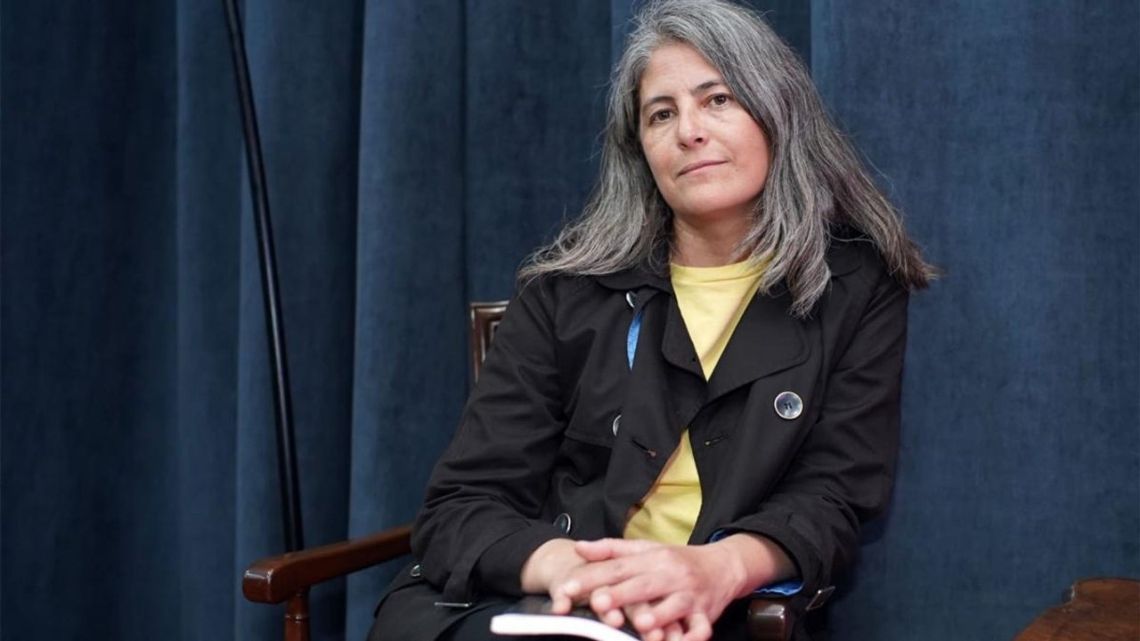
Ghostly gurises (children) move through the house as it returns to the brush, weary of axe blows and disappearances. In her latest novel, Una casa sola, Selva Almada gathers caudillos (strongmen), patrones (landowners), milicos (soldiers) and mensús (indentured labourers) as if listening to the afterlife of a territory where lives vanish into labour, violence and silence. The novel becomes a listening-post for the Littoral itself: its brushlands and ridges, adobe houses, loves, struggles and buried sorrows, all filtered through the Río de la Plata Gothic from Gualeguay to Serodino.
The fourth novel by the Entre Ríos writer moves within a form of writing that, rather than signifying, carries multiple voices – a cresting, breaking wave of poetry that was already flowing through her ‘Littoral Trilogy,’ better known as the ‘Trilogy of Men’ (three books: El viento que arrasa, Ladrilleros and No es un río) – branching narratives that have garnered critical acclaim worldwide and translations ranging from English to Chinese.
“In a way, lyricism was already present in my earlier fiction, because I love poetry very much, although I don’t write poetry. My first book, written just after I turned 20, was, in fact, the [2003] poetry collection Mal de muñecas,” she said in an interview.
“I’m one of those writers who reinvent themselves through reading, and I’ve always been an avid reader of poetry.

“For me, a narrator who doesn’t read poetry is inconceivable – and vice versa; something a teacher, Claudia Rosa, taught me when I moved to Paraná to study communication, initially for journalism, and later a teaching degree in literature.
“Among my favourite poets is Estela Figueroa, whose work provides the epigraph for Una casa sola. It comes from her poem ‘Construcciones,’” says Almada.
“I even stole an interjection or two from La piel de caballo by the poet Ricardo Zelarayán for my ghosts of the brush,” admits the author, who moves from page to page at a vine-like pace, recording the voice of a house that bears witness to the rotten hand of man – one that battles against nature and against itself.
You were telling me that you began writing the novel during a writers’ residency in Saint-Nazaire [France], and then set it aside for a while, which is something you tend to do. What happens in that interval?
Sometimes a long time passes between an initial scene appearing – which is how I begin – and the actual writing of the book; sometimes years, as in this case. In the meantime, I don’t let go of the story. I’m thinking things through – thinking about the characters or the settings, or adding new readings. So I don’t write it all in one sitting, but I remain persistently in contact with that thing which will become a novel or a short story – I don’t yet know – which emerges in the course of writing.
Did Una casa sola change much from the first drafts?
My first idea was to write about a house where something had happened and which had been abandoned. But it felt too experimental. So as I kept writing, this family of peones [rural labourers] appeared lost in the middle of the brush, with a shadowy patrón [boss/landowner], and it’s never quite clear what is happening to them, alongside voices that come from other places and times, human and non-human.
I knew straight away that the novel would be strongly shaped by an idea of class struggle, or of human bodies placed in the service of a patrón or a caudillo [strongman] – those gauchos and rural workers who seem to exist in the endless limbo of not mattering to anyone, like their children, who end up fighting in other people’s wars without much say in the matter, because they are marginal, because they are poor, simply snatched up because they are there.
Another new element for readers is the shift in narrative voice, from the usual third person to the first. Do you tend to think about technique before writing?
I’m not interested in technique at all. I mean, I do work a great deal – I rewrite a lot, especially the first scene, or those opening scenes, until something I like emerges, until a tone appears, a voice, the voice of the novel, but I don’t dwell too much on technique. I revise a lot; I love revising, it doesn’t weigh on me in the slightest, but technique is something rather alien to me.
Like genres?
Genres too. They don’t interest me either. Putting technical questions of writing first feels to me like separating the organs of a body and asking, why does this actually function the way it does? I doubt a good story works like that. I prefer to think of texts as organic systems, with languages and perspectives interwoven, with the infinite possibility of expression.
I asked about technique because within national literature it’s an issue that tends to be placed above any aesthetic dispute – even above plot.
That’s curious. There are many authors who work from technique, who talk a great deal about technique, who teach technique. Not me – I’m a bit orejona [someone who plays by ear/intuitively], to use a regional word from the novel. I go by ear.
When I used to run workshops, or when I give a talk for writers, people ask me to speak about character. And I can’t talk about that – the narrative construction of character – without talking about plot, about voice. I find it very difficult to think of them separately.
History and
Prejudice
The untamed ventures of Selva Almada have something new to say about landscape and language, through a mode of writing that unsettles the reader, hovering on the threshold of what is expected from so-called ‘provincial’ literature. It may be among sweat-soaked shirts, reverend ruteros (roadside wanderers/travellers) and lives unmoored in the wake of the meteor that struck the local literary scene in 2012, El viento que arrasa – winner of the First Book Award at the Edinburgh International Book Festival – or in the sapucai (a piercing cry typical of the region) and homoerotic reworking of the Montagues and Capulets in Ladrilleros (2013), works so influential they have inspired adaptations ranging from opera to theatre and film.
“Telling stories about men – which happened by chance across all my novels – allowed me to reveal certain mechanisms of violence, repression and domination in society, while also probing honour and betrayal among men, which operates very differently among women,” Almada emphasises.
“When I began writing, I was still living in Paraná and organising reading series around the self-managed magazine Caelum Blue [editor’s note: a southern constellation]. Héctor Tizón was widely read. Once, in an interview, he described himself as a ‘writer of the provinces’—in the plural. I always liked that idea and when I started writing, I adopted it myself. I think it reflects something of those of us from the provinces: a desire for recognition, and also to set ourselves a little apart from those from Buenos Aires,” says the author of *Una chica de provincia* (2007), some of whose stories were later republished in the highly recommended entry-point anthology El desapego es una manera de querernos (2015), still marked by her distinctive reinvention of the rural imaginary.
What would ‘provincial literature’ be?
(Pause) I’m not sure it exists. Nor can I imagine how it might be reduced to a shelf in a bookshop, especially now that I know much more than I did a few years ago. It’s an extremely diverse literature: sometimes very urban, sometimes genre-based, sometimes not. And it’s not simply produced because it’s written outside Buenos Aires.
Of course, having grown up somewhere – or even working within a particular landscape over a long period – your perspective is shaped by that origin or experience, by those voices, those colours. But not necessarily. I know many writers from the provinces whose work bears no trace that would make you say it comes from Tucumán or La Rioja. And others where it’s more evident, and they strike me as overly folkloric, overly regionalist – and those don’t interest me.
Since 2020, together with writers Natalia Peroni and Raquel Tejerina, you’ve run Salvaje Federal, an initiative which fosters dialogue between authors from different regions of Argentina through a bookshop and cultural initiatives. How has your broader knowledge of national literature influenced your writing?
The concept for the bookshop came from my experience with book fairs and the different parts of the country I’ve visited. I would always bring back books and authors I liked, and I realised how difficult they were to find here. That was its initial profile – at first online during the pandemic – and it gradually expanded into larger cultural projects, such as the Salvaje Festival from 2022 onwards. Thinking about my reading experience – which I insist is inseparable from my work as a narrator – I realised I knew perhaps 25 percent of what existed along those routes, and I came to know the rest through the bookshop. These realities you begin to connect, these shared experiences, return to the writing.
We mentioned the wandering gauchos that open your new novel, which you’re presenting from Buenos Aires to Athens. Those zombie-like discourses of the gauchesca tradition, filtered through the history of the Littoral, seem to offer a historical-poetic interpretation of the territory, in the manner of Juan L. Ortiz or Juan José Saer. Did you draw on historical material about Entre Ríos or on the poems of Hilario Ascasubi or José Hernández?
From the gauchesca tradition, mainly to shape the voices of the characters. I reread the classics and, at the same time, began looking into how Justo José de Urquiza was killed – a minor detail, perhaps, but one that captivated me. From there I constructed the scene: he was assassinated at dusk, while drinking mate and talking with his administrator. I also read ‘¡También en la Argentina hay esclavos blancos!’, the essential 1941 investigation by Alfredo Varela, which deals with the yerba mate trade and the very real circumstances in which rural workers can disappear. And I remembered a case from the 2000s, from my own region, in which an entire peasant family disappeared – without any explanation, without anything ever being known about them.
Here we encounter ‘La Tata,’ the mother of Lorena Lucero, wife of the mensú [indentured labourer] Damián and mother of four children, who searches for her daughter while confronting the milicos [soldiers] with bellies full of the landowner’s barbecues.
La Tata is directly inspired by the Mothers of the Plaza de Mayo and the Grandmothers of the Plaza de Mayo. And more recently, by groups such as the Mothers of Victims of Trafficking – figures like the mother of Marita Verón. Women who, often without resources, begin to dig, to demand, to insist – and from time to time they manage to move the machinery, however slightly, in the search for those who are missing. It always strikes me, when I travel around the country and see the screens in bus terminals, how many people have disappeared even in democracy.
What returns from small-town childhood in your
fiction?
I’ve lived in Buenos Aires for 25 years, and in some way I’m always returning there – to those first 10 or 12 years, when my grandmother taught me the names of plants, or when I had a kind of unmediated relationship with animals. Yes, it’s strange, but I’m always going back.
I have a very good memory for what I’ve heard. So when I begin shaping the language of a novel, words start to appear that I may never have heard again since childhood, yet they still resonate in my mind. Or a word I heard only once, from someone, that caught my attention and remained stored away.
My paternal grandfather, a very humble paisano [countryman] from the countryside, was an excellent storyteller. In the summers, my siblings, my cousin and I would visit his house – no electricity, no television, no-one else around – and he would tell us stories, pipa en la diestra (“pipe in his right hand”), of apparitions, spirits, basiliscos [mythical serpent-like creatures] and indigenous and criollo [local creole]
legends.
Chronicles of
violent times
Returning to the brush. That is the taut arc of Una casa sola, the house which Almada follows across a span from the mid-19th century to a new millennium laid waste by the brutal deforestation driven by the rapacious soy agribusinesses.
“I wanted the story of the house to make visible the crisis of the Littoral and the Chaco: the machines that begin to replace manual labour in the countryside, the people forced out to the cities, and the overwhelming arrival of soy,” explains the writer.
Almada does not hide the body nor the word – the same word she defended at the latest opening of the Buenos Aires Book Fair: “If those in power are so careless with language, with such contempt and darkness, then the rest of society feels authorised to speak in the same contemptuous way. Reading is a right, but education is being dismantled. Teachers’ salaries are miserable, and all of this undermines children’s right to read.”
Nor does she hide it in her fortnightly column for Perfil, where she recently anticipated: “We are going to get out of this rain, we are going to get out of this rain. Deep down, I miss being back in the streets, the subway packed with green, orange and violet scarves, the glitter, friends meeting before and after, being together and jumping because ‘whoever doesn’t jump…’, chants, bare breasts, fists raised. In June, it will be 10 years since the first Ni Una Menos; we need to start warming up, I think, bending our knees to march and jump and dance through the streets, right, friends? And so they say more men die than women. And so they say femicide does not exist. And so they say gay people abuse their children. And so they say it’s all the fault of wokeism. Start running, fascists.”
Do you see yourself as part of a feminist literature?
I am a writer, I am a feminist; both are part of my life, and I think [2014 novel] Chicas muertas marked a before and after for me. I have no problem with the label. My novels, I think, can also be read in that light. Completely. At the same time, I am very attentive to anything that becomes slogan-like.
Now, if people talk about feminist writing or feminist writers, that wouldn’t bother me – unless I were lumped together with people who prioritise the label before the work itself. I have sometimes sat on juries for literary prizes where it is clear that the intention to be a feminist writer comes first, and only afterwards comes the writing. I have no interest in belonging to that.
“Right now I’m preparing a glossary for translators because this new book is a bit more complex, a language of borders, but I’m interested in those translations because I can sense the reading experience in other cities abroad and share the universality I aim for in my provincial stories. And I like hearing the questions about how we survive,” laughs Almada.
“People abroad always ask about the situation in Argentina – some with fascination, others with alarm. They ask how it happened, what will happen next. And I don’t mind answering, because I stand by the writer’s commitment to reality. I think that today, having the attention of a group of people is a privilege. Standing on the other side of the street and saying everything I think about this government,” adds the writer.
Precise words, as always, in the literature of Selva Almada.
related news


by Mariano Oropeza, via Perfil







Comments