

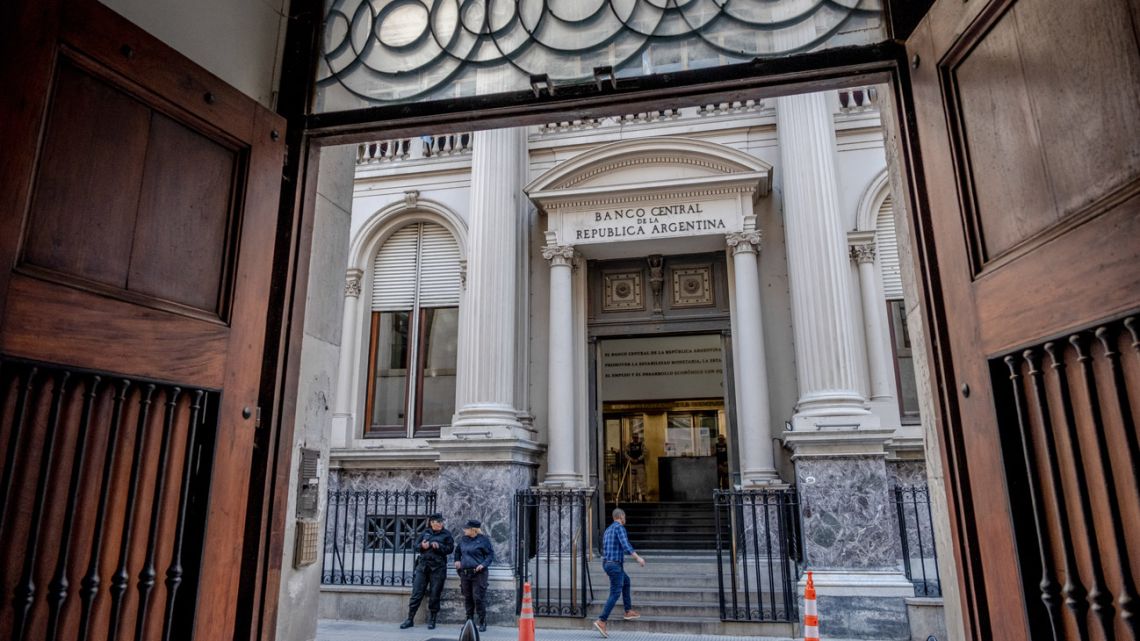
Argentina’s path to a coveted credit rating upgrade hinges on a sustained build-up of foreign-currency reserves, according to Fitch Ratings.
The government of President Javier Milei has made “impressive” progress in bringing down inflation and tightening fiscal policy, said Todd Martinez, co-head of the Americas sovereigns group at the ratings firm. That has earned it two upgrades since late 2024, bringing it to CCC+, seven notches into speculative grade.
But strengthening the Central Bank’s balance sheet – and proving it can hold on to those dollars – remains critical.
“Reserve accumulation is the missing piece,” Martinez said in an interview. “To make that next step to B-, we would like to see the government buying more than enough dollars to pay its debt and also build up a cushion for the future.”

The Central Bank, which declined to comment, has purchased roughly US$3.5 billion in reserves this year, maintaining its pace even as the Iran war roils markets. It has a goal of buying between US$10 billion and US$17 billion in 2026. While the push has been positively received, investors remain wary of how Argentina will meet upcoming bond payments without eroding those reserves, particularly as officials have ruled out a near-term return to international debt markets.
That tension is reflected in sovereign spreads, which remain at about twice where Milei wants them to be. Economy Minister Luis Caputo, who has has resisted issuing new debt abroad at current levels, recently said Argentina has identified funding to meet near-term maturities and is working on alternative financing sources, without giving specifics. An operation such as Ecuador’s tender offer, seen by investors as one possible pathway for Argentina, was also ruled out.
A successful liability management exercise that lowers short-term financial needs for Argentina would be one of the “best catalysts for our rating,” Martinez said. “A lot of current and potential bondholders might look at that and have more willingness to lend to Argentina at a lower cost, improving financial availability.”

An upgrade would carry tangible benefits. Many institutional investors are restricted from holding lower-rated debt, limiting demand for Argentine bonds and keeping borrowing costs elevated. A higher rating could help broaden the investor base, lower country risk and improve access to financing – dynamics that have played out in other markets.
“Argentina is still a country that has a higher degree of vulnerability and really needs to build that cushion of reserves or insurance policy to get that higher rating,” Martinez said. The government’s goal for this year is “probably enough” for a higher rating, he added – but only if those reserves are not immediately used for debt service.
The South American nation, which has defaulted multiple times on its debt, has nearly US$4.2 billion in payments due on foreign currency bonds in July. Its market debt maturities in hard currency are projected to reach US$20.8 billion in 2027, including principal and interest, according to local broker Facimex.

Argentina also owes the International Monetary Fund almost US$3.7 billion this year and US$7.8 billion the next, according to data from the Fund.
“We think this government will always find a way, but to get to B- we do need to know where those dollars might come from in the next few years, so clarity on these financing sources would be important.”
S&P Global Ratings also underscores the need for reserve accumulation as a buffer, arguing that greater access to voluntary funding improves the probability of an upgrade from current CCC+ levels. Moody’s Ratings, for its part, says Argentina could still make rating progress without regaining market access.

“The focus is always, in Argentina’s case, the balance of payments,” Jaime Reusche, the firm’s senior credit officer, said in an interview. Moody’s rates Argentina Caa1, also seven levels into speculative territory, with a stable outlook.
by David Feliba & Ignacio Olivera Doll, Bloomberg













Comments