

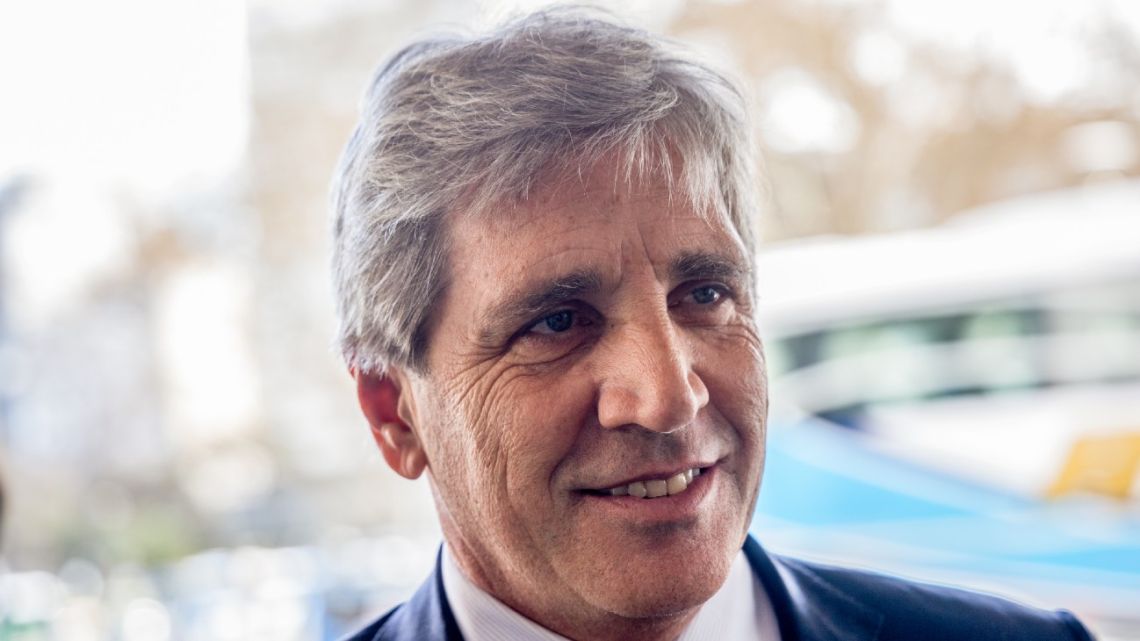
Argentina’s Economy Minister Luis Caputo expects a strong rebound in the fourth quarter and dismissed the prospect of a recession, even as growth slows.
Caputo sees the recovery being driven by construction and mortgages, as well as gains in real wages as inflation continues to ease, he said in an interview on the sidelines of the International Monetary Fund and World Bank annual meetings in Bangkok.
“I think we will see a significant recovery in construction,” he said. “You’re going to feel it in the roads. You’re also going to feel it in mortgage lending.”
“We don’t see a recession,” he added.

His optimism comes after the economy contracted 0.6 percent in the second quarter and again in July, leaving analysts debating whether Argentina risks slipping into a technical recession this year and stoking investor concern that market-friendly President Javier Milei will face a tough reelection battle in 2027.
‘Don’t see that’
Caputo also expects lending to recover as interest rates decline and real wages improve. Credit growth has recently lost momentum, with banks shifting back toward government securities as a slowing economy and elevated delinquencies weigh on lending.
Borrowing costs have already begun to fall, he said. Banks have said that delinquencies are “no longer a problem” and have started to decline, he said, though the improvement has yet to show up in official data.

Caputo rejected the idea that the government faces a choice between reviving growth and continuing to squeeze inflation, which remains the president’s economic priority.
Milei’s government has leaned on the currency to curb inflation, but economists have warned that the peso’s appreciation in real terms is weighing on credit and growth, raising questions over how long Milei can prioritise disinflation without doing further damage to activity.
“We don’t see that trade-off in the same way as other economists do,” Caputo said. “We don’t think they’re incompatible at all.”

Caputo said disinflation would lower the cost of financing investment, while spare productive capacity would provide room for growth.
Caputo acknowledged that the energy shock had weighed on growth, saying that without it, Argentina would probably be expanding at close to four percent.
“We remain focused on bringing down inflation because we know that’s what’s best for Argentines, because it has been the president’s commitment since day one, and because we know it improves wages and reduces poverty,” he said. “That will continue to be the priority.”

Earlier Friday, IMF Western Hemisphere Director Nigel Chalk said he expects a “very positive” acceleration of growth heading into 2027.
Caputo isn’t ruling out a return to international debt markets next year, but said the government would only do so if borrowing costs become competitive with the cheaper financing options currently available.
“As long as we have the opportunity to refinance at lower rates, that’s our obligation,” he said. “Now, if next year the conditions are right because country risk falls significantly or global interest rates come down, and we can refinance at the same rates we’re getting now, I would have no problem with that.”

‘In discussions’
Argentina is in talks with the World Bank for about $US10 billion in financing for private-sector projects, Caputo said in a post on X Thursday. He said the funding would support rail projects, the Taca Taca copper mine in Salta Province and a urea plant in Bahía Blanca. Caputo also said Argentina is in talks to secure multilateral funding worth at least US$2 billion heading into 2027, without specifying the source.
In a separate interview, Susana Cordeiro Guerra, vice-president for the Latin America and the Caribbean region at the World Bank, said they expect to lend more to Argentina as Milei heads into 2027.
“We are definitely in discussions and will support the government in their liquidity needs at different points in time in a strategic way throughout the year,” she said. The country faces elections and more than US$25 billion in debt maturities next year.

Milei’s approval rating sat at 38 percent in August, near the lowest levels of his Presidency, according to an AtlasIntel poll for Bloomberg News. Some 70 percent of Argentines described the labor market as bad, the survey showed. Milei wrote off polls as unreliable in Argentina.
Argentina has lost nearly 250,000 private-sector payroll jobs since just before Milei took office, and unemployment has ticked up to nearly 8%.
by Manuela Tobias, Bloomberg










Comments