

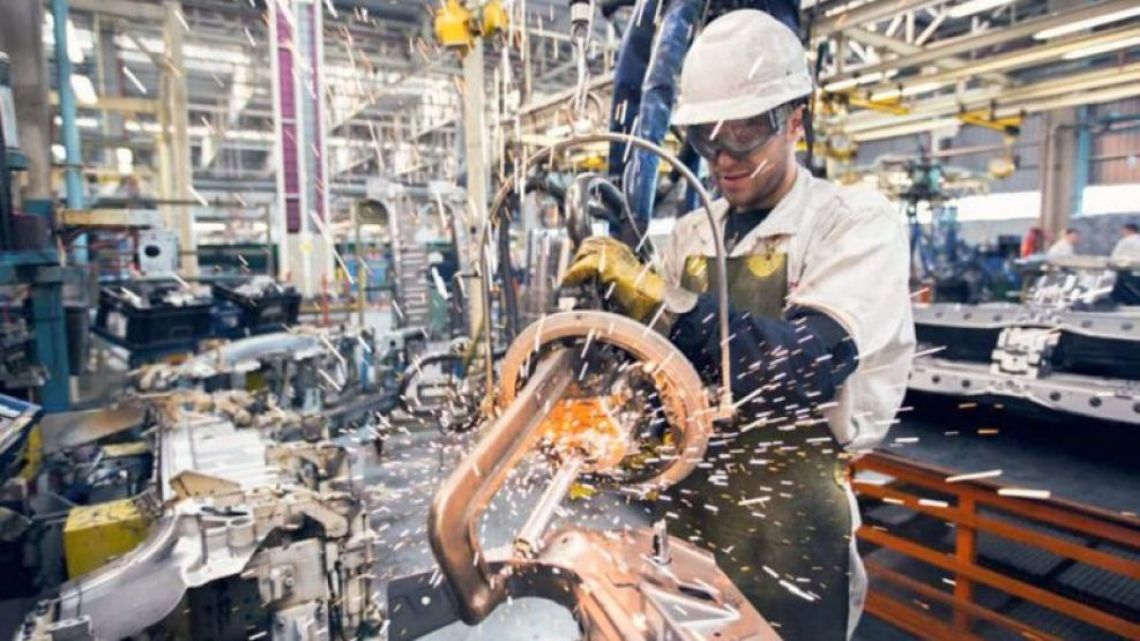
Argentina’s industrial sector remains in a fierce contraction, with output in the first two months of 2026 down 12 percent from the same period last year, according to government data.
Economic indicators published by the INDEC national statistics bureau last week showed that manufacturing output fell 8.7 percent year-on-year in February, another blow following a 3.3 percent decline in January. The data extends a sustained downturn for the sector that has now lasted eight consecutive months.
There were no signs of recovery in monthly terms either – output dropped four percent in February from January, marking one of the steepest month-on-month falls since early 2025.
Industry has been among the sectors hardest hit by President Javier Milei’s economic programme, with declines recorded every month since last July. The cumulative contraction underscores the pressure on domestic demand and investment as the government pushes ahead with fiscal adjustment and deregulation.

According to INDEC, 14 of 16 manufacturing branches posted year-on-year declines in February. The steepest falls were seen in textiles, which plunged 33.2 percent, machinery and equipment, down 29.4 percent, vehicles and auto parts, down 24.6 percent. Clothing garments, leather and footwear dropped 18.2 percent, while food and beverages fell 6.9 percent.
The sharpest contractions were concentrated in sectors tied to consumer demand and capital investment, both highly sensitive to credit conditions and economic activity.
Only a handful of sectors showed resilience. Oil refining and related products rose 19.7 percent, while chemical substances and products increased 3.7 percent.

"Industrial contraction continues with a steep and generalised fall but with some initial indications of stabilisation. The key from here onwards will be the recovery of consumer markets and investment to confirm a change in trend,” said a report from the Centro de Estudios Políticos y Económicos (CEPEC) think tank.
Economist Hernán Letcher, the director of the Centro de Economía Política Argentina (CEPA) think tank, said on social media that industrial activity remains roughly 10 points below its average level prior to Milei’s inauguration in late 2023, and nearly six points below its most recent peak in May 2025.
“The level of industrial activity remains almost 10 points below the average between January and November 2023,” Letcher wrote, adding that output is still well off its recent highs. “Industrial production is 5.8 points below its last peak in May 2025."

Additional data from the Federación de Industrias Textiles Argentinas (FITA) trade group highlighted the depth of the downturn in one of the nation's worst-affected sectors. Textile production fell 23.9 percent year-on-year in January, marking its sharpest contraction since the sector’s records began in 2016.
Capacity utilisation in the textile sector dropped to just 24 percent in January, down more than 10 percentage points both month-on-month and year-on-year. Across industry as a whole, use of installed use stood at 53.6 percent, underscoring the severity of the textile slump.
The CEPEC think tank said the contraction remains “steep and generalised,” although it noted early signs of stabilisation. It added that any sustained recovery will depend on a recovery of “consumer markets and investment.”
– TIMES/NA














Comments