

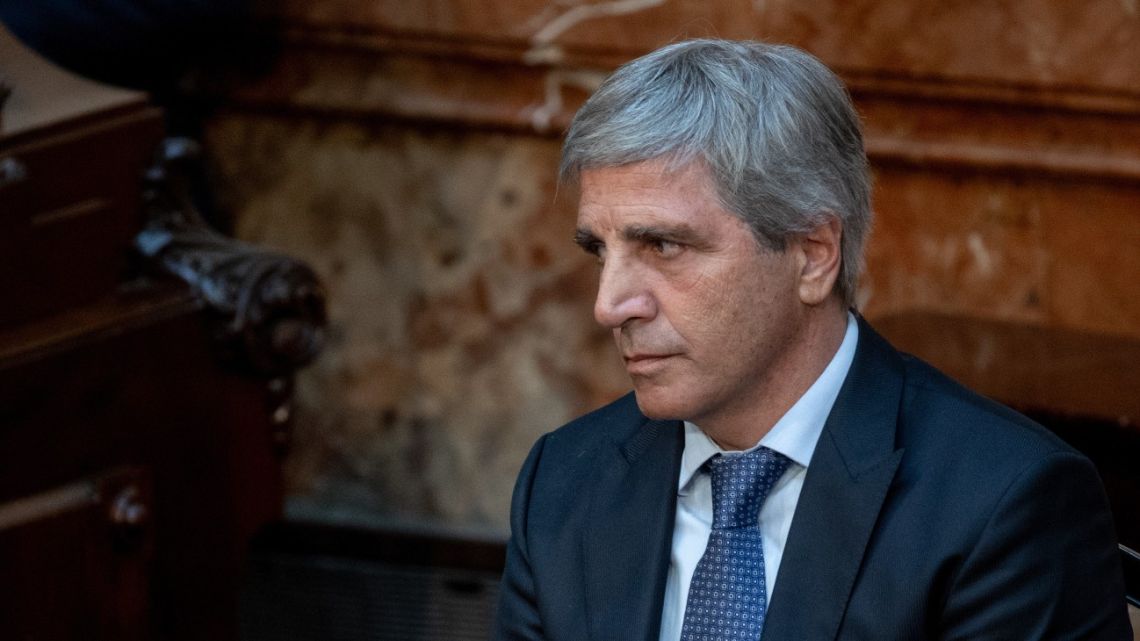
In his first stint as a top Argentine finance official a decade ago, Luis Caputo tapped foreign bond markets again and again, selling more than US$40 billion in total and earning the moniker “serial borrower” from his critics. Nearly three years into his second tour, Caputo, now the top economic aide to President Javier Milei, hasn’t sold a single bond overseas.
Some of that is simply the result of the deep budget cuts Caputo has helped Milei orchestrate, as his team at the Economy Ministry is quick to point out. No longer plagued by chronic deficits, Argentina’s financing needs are smaller.
And yet, if the debt binge a decade ago was deemed reckless, setting the stage for the country’s third default this century, the abstinence this time brings its own risks. The global bond market is ready, analysts estimate, to hand Argentina at least US$5 billion – cash the country badly needs to rebuild hard-currency reserves and safeguard crucial imports when the next crisis hits.
The sticking point is the interest rate. Caputo argues that the Milei administration has pulled off so many watershed reforms – freeing up a bureaucracy-laden economy while reining in triple-digit inflation – that Argentina deserves to pay far less than the roughly nine percent the bond market is currently demanding. So, for now, he prefers to cobble together financing from investors in the local market while seeking support from multilateral lenders.

It’s an approach that, to the surprise of many analysts in Buenos Aires and Wall Street, has largely worked so far, allowing the government to meet foreign-bond payments without draining dollars from the country and triggering a plunge in the peso. But it’s a dangerous game that could backfire, they say, if an economic setback at home or a global bond selloff were to cut Argentina off from the market and trigger a cash crunch just as Milei gears up for a contentious re-election bid next year.
“The concern is the combination of political risk and a lack of liquidity to meet all of the debt payments,” said Ernesto Revilla, chief economist for Latin America at Citigroup. “That said, they’ve shown that the stabilisation programme is progressing well despite the criticism it has faced along the way, including from us, Wall Street analysts.”
Caputo’s office says comparisons between his decisions now and then miss a key point: under Milei, he oversees all economic policy while he was just responsible for arranging financing for the government under then-president Mauricio Macri. He’s always believed in fiscal austerity to cure Argentina’s economic woes but is only in position to implement that vision now as Milei’s economy minister, his office said.

“The current situation is very different from his previous experience,” the Ministry said in a statement to Bloomberg News. “He is now in charge of designing economic policy and also has the president as his main ally in implementing the programme.”
Under Macri, Argentina was posting deficits exceeding six percent of gross domestic product, year after year, which forced Caputo to tap Wall Street repeatedly. In one multi-tranche deal in early 2016, he raised US$17 billion in a single day, a record for a developing nation at the time.
Caputo’s office said he “warned the authorities on numerous occasions that, for countries like Argentina, financing is limited, and that it would not be possible to continue financing that deficit.”

The “serial borrower” nickname, or “endeudador serial” in Spanish, captured the anger that built in the country over Macri’s failed policies. Even Milei blasted Caputo at the time, criticising him in a viral clip for his unsuccessful bid to prop up the peso while doing a short stint as head of the Central Bank. “Caputo smoked through US$15 billion of reserves irresponsibly and inefficiently,” Milei railed.
While supported by stronger fiscal accounts this time around, Caputo has fewer dollars at his disposal: about US$10 billion in net reserves after months of near-daily Central Bank purchases, according to private estimates. Rebuilding reserves has become one of the main demands from the International Monetary Fund, which supports Argentina with a US$20-billion programme. With a thinner dollar cushion, Caputo has also moved slowly to remove currency controls that discourage the investment Argentina needs to bolster economic growth.
“With Macri there was fiscal gradualism and an immediate opening of the capital account,” Revilla observed. “Now we have shock therapy on the fiscal and gradualism in the capital account. The results indicate that this programme, to this date, has been a lot more successful.”

Determined to avoid paying the yields demanded by Wall Street, Caputo tapped instead the dollar savings that Argentines, wary of runaway inflation and successive peso devaluations, have stockpiled over the years. He did so by selling dollar-denominated bonds in the local market, while also securing US$3.2 billion in bank loans guaranteed by the World Bank and the Inter-American Development Bank. Both options turned out to be cheaper than a traditional Wall Street sale.
A record harvest and booming output from the Vaca Muerta shale formation are also generating a steady stream of export dollars that has supported Caputo’s refinancing strategy.
The big question now is whether waiting will pay off – allowing Caputo to eventually tap global markets at a rate he considers acceptable – or whether Argentina will miss its window and start running low on cash.

Time may not be on Caputo’s side. Milei will start gearing up soon for his reelection bid in 2027, when Argentina faces more than US$25 billion in foreign-currency debt payments. Elections have a way of spooking investors here. Just last year, Caputo was forced to secure a US$20-billion lifeline from the US Treasury to halt a run on the peso ahead of midterm elections that many investors feared would erode Milei’s ability to enact free-market reforms.
Doubts over whether his reforms will outlast the election, or even whether Washington would come to Argentina’s rescue again, are starting to cloud next year’s outlook, which only adds to the pressure to lock in as much financing as possible.
“Five years from now, we may look back and say it was a very clever play not to take what could have been an easy route” by tapping the market now, said Andrew Stanners, senior investment manager for emerging-market debt at Pictet Asset Management. But, he said, “the reason international bond players are so pushy is because they see this as probably the best window at this moment in time, and it’s just another stream of liquidity they may need.”












Comments