

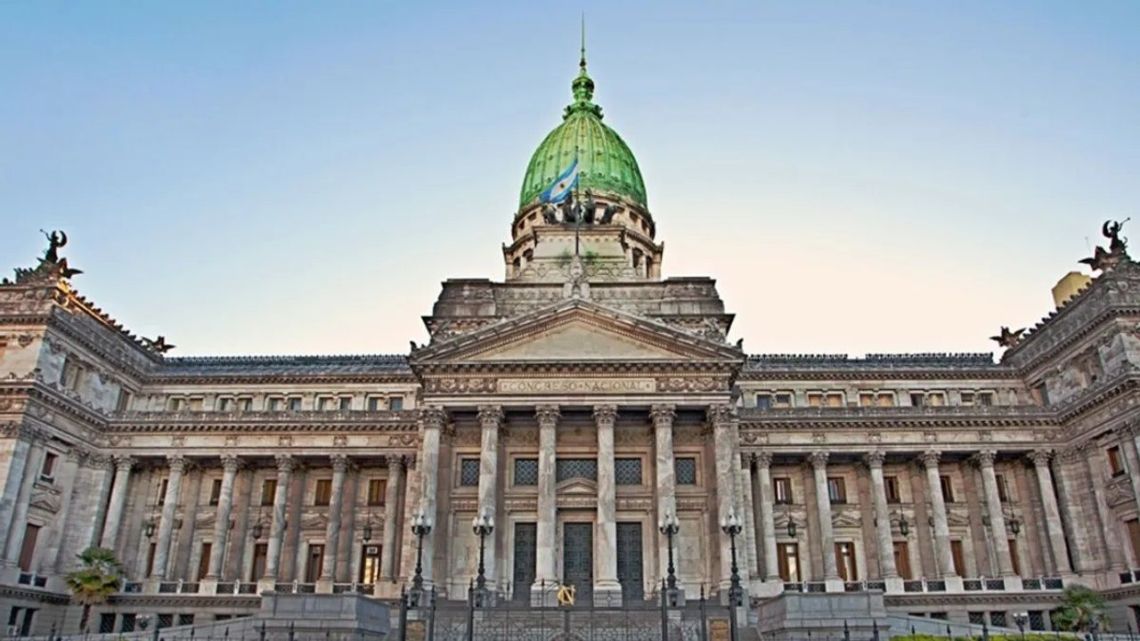
Argentina’s Senate has passed a bill to suspend next year’s primary vote, removing a potential source of political and market volatility as questions swirl about President Javier Milei’s chances of winning re-election.
The bill narrowly cleared a Senate committee last week and got through the floor with a 43-29 vote, with no abstentions, Thursday afternoon. It heads to the lower house next. Patricia Bullrich, Milei’s top senator, said Milei’s party had the votes to pass the chamber in an interview earlier this week.
Getting rid of primaries, known locally as the PASO, would give Milei a greater runway for his economic measures to take hold before the October presidential vote. The reform had been stalled since Milei sent it to Congress in April, before a corruption scandal engulfed his administration and led to the resignation of his cabinet chief, who had signed the original proposal.
Markets are already fretting over the 2027 race as the economy likely entered a technical recession in the third quarter and Milei’s approval ratings hover around 36 percent, near the lowest of his Presidency, though still higher than his predecessors at the same point in their terms. Dollar bonds have slumped about 25 percent since the beginning of August.

Investors are optimistic about the bill because it would shorten Argentina’s prolonged election cycle, which typically begins in May and stretches into November, often putting pressure on the peso as savers and investors buy dollars to hedge against political uncertainty. Argentina’s unusual primary system sparked upheaval in markets during the 2019 and 2023 presidential races, and again before Milei’s midterm victory last year.
Without the PASO, the deeply divided Peronist opposition would lose a key mechanism for letting voters choose its presidential candidate. With former president Cristina Fernández de Kirchner under house arrest and her political heirs feuding over who will succeed her, choosing a candidate behind closed doors risks deepening those divisions. Regardless, Bullrich said Milei’s party was bracing for a united Peronist opposition next year.
Besides getting rid of primaries, the bill also bars people convicted of intentional crimes whose convictions have been upheld on appeal from holding public office and positions in political parties. The provision helped secure the support of the pro-market PRO party, after a similar measure known as ficha limpia, or clean slate, failed to advance last year.

While the idea is for citizens to elect each party’s candidate all at once, most times the parties have already chosen their candidate before the non-binding primary. Instead of narrowing the field, the PASO effectively served as a poll two months before the actual election.
Argentina’s powerful governors are also stretching out the election calendar across the year. They’re allowed to schedule their provincial vote on a different date from the national race, a commonly used mechanism to distance association with the incumbent party. With the first provincial vote scheduled for February, Argentina will spend almost the entire year in some stage of the electoral process.
The lower house also passed Milei’s bill to ban money printing at the Central Bank earlier Thursday, and continues to discuss his 2027 Budget.
related news
Caputo: Argentina has activated US$5-billion Chinese currency swap to guarantee debt repayments
Santilli says Argentina's gold reserves are 'perfectly safe'
Labour report says over 60% of self-employed youths are underemployed in Argentina
Argentina's government rules out economic policy changes despite creeping recession
by Manuela Tobias, Bloomberg







Comments