

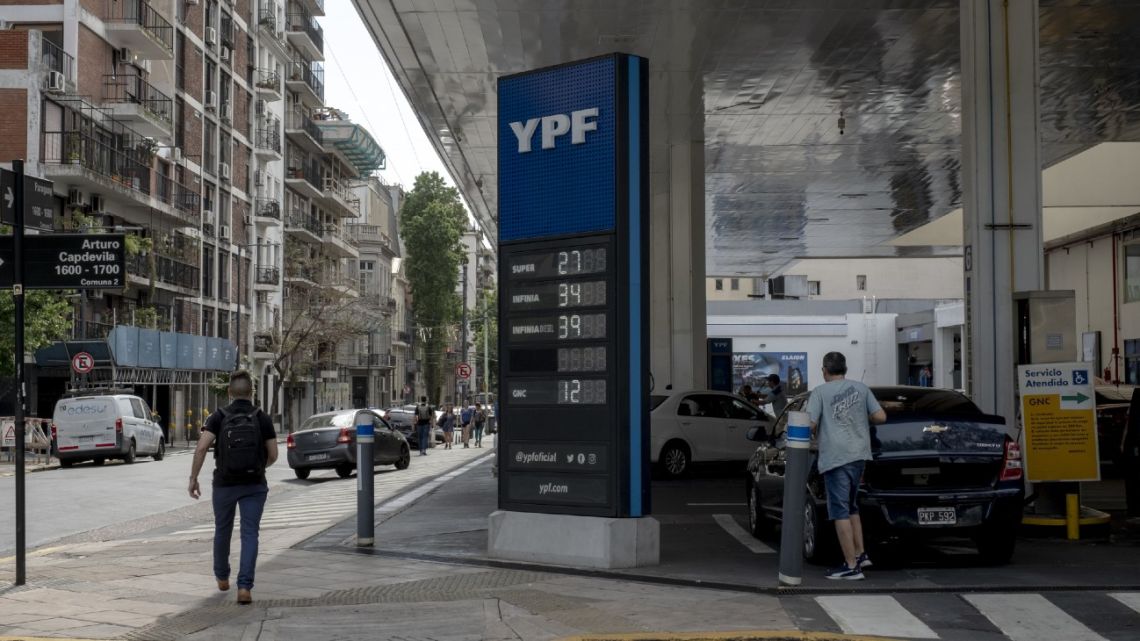
Horacio Marín, the head of Argentina’s state-controlled oil company YPF, says the firm will not alter domestic fuel prices despite the recent surge in global crude oil costs triggered by the conflict in the Middle East.
Marín, who serves as president and chief executive officer of the company, said YPF intends to avoid sudden price shocks for motorists even as international energy markets remain volatile.
“Given the uncertainty generated by fluctuations in the international price of oil, I think it is important to reaffirm our position,” Marín wrote in a post on the social media platform X.
“YPF will not generate shocks in fuel prices. We are acting prudently and honouring our honest commitment to consumers,” the company chief said.

YPF, which dominates the domestic fuel market and operates the country’s largest network of service stations, often acts as a price setter for the wider industry. Changes by the company influence pricing decisions by its private competitors.
According to Marín, the firm is working with a “micropricing” strategy that evaluates prices continuously rather than making large adjustments in response to sudden movements in global crude markets.
The approach involves analysing prices “day by day, week by week” using a moving average system that allows the company to smooth out spikes and drops in international oil prices.

This mechanism, he said, enables the company to “soften peaks in increases and decreases, giving consumers greater predictability and a more stable price.”
“The volatility and uncertainty do not generate real value, only short-term speculation,” Marín added. “What we are seeking is reliability over time.”
Global oil prices have risen sharply in recent days amid the escalating conflict in the Middle East, raising concerns about supply disruptions and increases in fuel costs. Prices exceeded US$100 a barrel on Monday – the highest level since 2022.

President Javier Milei, speaking in an interview Monday, said the Middle East crisis could lead to "improvements" in Argentina's oil and agricultural exports.
Argentina, "in this context, will see an improvement in its terms of trade because oil prices are rising [and] Argentina is a net exporter," Milei told domestic radio station FM NOW.
– TIMES/AFP/NA














Comments