

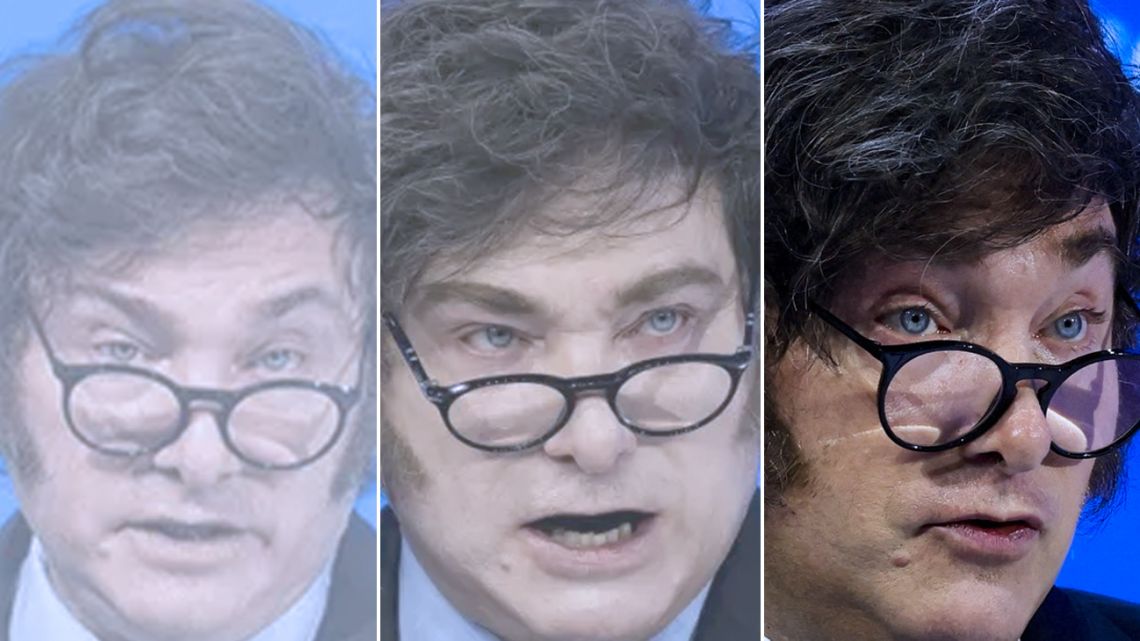
President Javier Milei has said more than once that he might be mad but no idiot with his speech to the World Economic Forum in Davos last Wednesday a case in point. Milei is no fool and fully realised that he had no margin for repeating previous rampages against woke on a broad front assailing some of the most basic tenets of Western liberal democracy as well as sensitive gender issues just when the European Parliament was debating the approval of the Mercosur-European Union free trade agreement which he himself had enthusiastically signed only the previous weekend – “Mercosur’s greatest achievement since its creation.” This gave him little choice but to turn his speech from a bang into a whimper – preaching to the converted in the form of praising the virtues of Western capitalism to an audience of the world’s rich and powerful might seem redundant to the point of being bland, turning the roaring libertarian lion into a pussy cat, but it was the lesser evil.
José Ortega y Gasset’s famous phrase of “a man and his circumstances” applies to Milei as much as anybody else in the face he presents to the world – Argentina’s foreign policy is exclusively defined as automatic alignment with the United States but whatever the personal empathy with Donald Trump (which is not as strong as officially projected), the two leaders find themselves in very different contexts. Even the aggressive Trump seems to be having moments of pause before wrecking a trade with the European Union topping a trillion dollars but how much less can Milei afford to take on a world he needs to fulfil Argentina’s economic potential – all the trade and investment he can find beyond the superpower, ranging from Canadian mining companies to resorting to Spanish, German and even Chinese banks to make this month’s foreign debt payments.
These differing contexts undermine the notion of the two leaders as ideological soulmates. “To me, the most beautiful word in the dictionary is tariff and it’s my favourite word,” a protectionist Trump has repeatedly said (the first known time over a decade ago) while Milei both preaches and practises free trade. Milei’s Davos speech blasted state intervention, regaling his audience with his anarcho-capitalist creed: “Regulation kills growth,” whereas Trump is endeavouring to steamroller the Federal Reserve into lowering interest rates to more electorally attractive levels at the risk of an inflation which Milei has been staunchly battling here at the cost of much else (with much success, thanks in part to Chinese imports).
Milei has gone to great pains to be on the same page as Trump over his Venezuelan venture at the start of this month but there are certain signs of strain even there. Whereas the White House has confirmed the invitation of Venezuelan caretaker president Delcy Rodríguez, although a date has yet to be set, Milei in Davos described the Caracas régime last Wednesday as “a bloodthirsty narco-dictatorship whose terrorist tentacles have extended all across our continent.” Argentina is also quietly disappointed that the Border Guard corporal Nahuel Gallo does not seem to be given any priority in the release of prisoners despite the intensely loyal alignment with Washington. There are also fears that Trump’s drive to fast-track Venezuelan oil production in order to bring down US petrol prices to electorally attractive levels (like the interest rates) might further blunt Chevron’s interest in accelerating investment into Vaca Muerta shale.

In short, both leaders feel obliged to place national interest first and foremost, which sometimes places them on divergent paths, but Milei has every wish and need to humour Washington as much as or more than the rest of the world – he has thus agreed to join the Board of Peace (with Trump as its omnipotent president) despite it being widely seen as a clumsy bid to replace the United Nations, even if less than a fortnight previously Milei strongly endorsed the candidacy of Rafael Grossi, head of the International Atomic Energy Agency, to be the next UN secretary-general.
Milei’s three Davos speeches have had the common denominator of also being addressed to home audiences and Wednesday’s concessions to the World Economic Forum’s motto of the “spirit of dialogue” perhaps also reflect a new domestic political context following last October’s midterm triumph. Instead of tilting at windmills and ruling by decree with tiny parliamentary minorities, Milei now has the strength to secure majorities for his legislation with relatively modest doses of moderation – let us see how this year unfolds in Congress.








Comments