

The name “Iran” appears only three times in a report on the US National Security Strategy released by the White House at the end of last year. It is mentioned in a list of eight conflicts that have ended, according to the document, in “an unprecedented peace” – which is credited to Donald Trump’s “negotiating capacity”. Among them is the Iran-Israel conflict. Iran is also mentioned when it is stated that previous military operations carried out by Israel and the United States in June 2025 “significantly degraded” Iran’s nuclear programme.
Only a few months ago, there seemed to be nothing to worry about in Washington when it came to the capabilities of Iran’s nuclear programme. But things changed dramatically on Saturday, February 28: the United States and Israel launched a new military operation against targets within Iran’s nuclear and military complex and against the country’s highest authorities. The initiative, US Secretary of State Marco Rubio acknowledged, came from Israel. The attack claimed the life of Iran’s Supreme Leader Ali Khamenei.
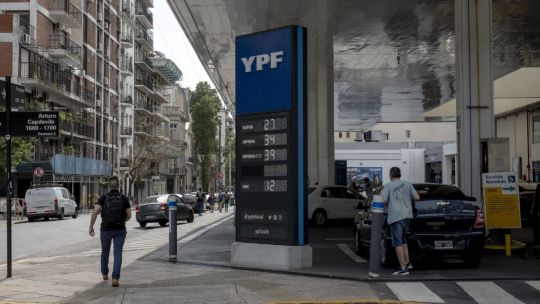
We are now entering a third week of war in the Middle East and are now in uncertain territory. Khamenei has been replaced by his son, Mojtaba, as the political and spiritual leader of the Iranians. The United States is investigating whether, as everything suggests, a Tomahawk missile fired by its Navy struck a girls’ school in southern Tehran, leaving 168 dead. Markets began to show signs of concern early yesterday in Asia and, as feared, oil prices continued to climb, surpassing US$100 per barrel, with repercussions for the global economy.
Amid this turbulent scenario, Trump sought to reassure the public and told the CBS network that the war was “virtually over,” marking the beginning of a series of contradictory statements about the end of the conflict. Markets chose to respond in line with Trump’s optimistic declaration and closed higher.

Among the several statements the US president made during a press conference in Florida, one is particularly relevant: his remarks regarding Iran’s attacks against countries such as Saudi Arabia, the United Arab Emirates and Qatar – neighbours of Iran and key players in the region’s fragile balance of power. The tycoon described the Iranian regime’s aggression against nations that are “mostly neutral,” or “at least were not going to get involved” in the conflict as “very foolish, stupid.” These are countries that, although they have hosted US military bases for years, had shown no intention of committing themselves to the war.
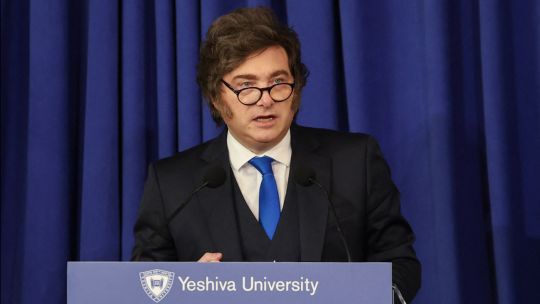
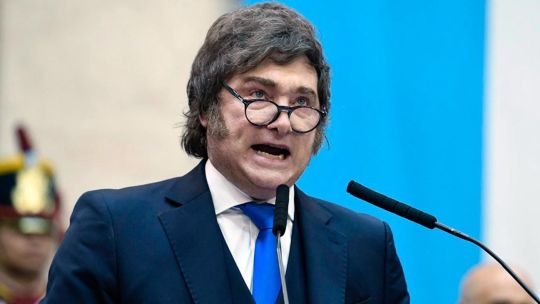
Trump’s clarification leads us to consider the remarks made by President Milei at a Jewish academic institution in New York this week. Before an audience of around 500 Orthodox Jewish students gathered at Yeshiva University, Milei spoke about the war in the Middle East and did not hesitate to declare: “We are going to win.” It was the main headline for newspapers throughout Argentina.
The President of the Nation bears ultimate responsibility for Argentina’s foreign policy. In making decisions he is supported by a permanent corps of diplomatic officials belonging to the Argentine Foreign Service, whose task is to represent and defend the country’s interests. The Foreign Ministry is its highest authority.

Milei has been in the United States since last Saturday. While in Florida he attended a meeting with presidents of Latin American countries aligned with Trump’s administration, among which Argentina stands out as the largest economy present (it is the third-largest in the region, behind Brazil and Mexico). On Tuesday, the President opened Argentina Week in New York, a roadshow aimed at attracting investment and promoting trade, organised by the US Embassy in Washington.
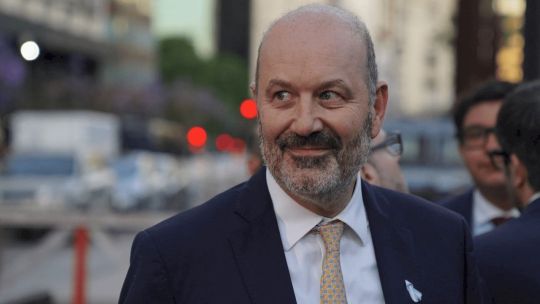
Milei is accompanied on the trip by half of his government. Foreign Minister Pablo Quirno is present – an economist who previously served as head of the Treasury Secretariat before taking up control of the ministry. His background as an economist does not exempt him from his responsibility in conducting foreign relations, much less from the duty of advising the President accurately. Quirno comes from a patrician family and is, through his mother’s line, a descendant of Carlos María de Alvear, an independence hero who served a long diplomatic career.
Domingo Cavallo was also an economist when, as foreign minister in September 1990, he announced the dispatch of Argentine naval vessels to the Persian Gulf as part of an international coalition led by Washington that liberated Kuwait following the invasion by Saddam Hussein’s Iraq. Carlos Menem was president at the time, and it was the first significant manifestation of what would later be called “carnal relations” – an expression that history attributes to the memorable Guido Di Tella but which was in fact coined by the international relations theorist Carlos Escudé.

We all know how that story ended.
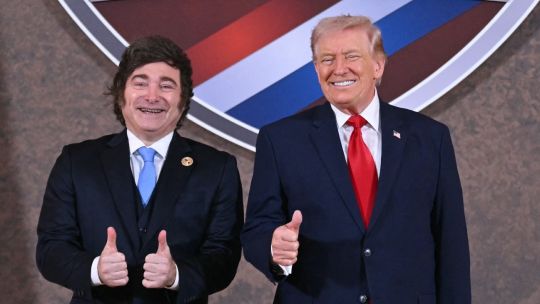
From the beginning of his administration, Milei established a “strategic alliance” with the United States and Israel. That “alliance” has gradually taken on other implications with regard to the situation in the Middle East.
During last year’s conflict in that region, the President described Iran as “an enemy of Argentina,” holding the Persian theocracy responsible for the attacks on the Israeli Embassy in 1992 and on the AMIA Jewish community centre in 1994, as concluded by the Argentine courts. On Monday, at Yeshiva University, the President repeated that characterisation – but went a step further: when Milei says “we are going to win,” he seems to assume that Argentina is at war with Iran.

Because of his affinity with Trump and Israeli Prime Minister Benjamin Netanyahu, has Milei declared a war of a personal nature? Or has he decided that Argentina itself is at war?
We know that the President moves with a security apparatus that surpasses anything previously seen in the country. That seems appropriate. But are the conditions in Argentina such that Milei can engage in this kind of reckless ideological display?





Comments