

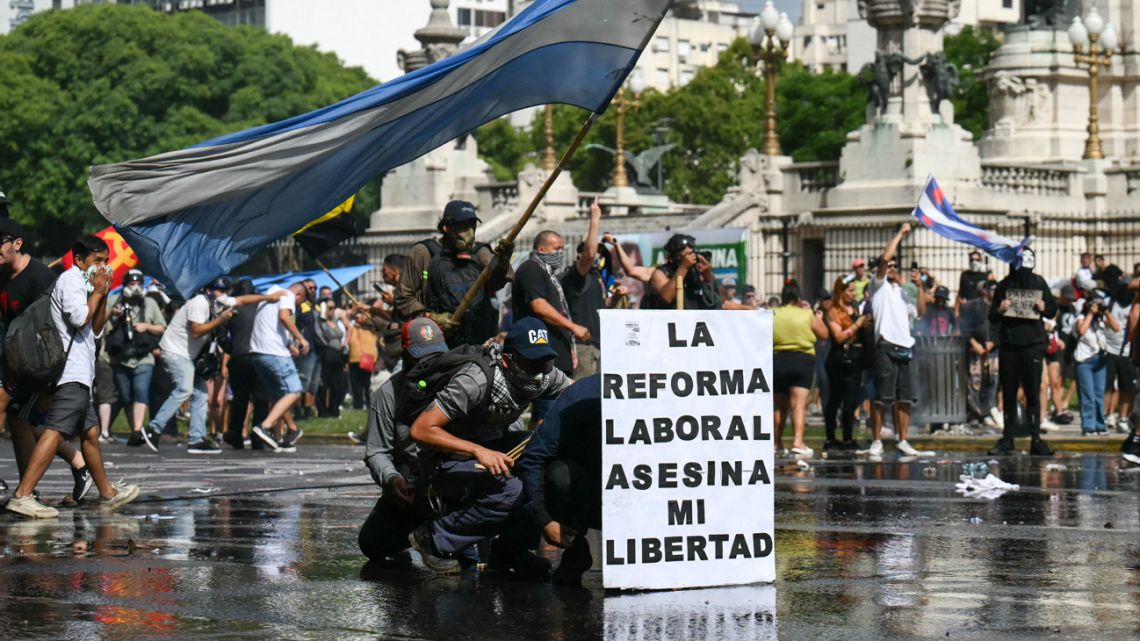
Argentina has moved closer to approving controversial labour reforms that on Wednesday triggered clashes between workers and police in the streets outside Congress.
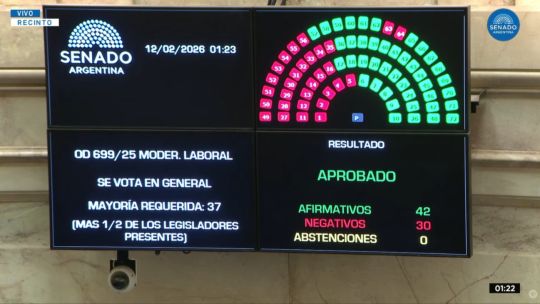
The labour law reform package, a key project of President Javier Milei’s government, cleared the upper house and will now be sent for review by deputies, who can still review the text.
Milei’s main bill would make it easier to hire and fire workers, reduce severance pay, limit the right to strike and restrict holiday rights.
Critics say the move will make jobs more precarious in a country where almost 40 percent of workers lack formal employment contracts. The CGT, Argentina’s main labour federation, has called the reforms “regressive.”

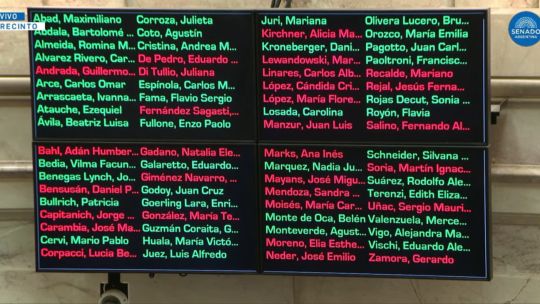
Argentina’s Senate voted 42-30 early Thursday morning to pass the reform, which will now head to the lower house Chamber of Deputies for approval.
Milei’s government allowed around 30 amendments to its original bill in order to ensure its swift passage.
The approval, granted during extraordinary sessions called by Milei, came a day after demonstrators in the capital hurled stones and bottle bombs at police and security forces, who responded with tear gas and rubber bullets.

Representatives of social organisations, political parties and unions protested Wednesday afternoon with signs reading: "Stop Milei's labour reform."
A few dozen people, many hooded and masked, clashed with police blocking access to Congress, as lawmakers inside the building debated the plans.
Reporters witnessed injuries to one police officer and one protester, though an official toll has yet to be made public. Media at the scene estimated that at least 20 people were arrested.

"They started repressing us," said Ernesto Pasarín, his eyes watering from the tear gas. "Labour reform doesn't mean the creation of jobs, but rather more precarious ones."
Some individuals broke off bits of pavement and threw stones at the police. At least four garbage containers were set on fire in the vicinity of Congress.
Milei has insisted that existing labour laws are too restrictive and discourage formal hiring. He wants the reforms adopted by March, when normal sessions of Congress are set to begin.

"Today we are here to decide whether we remain trapped in a statist, corporate and patronage-based system that has driven away investment, destroyed jobs and impoverished millions of Argentines," said Joaquin Benegas Lynch, a ruling party senator, during Wednesday's debate.
For protester Federico Pereira, a 35-year-old sociologist on the streets outside, "with this exploitative labour reform, they are only thinking about the wealthy.”
“Those who benefit are the bosses,” said the demonstrator.

The law "will not generate employment, it will not generate investment as long as the economic plan remains," said opposition Peronist Senator José Mayans at the close of the debate.
Senator Patricia Bullrich, the main backer of the law and a member of Milei’s ruling party, said that the law seeks to "simplify" working life in the country and allow new generations to "live with dignity and a future."
Since taking office in December 2023 with a plan to revitalise Argentina's struggling economy, Milei has slashed government spending and spurred deregulation.

Opposition parties and unions dispute that the reforms will create new jobs. They point out that the economy shows persistent signs of stagnation, marked by declining consumption and industrial activity.
Security Minister Alejandra Monteoliva vowed that those responsible for Wednesday's violence "will be identified" and punished appropriately.
"They are dozens of members of leftist groups who acted in an organised manner, with premeditated violence and improvised weapons to... sow chaos. They will pay," she said in a post on X.











Comments