

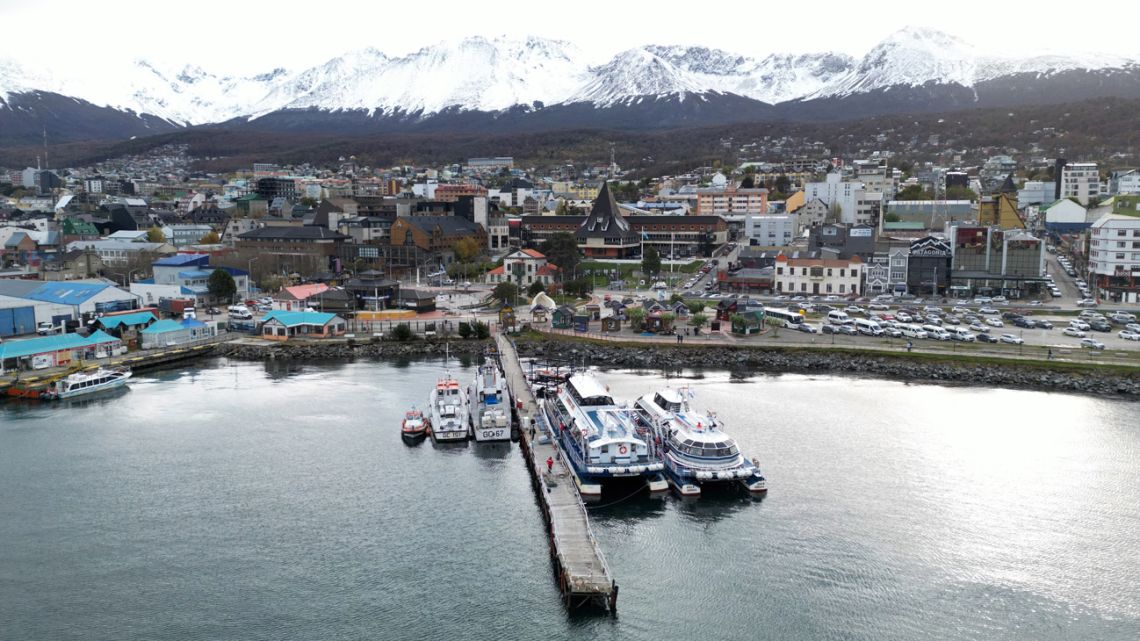
A team of scientists will travel to the southern port city of Ushuaia next week to determine whether hantavirus is present there, national health authorities have confirmed.
The MV Hondius cruise ship, where a rare hantavirus outbreak on board killed three people and triggered an international health scare, set sail from Ushuaia on April 1.
Local health authorities have voiced doubt about the idea that passengers were infected in Ushuaia based on the virus's incubation period, among other factors.
Tierra del Fuego provincial health official Juan Petrina on Thursday confirmed that a team of scientists from Argentina's leading epidemiological institute would travel to Ushuaia next week to determine whether or not hantavirus is present there.

"The results should be ready within four weeks," he told reporters.
Scientists from the ANLIS-Malbrán Institute in Buenos Aires, xxxx, will work alongside provincial specialists in the field to collect samples, which will then be sent to laboratories for examination.
Hantavirus typically spreads through the urine, faeces and saliva of infected rodents. There are no vaccines or specific treatments for the rare respiratory disease.

While Tierra del Fuego, the province where Ushuaia is located, has never recorded a case, hantavirus is endemic in other regions of Argentina.
"The epidemiological situation in the area hasn't changed much. We haven't had any cases, and it has already been 45 days since the vessel set sail," said Petrina.
The World Health Organization (WHO) believes the first infection occurred before the start of the cruise ship's voyage, followed by transmission between humans on board the vessel.

To date, it has not been possible to determine the time or place of the initial infection among the ship’s passengers.
In the southern regions of Argentina and Chile, the rodent that serves as the reservoir for the Andes strain of the virus is the long-tailed pygmy rice rat (Oligoryzomys longicaudatus), known locally as the “colilargo.”
This strain has been identified as responsible for the infections on the cruise ship.
– TIMES/AFP
related news

IMF says it will approve review of Argentina’s programme next week

Soaring household defaults rock Argentina’s banks and fintechs
Health body investigating hantavirus hit by fresh Milei budget cuts












Comments