

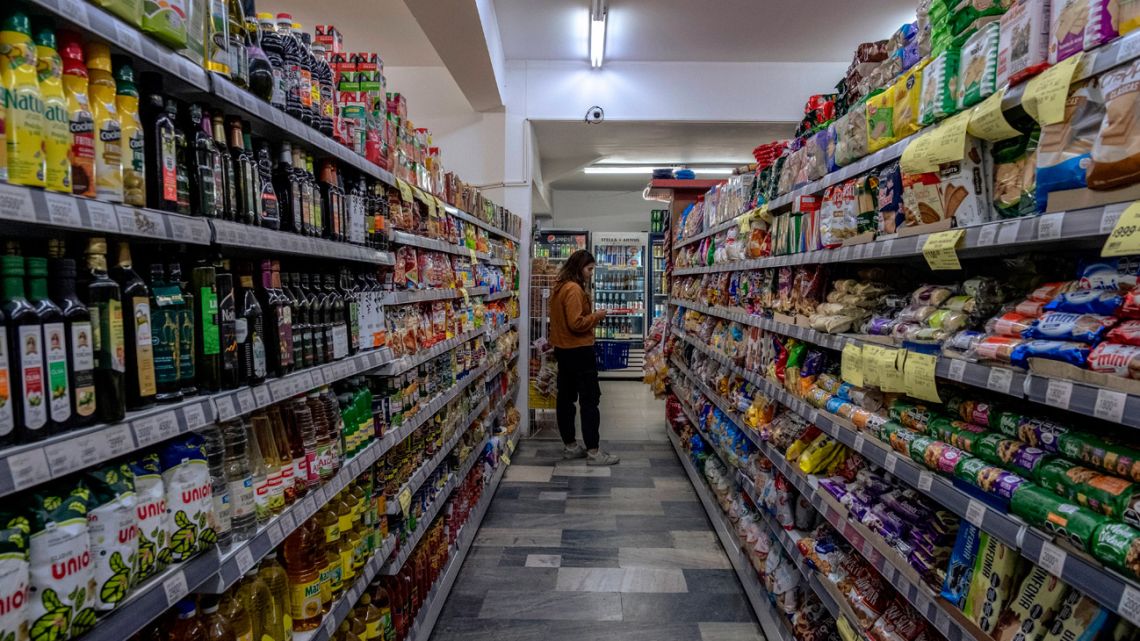
Argentina’s monthly and annual inflation readings both came in higher than expected in February before the war in Iran put upward pressure on oil prices.
Consumer prices rose 2.9 percent last month compared with January, above the 2.8 percent median estimate of economists surveyed by Bloomberg and unchanged from January’s 2.9 percent print. From a year ago, inflation accelerated to 33.1 percent from 32.4 percent and above the 32.9 percent median estimate, according to data published Thursday by the INDEC national statistics bureau.
Food and non-alcoholic beverages, driven by beef, contributed the most to last month’s price increases, while housing and utilities rose the most, according to INDEC.
In February, the government of President Javier Milei continued to strip energy subsidies to help maintain fiscal balance, the main tenet of his economic turnaround. State coffers have suffered a roughly nine percent year-on-year drop in revenues due to lower tax revenue. Meanwhile, electricity prices were expected to rise 3.6 percent, while gas jumped 17 percent, according to a late January announcement from the national energy secretary.
The inflation rate in March is likely to edge higher as a result of the fallout from the United States and Israeli attacks on Iran, especially creeping gasoline and diesel prices and higher costs for fertilisers. So far this month, local fuel prices have jumped about six percent, according to local consultancy firm EcoGo. But that’s attributed to a roughly one percent monthly fuel tax increase plus price adjustments to account for January and February inflation, according to EcoGo’s Sebastián Menescaldi.

Menescaldi estimates that March’s inflation rate will come in at 2.9 percent, with 0.3 percent of the rise driven by higher international oil prices.
State-owned YPF controls just over half the motor fuels market, and CEO Horacio Marín promised earlier this month that the company will avoid generating shocks at the pump. In a March 1 note to investors, Citigroup analysts forecast an annual inflationary impact of 0.9 percent in Argentina from the conflict, while Barclays on March 6 predicted a 0.8 percent inflation bump.
Just before January’s inflation print was published, the government’s statistics agency chief resigned over disagreements about when to implement an updated formula to measure the rate of rising consumer prices. The change was shelved indefinitely. Services, like utilities and rent, would have weighed more heavily in the new formula, while food would have had a smaller impact.

Economy Minister Luis Caputo has argued that changing the methodology now would be viewed negatively by the public.
Milei has struggled in his bid to continue slowing monthly inflation since hitting a two-percent average from last year’s second quarter. The key economic indicator has cooled from a peak of more than 25 percent when the libertarian economist took office in late 2023.
“The rapid disinflation observed in core goods through the first two years of the macro stabilisation programme relates to the administration’s strong emphasis on opening the economy and reducing import taxes; meanwhile, core services, less affected by the exchange rate and more by wage dynamics, has proved stickier to the downside,” JPMorgan analyst Lucila Barbeito wrote in a February 26 note.

Inflation is still expected to cool this year, albeit at a slower pace. Economists surveyed by the Central Bank in February forecast 26 percent annual inflation by the end of the year and growth of 3.4 percent in 2026.












Comments