

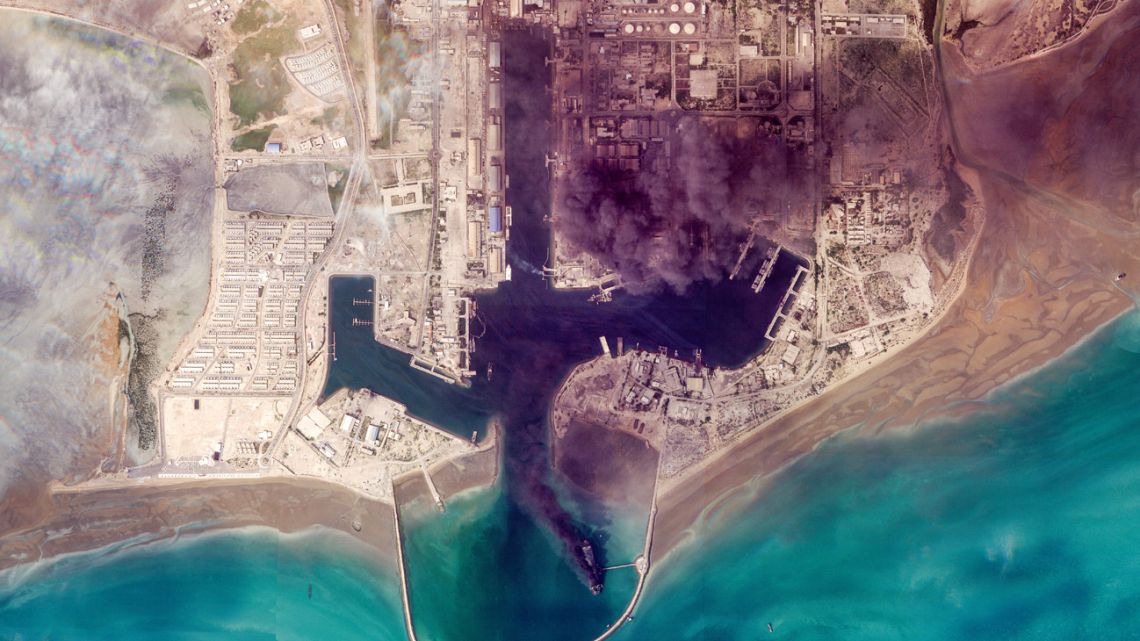
The war in the Middle East is causing what the International Energy Agency (IEA) said Thursday is the largest supply disruption in the history of the global oil market.
Iran’s chokehold on regional energy flows is forcing Gulf producers to slash output, removing about 7.5 percent of global supply and a far larger share of exports, the agency said.
The immediate shock has been the near-total closure of the Strait of Hormuz, one of the world’s most important energy corridors. About 20 million barrels of crude and petroleum products passed through the waterway each day last year, but flows are now down more than 90 percent, according to the IEA.
The agency estimates the conflict will cut global oil supply by eight million barrels a day this month, or nearly 250 million barrels in total.

The disruption has overshadowed a record release of emergency reserves. On Wednesday the IEA said its 32 member countries agreed to unlock 400 million barrels of oil, the largest coordinated release in its history.
Saudi Arabia, Iraq, Kuwait and the United Arab Emirates have all had to curb production as shipping through Hormuz has ground to a halt. While some volumes can be diverted through alternative pipelines and ports, the closure has forced Gulf producers to collectively shut roughly 10 million barrels a day of output.
There have also been attacks on commercial shipping since the war began. Two crude tankers were struck in Iraqi waters and Oman temporarily evacuated the key export terminal at Mina Al Fahal.

Higher output from producers outside the Organisation of the Petroleum Exporting Countries and its allies, along with increases from OPEC+ members Kazakhstan and Russia, is helping soften the impact, the IEA said.
The price surge and economic uncertainty are also dampening demand. The agency cut its forecast for global oil consumption growth this year by about 25 percent to 640,000 barrels a day.
Brent crude briefly rose above US$100 in early trading Thursday before trimming gains. Prices are up around 60 percent this year.

The war began on February 28 when the United States and Israel launched air strikes on Iran that killed Supreme Leader Ali Khamenei, prompting Tehran to retaliate with missiles and drones across the Gulf.
In his first message since his appointment, Iran's new supreme leader Ayatollah Mojtaba Khamenei said on Thursday that his country's forces must keep the Strait of Hormuz closed.
"The lever of blocking the Strait of Hormuz must definitely be used," Khamenei said of the strategic waterway through which vast amounts of oil and gas are usually shipped, in a statement read on state television.

Iran’s President Masoud Pezeshkian said Tehran would only consider a ceasefire if it receives “firm international guarantees against future aggression” and reparations. Writing on X on Wednesday after speaking with the leaders of Russia and Pakistan, he said Iran fears Israel could strike again once the war ends.
US and Israeli officials say the conflict could continue for weeks. Israeli Defence Minister Israel Katz said operations would continue until “victory is achieved”.
US President Donald Trump has sent mixed signals, saying there was “practically nothing left to target” in Iran but also suggesting Washington should not end the campaign too soon.

“We don’t want to leave early, right?” he told supporters during a speech in Kentucky.
About 2,500 people have been killed across the region since the war began, according to official figures and non-government estimates. At least 1,825 of the dead are in Iran, according to the Human Rights Activists News Agency.
Seven US service members have also been killed, most of them during the first two days of fighting. In Lebanon, Israeli strikes that began on March 2 have killed at least 634 people, the country’s state-run National News Agency said.
– TIMES/BLOOMBERG/AFP












Comments