


French oil and gas giant TotalEnergies will invest nearly US$10 billion in the coming years to expand its operations in Argentina, the firm’s chairman and chief executive, Patrick Pouyanné, announced on Thursday.
Pouyanné, who said the investment would be focused on the Vaca Muerta shale formation and offshore projects, made the announcement during the President Javier Milei’s visit to Paris for the latest edition of the ‘Argentina Week’ investment roadshow.
"I am happy to announce that we have close to US$10 billion of investments ahead of us in Argentina," he said at the event.
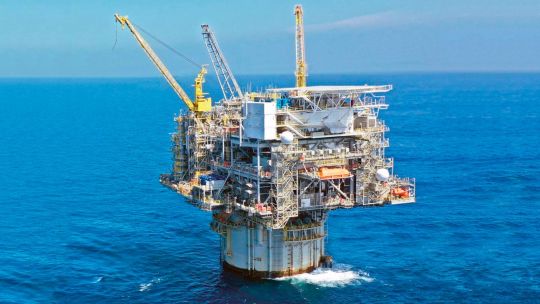
Pouyanné met Milei beforehand to discuss the company's plans, including a US$1.5-billion offshore development in Tierra del Fuego Province.

The pair agreed to name the development ‘Alberdi,’ in honour of Juan Bautista Alberdi, one of the architects of Argentina's 1853 Constitution and one of Milei’s political idols.
Most of the investment will go towards operations in Neuquén Province, northern Patagonia, where it has shale gas operations.
"The good news for the world, not only for Argentina, is that we can now not only produce shale gas at Neuquén but also shale oil," said Pouyanné.

TotalEnergies plans to increase gas production at its Aguada Pichana project and develop the San Roque oil field in the Vaca Muerta formation, with the latter potentially requiring around US$5 billion in investment.
Pouyanné said the company had already invested almost US$6 billion in Neuquén over the past decade and aimed to raise gas production to 16 million cubic metres per day.
TotalEnergies is currently Argentina's largest natural gas producer, accounting for around a quarter of domestic supply, according to Pouyanné.

He said the company also wanted to keep developing wind power in Argentina.
On Monday, the group announced it wanted to increase its annual production of gas and oil by two to three percent between 2030 and 2035.
The chief executive credited Milei for unlocking new investment, noting steps to allow companies to repatriate dividends and tax and regulatory benefits offered under the RIGI investment incentive scheme.
– TIMES/AFP
















Comments