

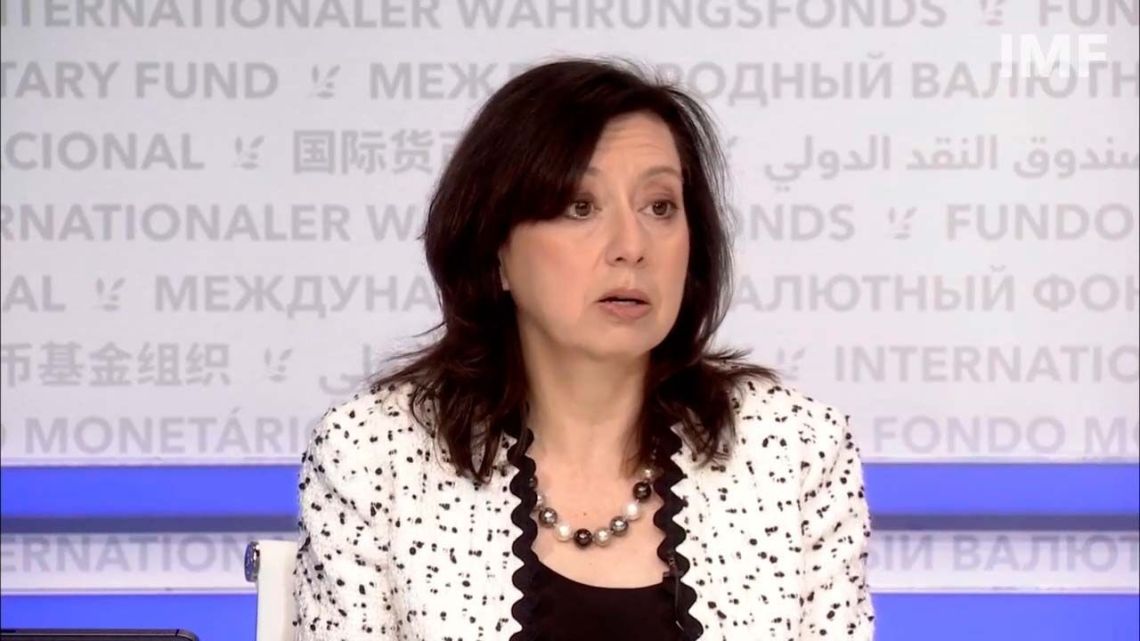
Argentina should continue its efforts to stabilise the economy and promote growth, but the benefits must be extended to workers as well, International Monetary Fund spokesperson Julie Kozack said on Thursday.
Kozack said Argentina had made “significant progress in restoring macroeconomic stability in a very challenging environment.”
The official highlighted a sharp decline in inflation, stronger external reserves, greater fiscal discipline and progress towards a fiscal surplus, describing these achievements as an important foundation for sustainable growth.
A technical mission led by IMF official Joyce Wong concluded its work on the third review of Argentina’s programme on Tuesday, following meetings in Buenos Aires that ran from September 21 to 29, Kozack confirmed.

Argentina, the Fund’s largest debtor, agreed a fresh US$20-billion, four-year lending programme with the institution in 2025. IMF technicians have already carried out two reviews of its implementation.
“Discussions are continuing, and will continue in the coming weeks” with the aim of reaching a staff-level agreement for the third review, the spokesperson added.
The next step is the preparation of a staff report for consideration by the IMF’s Executive Board. Approval would pave the way for a further disbursement of around $900 million.

Kozack declined to comment on the outcome of the latest quarterly review.
“There is a joint recognition between the IMF and Argentina that the work to strengthen Argentina’s resilience needs to continue,” Kozack said.
The dialogue will also focus on how to broaden the economic recovery, with growth so far concentrated in a handful of sectors.

“It is important to ensure that growth, which has been focused in energy, mining and agricultural sectors, broadens and becomes more evenly distributed across sectors in the economy,” she said.
The IMF forecasts that Argentina’s economy will grow by 3.5 percent in 2026.
Kozack said much of the focus of the discussions was on how Argentina could “consolidate the gains from the stabilisation that has been achieved and broaden those gains across the economy.”

She said this would require greater investment to support durable economic growth, job creation and better opportunities for Argentines.
The IMF maintains that Argentina has made significant progress in restoring macroeconomic stability.
Milei has achieved a fiscal surplus and reduced annual inflation from triple-digit levels when he took office in December 2023 to an annual 33.5 percent currently.

However, poverty and extreme poverty rose again in the first half of 2026 after two years of declines. Critics of the Milei government point to the closure of around 30,000 companies since the President took office.
– TIMES/AFP/NA












Comments