


The modern world stands at an inflection point. Nations today are confronted not merely by conventional security threats, but by an ideology of terror that recognises no borders, no faith, and no humanity. From South Asia to Latin America, from Europe to the Middle East, terrorism has left behind shattered families, wounded societies and scarred national memories. It is therefore imperative that democracies speak in one voice and act with moral clarity against this menace.
For decades, India has endured the pain of cross-border terrorism, from Mumbai to Pulwama, from Parliament to Pahalgam. The 2025 barbaric attack in Pahalgam, in which innocent civilians were murdered after being identified by religion, was not merely an assault on India’s sovereignty; it was an attack on the ideals of pluralism, coexistence and humanity itself.
In response, India launched Operation SINDOOR, a calibrated and precise operation directed exclusively at terrorist infrastructure responsible for orchestrating violence against Indian citizens. India did not target civilians. India did not seek escalation. India’s actions were directed solely against terrorist infrastructure that had for long operated with impunity across the border.
The Indian Armed Forces acted with professionalism and precision, targeting identified terror infrastructure while consciously avoiding civilian harm. The operation was conceived as a calibrated, intelligence-led response. Official briefings made it unequivocally clear that the objective was limited to dismantling terror camps and launchpads while exercising restraint to avoid collateral damage. India’s position was also transparent before the international community: the response was focused, non

escalatory and intended to neutralise terror capabilities, not to inflict suffering on ordinary people.
India’s conduct reflects the ethos of a responsible democracy. Even amidst provocation, operational ethics remained central. The targets were terrorist facilities and command centres associated with internationally proscribed organisations. Civilian areas and non-combatants were deliberately avoided. This distinction is vital, because in the global discourse on counter-terrorism, democracies must continue to uphold the principles of proportionality, precision and accountability.
Unfortunately, the world has too often oscillated between outrage after terror attacks and indifference once headlines fade. No nation should be expected to absorb repeated acts of terror while exercising infinite restraint. Terrorism cannot be justified, contextualised or romanticised under any political pretext. The international community must decisively reject the dangerous tendency to separate terrorists from

those who shelter, finance or encourage them. Today there is an urgency of our shared responsibility to combat terrorism in all its forms and manifestations.
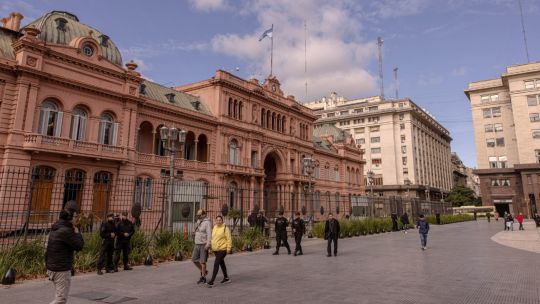
Argentina understands this reality deeply. The Argentine people carry painful memories of the 1992 bombing of the Israeli Embassy in Buenos Aires and the 1994 attack on the AMIA Jewish community centre. Those barbaric attacks were not merely assaults on Argentina; they were attacks on humanity itself. They left an enduring lesson that terrorism respects neither geography nor ideology. India empathises profoundly with Argentina’s suffering because India too has endured decades of cross border terrorism directed against its citizens.
Today, India and Argentina are united not only by expanding strategic ties and democratic values, but also by a shared conviction that terrorism must never be normalised, excused, or selectively condemned. I’m glad to note that Argentina condemned the Pahalgam’s barbaric terrorist attack immediately. During his visit to Argentina our Hon’ble Prime Minister Narendra Modi thanked His Excellency President Javier Milei for this gesture. The international community cannot afford ambiguity when confronting ideologies of hatred and violence. Both countries recognise that international cooperation and firm political resolve are indispensable to defeating the terrorism.

The larger issue before the world today is whether nations will collectively confront terrorism with consistency and conviction, or whether geopolitical calculations will continue to dilute accountability. Democracies cannot afford ambiguity. Every time terrorism is tolerated, ignored or strategically exploited, global peace becomes more fragile.
India’s message is simple and principled. A nation has the sovereign right and solemn duty to protect its citizens against terrorism. At the same time, such action must remain anchored in international law and humanitarian responsibility. Operation SINDOOR demonstrated that it is possible to be firm without being reckless, decisive without being indiscriminate.
India and Argentina, despite being separated by oceans and continents, are united by democratic values and by the shared conviction that terrorism is an assault on civilisation itself. In this common struggle, silence is not neutrality; it is acquiescence. The world must therefore stand united, not merely in condemning terrorism after tragedies occur, but in ensuring that terror networks, infrastructures and their sponsors find no sanctuary anywhere.

For humanity to prevail, terrorism must cease to be tolerated as an instrument of policy. The time has come for the international community to throw terrorism to the winds, once and for all.
by Ajaneesh Kumar, Ambassador of India to Argentina and Uruguay












Comments