

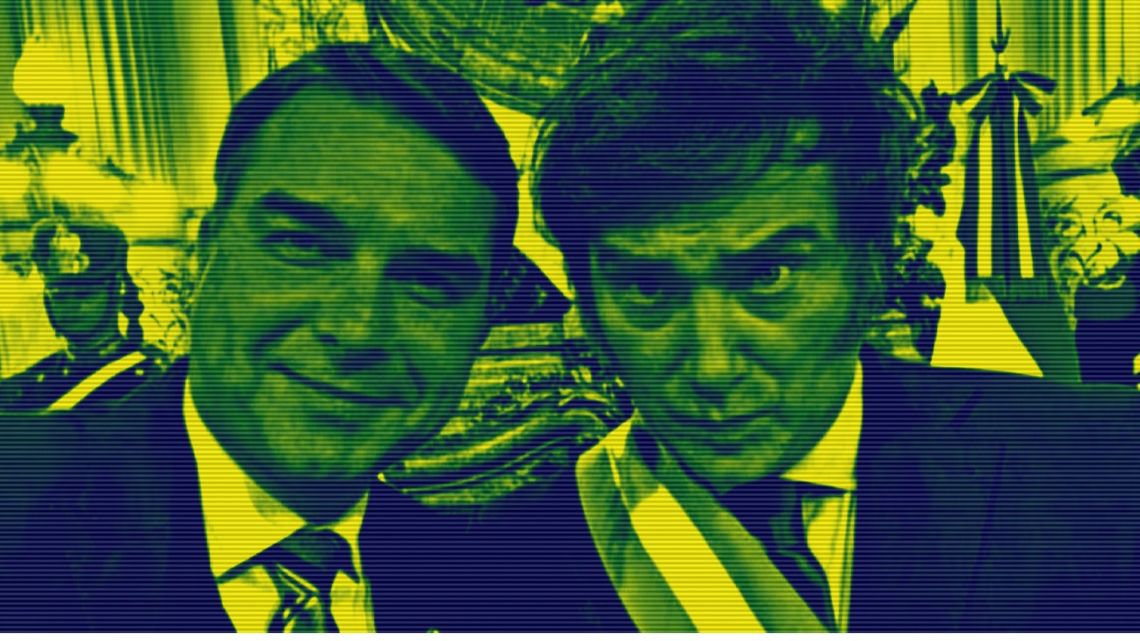
Luiz Inácio Lula da Silva's defeat and Flávio Bolsonaro's victory in the first round of Brazil’s presidential election were closely observed by Argentina’s political establishment. Naturally, they interpreted them in their own particular way, selecting whichever aspects suited them for their reading, at least in public.
Such convenient partial views seem inspired by the famous Choose Your Own Adventure children’s book series from the 1980s, in which readers could change the characters and the course of the story. Adapted to domestic electoral expectations looking ahead to 2027, government supporters and opponents alike are trying to seize on the signs from Brazil’s election to bolster their own strategies, whether out of conviction or necessity.
Javier Milei's government, for its part, prefers to focus on the fact that the candidate backed by the President won. He was the only Latin American leader to travel to Brazil during the campaign to publicly support Flávio. That visit, in July, included attacks on Lula that strained diplomatic relations between the two countries.
It remains to be seen whether the October 25 run-off is merely confirmation of Bolsonaro’s victory, there is no doubt in libertarian circles that the ideological current is advancing to the right again in South America, under Milei’s leadership, obviously.

Such self-perception goes beyond the President’s traditional megalomania. It's also a way of showing US President Donald Trump how well represented he now is in its strengthened “backyard,” with a record number of right-wing governments that are close to Washington. Trump also backed Bolsonaro ahead of the election.
Peronism – or, more accurately, Kirchnerism – preferred to focus on the fact that Brazil was yet another defeat for an incumbent government, even if that government belongs to a friend, Lula. With the exceptions of Ecuador and Paraguay, it has become commonplace in recent years for opposition candidates to defeat incumbents in presidential elections in South America.
The 'K' camp is clinging to another detail from Sunday’s vote. The winner of the election was hand-picked to run as a candidate by his father, jailed former president Jair Bolsonaro, who is serving a prison sentence and is barred from standing. To put it politely, the expectation within Cristina Fernández de Kirchner's camp sounds somewhat forced, but some political figures have highlighted it. Perhaps they are simply trying to stay on the right side of the boss, or her son Máximo, the leader of La Cámpora, while also continuing to take aim at Buenos Aires Province Governor Axel Kicillof.

Government supporters and opponents agreed on one thing: they applauded the high degree of polarisation in the Brazilian election, with Bolsonaro and Lula accounting for 92 percent of votes cast. Libertarians and Peronists are united in favour of a strategy based on opposing poles, putting up options that leave little room for other alternatives.
There's also room for another tacit agreement. As so often happens nowadays, Sunday’s results in Brazil were not be predicted by opinion polls. Here in Argentina, this kind of miscalculation – accidental or otherwise – has become commonplace. Despite everything, there is still demand for it, both in politics and the media. A sort of campaign adaptation of Choose Your Own Poll. And so the wheel keeps turning.









Comments