

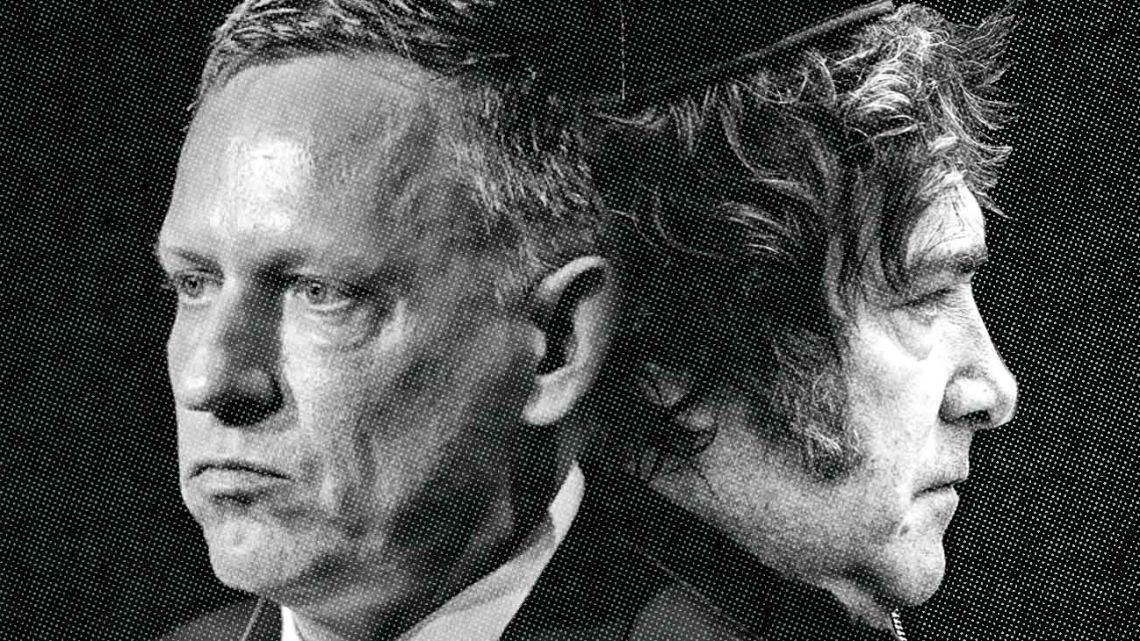
About a decade ago, Peter Thiel, the German-US billionaire who met with Argentine President Javier Milei this week, wasn’t seen as a sort of super-villain who manipulates global politics and funds anti-natural science. The same could be said for Elon Musk, another billionaire that at some point allowed Milei to cozy up to him. Instead, both figures were mainly considered bizarre but inoffensive entrepreneurs, who had created a lot of value in the private sector and were just pursuing their dreams of castles in the sky. It was the days when the United States and Europe had recovered from dual crises that at some point threatened the core of their political and economic models (the word “systemic” entered the mainstream); confidence in the status quo had been recovered. Western capitalism and democracy remained the hegemonic models to follow, while the geopolitical worldview that had reigned since the end of the Cold War, with the US as the sole superpower – despite the advance of China – guaranteeing global peace under its rules. Then-US president Barrack Obama was in the process of securing re-election, cementing his political dominance but also the political correctness of being progressive, and having good manners. In Argentina, Mauricio Macri put an end to more than a decade of Kirchnerism, earning the moniker “the slayer of populism” and put Argentina back on the map at Davos, later hosting the G20 Leaders Summit in Buenos Aires and selling billions in bonds in a triumphant return to international markets.
The contrast with today’s world is striking – and so is the way Thiel’s public persona is viewed. The global Covid-19 pandemic, together with a definitive social exhaustion with the current brand of supra-national financialised capitalism, shattered several of the paradigms that structured how Western mainstream society saw itself. Political outsiders holding right-wing flags and using vulgar rhetoric successfully challenged established elites. Donald Trump is the archetypical case, with others like Brazil’s Jair Bolsonaro and our very own President Milei in the same line. ‘Woke’ became a bad word and ideas of social justice and the defence of minorities came to be deeply questioned. The global geopolitical order is being re-written to the tune of Trump’s updated National Security Strategy, supposedly centred on the concept of “America first” but ultimately underlined by a transactional view of international relations. The rise of China is no longer a possibility, while the new arms race is technological. Russia’s invasion of Ukraine and a world at war are a new reality. Artificial Intelligence threatens to destroy millions of jobs and exacerbate already uncertain economic times. More broadly, a generalised feeling of pessimism has taken over as the dystopian world our predecessors warned about has come to pass, mass surveillance together with mind control and all.
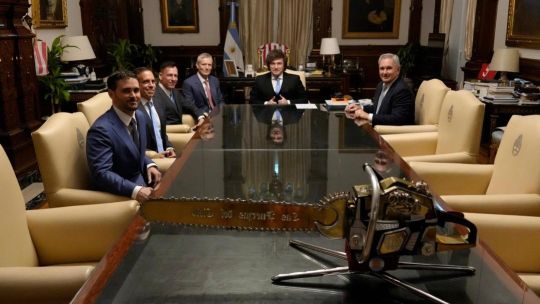
Enter the “new” Peter Thiel. The famed entrepreneur and venture capitalist met Milei at the Casa Rosada for talks on Thursday and is here to stay – at least for a while. He is said to have bought a mansion in the swanky Buenos Aires neighborhood of Barrio Parque in what has been reported as the most expensive real-estate deal the city has ever seen. He’s held meetings with controversial political strategist Santiago Caputo, Deregulation & State Transformation Minister Federico Sturzenegger and Foreign Minister Pablo Quirno, among others. He reportedly attended Argentina’s most iconic football match, the Superclásico between River Plate and Boca Juniors. There are rumours that he’s eyeing or has already bought multiple properties, with Patagonia among the possible locations.
Thiel’s presence in the country has elicited all sorts of opinions and a certain fascination from the media ecosystem. He is constantly dubbed one of the most powerful people in Silicon Valley and the most influential right-wing voice in the United States. An eternal contrarian, he was among the first tech industry leaders to voice his support for Donald Trump during the 2016 election campaign, when the politically correct thing was to vote Democratic – especially in California. By 2022, he left the board of Mark Zuckerberg’s Meta (formerly known as Facebook) to focus on politics. In an interesting interview with The New York Times, journalist Ross Douthat called him a venture capitalist for politics, a statement Thiel seemed to agree with. While the ultra-wealthy have always sought to influence politics, Thiel, Musk, and the rest of the Silicon Valley elite appear to have an exponential capacity to impact society globally. Sitting at the command centres of the world’s most innovative and also pervasive technologies, they have billions of dollars and personal data points at their disposal. And they are willing to use them. The digital ecosystem, which they control, is one of the most important factors in the rise of a new wave of anti-system populists. The fact that there are financial connections between Thiel, Musk and extreme right groups that often delve into neo-Nazism raises some serious red flags.

There is, without a doubt, ideological affinity between Milei and Thiel. Both of them fall under the category of anarcho-capitaist libertarians who see socialism and the decadence of Western society as major threats to humanity. Neither of them have particularly positive views of democracy, which Thiel considers incompatible with freedom. Both defend the role of monopolies in the economy as the engines that fuel innovation, in the face of an abusive state that is crookedly incentivized to block human progress. Thiel, who studied philosophy at Stanford University, has a pretty articulated worldview and a series of theories as to what has caused the “decline” of Western civilisation that he’s published in many books. Milei, a fervent proponent of Austrian economics, has done the same with his views, in many cases relying on plagiarism that, from his perspective, is probably not an issue.
There are also potential business interests in common too. Palantir Technologies, a company Thiel co-founded, has become one of the leading providers of software, data analytics and Artificial Intelligence capabilities for governments, militaries and major companies. It is already active in Latin America and probably looking to expand its presence in the region. Thiel’s venture capital firm Founder’s Fund has myriad investments and an interest in Artificial Intelligence, the fintech sector, and even energy and infrastructure. Milei and his close advisor Demian Reidel have been raving about turning Argentina into an AI oasis, taking advantage of the country’s nuclear energy programme and the benefits of the Patagonia region for the construction of data centres and other technological infrastructure. Silicon Valley elite have expressed interest in escaping conflict-prone regions, looking for an “apocalypse hedge” in the face of a potential nuclear conflict. Patagonia is often floated as an ideal location. Many of these billionaires do make their decisions on tax reasons though, which could rule out a country with a tradition of confiscation like Argentina.
Another reason that has been suggested to explain the billionaire’s presence in the country is that he wants to experience the first, true, anarcho-capitalist libertarian socio-policital experiment out in the world, first hand. Argentina’s President has become an international rockstar for the so-called “new right” movement, where his political success is highly valued. Domestically, there are very real questions as to the economic model that Milei and Economy Minister Luis ‘Toto’ Caputo have set in motion, particularly given the deep recession, stagnant wages and lack of job creation. Abroad, though, the fact of delivering budget surpluses with positive GDP growth, together with lowering inflation, are all that’s needed to consider the model a success.

In the same way as perception lies in the eye of the beholder, the views of someone like Thiel depend on the lens, whether it is from a particular moment in time or by someone with a specific political ideology. He’s clearly caused a stir, as he’s done everywhere else he’s been. Let’s see if he’s still making headlines in a couple of months.


Comments