

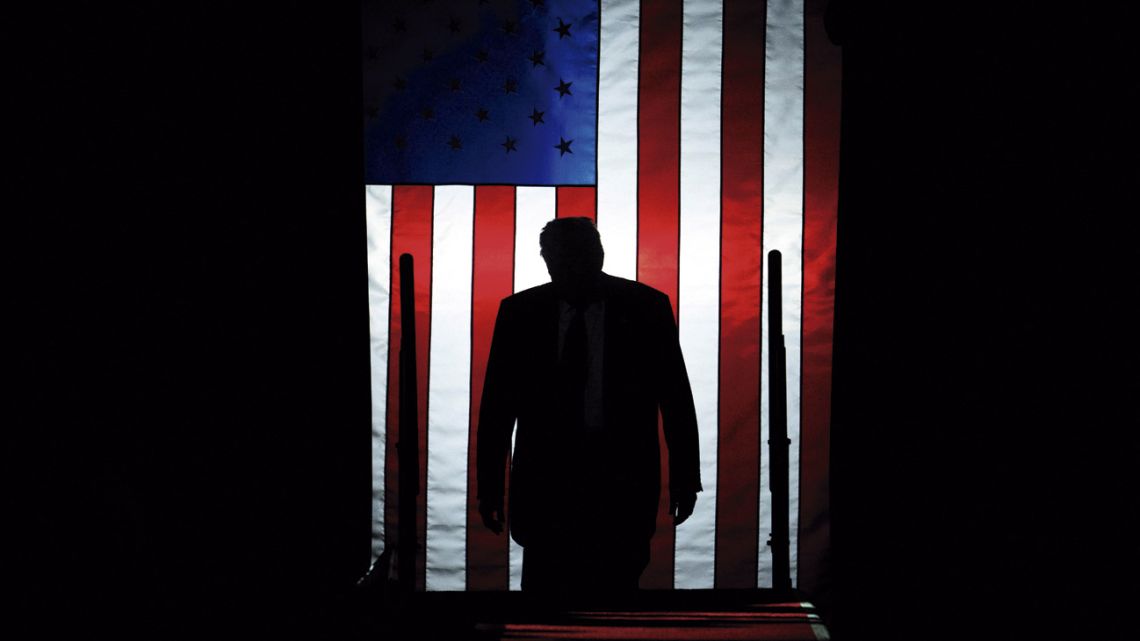
US President Donald Trump’s decision to take the driver’s seat has up-ended geopolitics. Everything that seemed certain only a few weeks ago – before the sequestering of Venezuelan dictator Nicolás Maduro from a fortified structure in Caracas without sustaining a single casualty – is now different.
In the Venezuelan capital, the United States demonstrated a level of military power that could have been inferred, but hadn’t been on full display in many years, if not decades. Trump revealed a level of conviction and therefore political power that has put the world on edge. The will to impose his vision of what the world should look like has definitely sparked fear in his adversaries’ eyes, especially smaller ones from a geopolitical viewpoint, such as Iran. It also appears as an unexpected windfall for his allies (at least those who are ideologically aligned to him) as Trump seeks to carve out Washington’s sphere of influence in the Western Hemisphere, putting pressure on Europe through NATO, apparently looking for concessions to Russia’s Vladimir Putin in order to end the war in Ukraine – and looking to annex Greenland from NATO ally Denmark. A big question-mark remains as to how Trump will deal with Xi Jinping, particularly given the Chinese president’s desire to recover Taiwan and the historic position of the US in which it has acted as the island’s guardian.
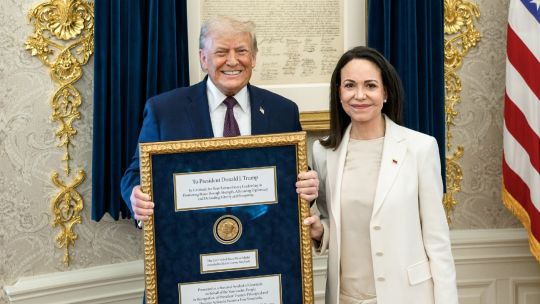
This chaos at the global stage is the view through which the current situation should be analysed. After extirpating Maduro from Venezuela, the White House surprisingly decided to back Vice-President Delcy Rodríguez, snubbing opposition leader and Nobel Peace Prize laureate María Corina Machado. Keeping a Chavista placeholder to execute Trump’s will under the constant threat of US military action sounds reasonable in retrospect, given the risk that a total dismembering of the Bolivarian regime’s top ranks could have set the stage for a descent into a failed state ruled by sectarian warlords. It also responds to Trump’s idea that what mattered the most was Venezuela’s oil, which he has already begun to move in global markets via the Qatari financial sector to avoid asset seizures. Regardless, the way the US president refers to Machado is demeaning for the natural leader of the opposition who, at some point, should return to Venezuela in order to stake her claim for power. In part, the Trump administration indicated it was angry that she decided to accept the Nobel Peace Prize he so desperately coveted (fortunately he received the FIFA version and she offered it to him Thursday) but at the same time it could result in a successful way to keep the Venezuelan security forces and multiple armed paramilitary forces under control as the transition gets under way, even if US Secretary of State Marco Rubio and Trump’s ideological shift away from nation-building seems to contradict that.
The sheer might of the US military strength unleashed in Caracas serves as a powerful threat to Washington’s other geopolitical adversaries. Iran, which is submerged in a deep socio-political crisis, is under The Donald’s watchful eye. Ayatollah Ali Hosseini Khamenei sought to squash the popular uprising with the use of his security forces, including the feared Revolutionary Guard corps, and then hide it through an intense Internet blackout. The size of the uprising dealt him a bad hand and prompted a fierce crackdown. Estimated figures ranging from thousands to tens of thousands of dead made their way into foreign news reports. The figure of Crown Price Reza Pahlavi has grown to become a sort of unifying theme throughout the Iranian protests, who has also said he is ready to step in and lead a transition toward a democratic state. This would imply the annihilation of the old order and many are looking to Trump to execute another effective military operation. At the time of writing, the US president had flirted with the idea. Iran closed its air space on Wednesday as the threat of an attack seemed to draw closer. The US strongman spoke to the news and said he had guarantees from Iran that lethal repression had stopped and executions had been called off. US warplanes returned to their bases while Middle Eastern allies sighed in relief. Uncertainty is the name of the game under Trump.

The transactional nature of the new school of US foreign policy is already on display. But the use of force used in Venezuela to kidnap a sitting foreign leader – even if he was a dictator – ramps everything up a notch. This, of course, puts the pressure on the Ayatollah who is clinging to power – a step in the wrong direction could mean a Tomahawk missile is on its way. It also has ripple effects on Trump’s ongoing dispute with the European Union and NATO. The idea that the Western Hemisphere belongs to the US as a sphere of influence and therefore Greenland should be annexed suggests that NATO allies could be at the opposite ends of an armed conflict. This idea was completely ridiculous a few months ago. It goes hand in hand with the affinity that Trump has displayed with Putin at Ukrainian President Volodymyr Zelenskyy’s expense, by which the preferred peace plan by the US ends up with Russia annexing the Donbas region. Ceding to Putin’s requests, while asking the Europeans to take care of their own defence, would seem to generate another sphere of influence where power is disputed by the traditional players of the so-called Eurasian region. That would leave China’s sphere of influence as spanning across Asia, Oceania and parts of Africa. India, a US ally, would be the antagonising power.
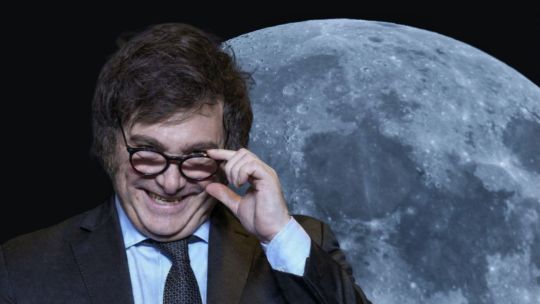
Under that scenario, Argentina’s Javier Milei has become Trump’s leading ally in Latin America. The natural antagonist is Brazil’s left-leaning leader Luiz Inácio Lula da Silva. Not only has he clashed directly with Jair Bolsonaro, a friend of both Milei and Trump, but he constantly disputes the US-centric vision of geopolitics, pushing for multilateralism and proximity power structures that aren’t dominated by the US such as the BRICS. Milei was one of the first Latin American presidents to win an election under a far-right banner that was aesthetically close to Trump’s. A far-right wave has ensued, with several countries following suit, solidifying Milei’s position as a regional leader of a host of nations seeking to throw their full support behind Trump’s geopolitics. This means total alignment, both politically and economically.
It’s an interesting context in which to see the EU-Mercosur deal finally being signed, giving Lula and the EU a much-needed victory in their cultural battle with Trump’s MAGA realpolitik. Milei has consistently praised the idea of free-trade agreements, but also his total rejection for Mercosur. His priority has always been a trade agreement with the US. Regardless, Milei will probably celebrate the agreement while he continues to seek the approval of The Donald on almost every matter. Argentina needs the full backing of the US in order to keep the peso-dollar exchange rate under control and the International Monetary Fund in a collaborative stance.

Trump is trying to tell the world he is the only one in charge. He told The New York Times recently that the only thing that can stop him is his own morality. Yet, he also faces domestic political challenges as his approval ratings fall deeper into negative territory. He’s waging a war of sorts against Democratic states and cities, sending aggressive ICE agents to supposedly curb illegal immigration, sparking a mass reaction by the population. The killing of Renee Nicole Good set off massive protests in the streets of Minneapolis, Minnesota, which could become a rallying call against the Trump administration and its policies. Midterm elections are coming up in November and the polls are beginning to suggest Democrats could take control of Congress. It’s still far off, but Trump doesn’t seem to be willing to stop anytime soon. He’ll only keep deepening the divide.
A new world order is trying to take shape in front of our eyes.





Comments