


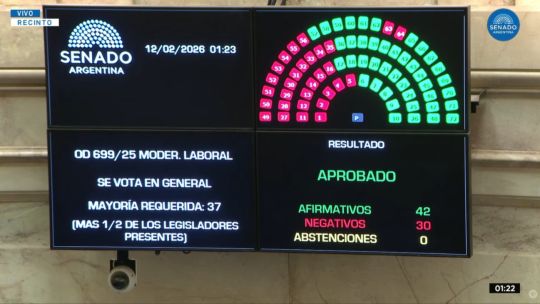
Senators in Argentina passed President Javier Milei’s signature labour reform bill early Thursday, a key step forward for the libertarian’s ambitious agenda that could support his government’s return to international markets.
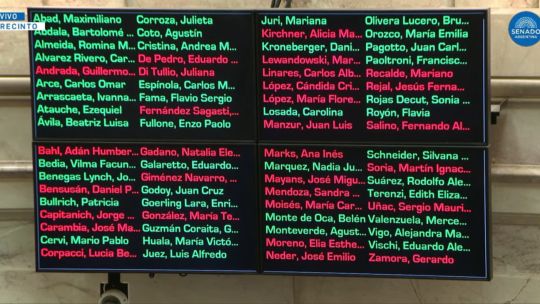
In a 42-30 general vote, the Senate approved the sweeping bill, sending it to the lower house for debate. Milei’s administration made 28 concessions Tuesday to win additional support from lawmakers and provincial governors. Among the changes, his administration removed an article that would have lowered employers’ income taxes because it would have reduced provincial revenue.
Senators debated inside as a relatively small group of protesters tossed Molotov cocktails at riot police who responded with water cannons and tear gas. Most of the capital’s downtown operated normally Wednesday.
Investors have closely watched the bill’s progress as a signal of Milei’s political strength after his party won Argentina’s midterm elections last October. It’s the first of several structural reforms he plans to pursue, though the timeline for others has slipped. Approval of the measure – the most sweeping employment legislation in decades – could lower Argentina’s sovereign risk and move the government closer to issuing international bonds.

Facing pushback from Argentine banks, Milei also took out an article that would have allowed workers to choose to directly deposit salaries into virtual wallets like MercadoLibre Inc’s Mercado Pago. It’s a setback for Argentina’s burgeoning fintech industry, especially as MercadoLibre Executive Chairman Marcos Galperin has consistently supported Milei.
Despite the last-minute changes, the labour reform still stands to be one of the biggest overhauls to Argentina’s economy in decades. Most of the country’s top labour rules date back to the 1970s. It also represents a shift for Milei from his chainsaw-style austerity in his first two years in office to a more moderate, chisel approach.
The reform aims to lower employers’ costs, encourage hiring, ease severance obligations and redefine collective bargaining agreements. It also reduces domestic taxes on cars, mobile phones and rental properties.

Although economists see the reform as widely overdue and needed, few see its immediate impact reversing an ongoing trend. Argentina’s formal private sector has already lost nearly 200,000 salaried jobs since Milei took office, about three percent of the total. The economy grew last year while the private sector workforce shrank, a first in at least three decades, according to Daniel Schteingart, director at local think tank Fundar.
As part of his austerity push, Milei has also cut 80,000 government jobs, according to official statistics.
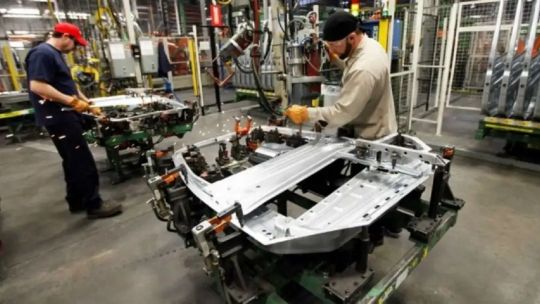
The labour market’s losses point to a K-shaped recovery under Milei, where export-driven sectors with relatively fewer jobs like agriculture, energy and mining are growing while labour-intensive industries like manufacturing, construction and retail are showing signs of recession.

Some economists also say the struggling sectors make the case for labour reform’s sensible changes as employers’ costs in Argentina, such as social-security contributions, exceed other nations in Latin America. Costly and unpredictable litigation over severance has also discouraged employers from hiring. But the top driver behind the job losses of late is stagnant or even declining activity in job-heavy industries, analysts note.
Unemployment has not spiked in Argentina as a result of the formal labour market’s decline due partly to a surge in informal employment, which is up by 231,000 jobs since Milei took office, eclipsing the formal sector’s losses. The number of independent contractors has also risen by about 140,000.
The government is also planning for senators to vote this month on a law that would modify environmental protections for glaciers. Changes to the so-called Glacier Law would forge a path to free up copper miners to invest billions in projects without the current legal uncertainty of environmental penalties. But that bill has been pushed out after Milei had to make several concessions on the labour reform.
related news



by Patrick Gillespie, Bloomberg








Comments