

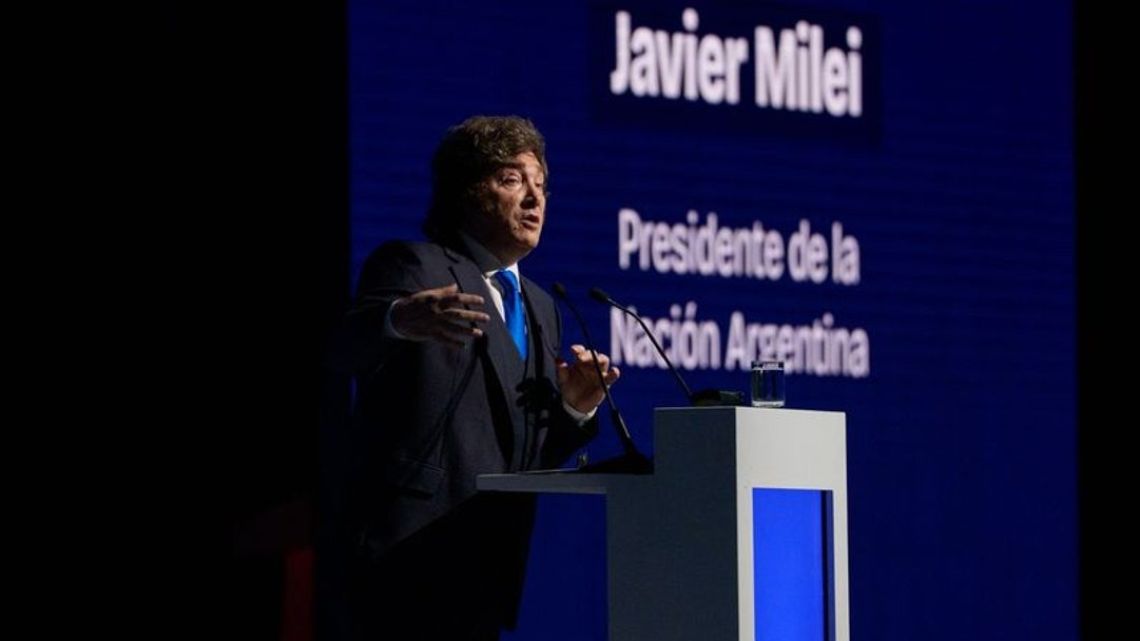
President Javier Milei closed the AmCham Summit 2026 with an animated speech on Tuesday, during which he defended his administration in the wake of “bad” inflation data.
Milei, 55, spoke just two hours after the INDEC national statistics bureau published March inflation data showing that prices rose 3.4 percent last month – above the expectations of private analysts.
To his credit, the La Libertad Avanza leader acknowledged he was not happy with the “bad” figure and dedicated much of his speech to trying to explain the economics and politics behind it.
“When politicians receive bad data, they feign ignorance or talk about something else. We have good things to talk about today, but as I am Milei and I detest the way traditional politics operates, and as I hate inflation and as I didn’t like the data, I am going to talk about inflation,” Milei said as he opened his speech.

Admitting that inflation “has been rising gradually since the middle of last year,” he nevertheless stressed that “from now on it will fall,” echoing remarks earlier in the day from his economy minister.
“Credit is growing, we are beginning to rebuild working capital, and when that happens, Argentina will start growing again. Inflation will plummet from now on and the economy will return to the growth path we were on before the political attack,” remarked Milei.
As is his custom, the President regularly raised his voice to slam his critics and emphasise that the country is on the right path.

“The fall in money demand in the second half of last year was going to affect the inflation rate. Then there is the seasonal factor; March is a month affected by education costs, followed by the impact of the war and transport-related issues. And there is the impact of meat prices; all of that explains the jump in the inflation rate,” he continued, insisting a bright future lay ahead for Argentina.
In his speech, Milei surprised everyone by focusing on the latest inflation figures, despite having – as he put it – “plenty of positive points” to highlight about the economy.
The President then sought to explain the acceleration in the index, arguing that it was due to temporary factors rather than a change in economic direction.

He also accused the opposition of coup-mongering, stating the problems had kicked in ahead of last year’s midterm elections, from which his party emerged victorious.
According to his analysis, the key lies in what happened during the second half of last year, when Argentina faced “two shocks of colossal proportions.”
He highlighted a sharp fall in the demand for money, saying it put pressure on prices. He also linked the inflation spike to a “run” on peso-denominated assets, which impacted the financial market, rising interest rates, increased country risk and pressure on the exchange rate.

As a result, financing became more expensive and economic activity slowed, the President argued, preventing annual growth from being higher.
“We must be patient for when you get desperate, you make the wrong decisions,” insisted the President.
Milei’s appearance at the AmCham Summit took place three days before he travels to Israel for the Middle Eastern nation’s 78th Independence Day celebrations.

It will be his third official visit as head of state and the La Libertad Avanza leader will be honoured with the Presidential Medal of Honour, Israel’s highest civilian award, for his support for the nation.
President Milei will depart Israel and return to Argentina on Wednesday, April 22.
Caputo confident

Though Milei was the star turn at the AmCham Summit, several of his leading Cabinet members were also in attendance. Even under-fire Cabinet Chief Manuel Adorni made a brief appearance, sitting in the front row of the audience for the President's speech.
One of the most eagerly anticipated appearances came from Economy Minister Luis Caputo, who appeared just hours before the publication of updated inflation data.
His message was clear: Milei’s government will stick to its course and “the path will not change.”

“In economics there is causality, and this President and this government are doing things right, and that is why things will turn out well,” Caputo told the audience of business leaders, politicians, investors, economists and members of the press.
Despite the challenges, the minister insisted that “the next 18 to 20 months will be the best in recent decades” for Argentina, arguing that the economic model will provide the necessary tools for the general development of economic activity.
Asked about why some sectors were suffering more than others, the minister stressed: “The reality is varied, just as people’s decisions are varied. Not everyone reacts in the same way.”

He predicted that, from April, Argentines would enjoy a sharp fall in inflation because “an improvement in the demand for money has already begun to be observed.”
Quirno delighted with US deal
In his appearance at the event, Foreign Minister Pablo Quirno talked with Argentina’s improved relationship with the United States
Quirno showered his boss, President Milei, with praise, highlighting the economic achievements of the La Libertad Avanza administration, such as the lifting of capital controls.
“Argentina has done things right, regardless of the relationship between Javier Milei and Donald Trump,” Qurino explained, highlighting the recent signing of a bilateral trade deal with Washington.
“This agreement we have secured, which was signed in November, is an investment agreement. It paves the way for investment and represents a very important strategic balance,” said the official.
Praising the still-to-be-implemented trade agreement between Mercosur and the European Union, the foreign minister admitted, however, that the outbreak of war in the Middle East had created headaches for the government.
“Argentina is a safe place for investment. The war creates uncertainty, but the country is well positioned,” he said.
Jorge Macri: ‘US is right partner’
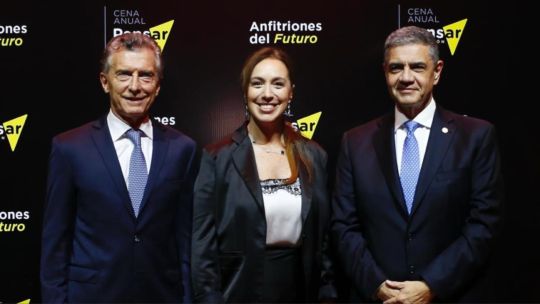
Though not aligned with Milei’s La Libertad Avanza party, Buenos Aires City Mayor Jorge Macri touched on similar themes in his speech at the event.
In his appearance, Macri described the United States as “the right partner” for Argentina, noting “strengthened ties” that would boost “development, openness and investment.”
Mayor Macri assured that the nation’s capital offers private sector investors “predictability, clear rules, infrastructure, financing, lower taxes and reduced public spending.”
He also spoke up for the importance of defending “industrial production sectors, as all governments do.”
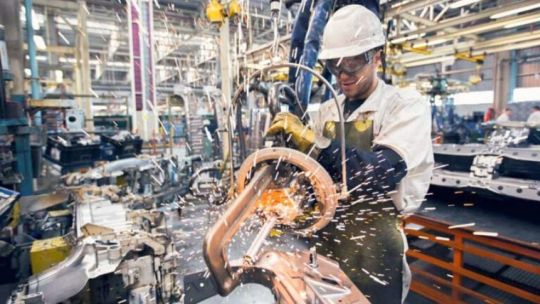
The remarks came with Argentina’s industrial and productive sectors under considerable strain. Economic indicators published by the INDEC national statistics bureau last week show that manufacturing output fell 8.7 percent year-on-year in February, extending a downturn that now stretches back eight consecutive months.
Touching on key Milei administration themes, Mayor Macri described life, liberty and private property as fundamental values, which take on greater significance in an international context marked by conflicts and tensions” – an allusion to ongoing conflicts in the Middle East and Eastern Europe.
“We have a calling to lead at regional and global levels because we are a City that embraces major challenges,” Macri noted.
While Buenos Aires “has no oil, lithium, minerals or soybeans,” he continued, it does have “human capital, the talent of our people” and that is why “it is the birthplace of nine of Argentina’s 12 ‘unicorns,” referring to privately held start-up companies that have reached valuations of over US$1 billion.
Lamelas sees ‘great future’
Another high-profile speaker was Peter Lamelas, Washington’s ambassador in Argentina, who reaffirmed US President Donald Trump’s support for Milei’s government.
In his first address at the annual summit, Lamelas predicted a “great future” for Argentina under Milei and noted the strategic alignment between the two.
Lamelas also referred to his time in Argentina to date, saying that after five months in South America, he “feels like he’s at home” with people who “work, produce and invest capital.”
Lamelas emphasised that the Trump administration would “encourage companies” to be “reliable partners in key sectors” and highlighted the importance of infrastructure and sound policies.
Trump had tasked him with “making sure Argentina grows, with more stability and with the US as its preferred partner,” he added.
“Argentina has what the world needs,” underlined Lamelas, pointing to natural resources, technology and human capital.
The partnership between Argentina and the United States “is not just a word,” but a “concrete action” towards the country’s economic development, he insisted.
Framing his own life story as a real-life example of “the American dream,” the ambassador revealed that President Trump had sent him “personally” to Argentina to “help Milei and the private sector.”
The AmCham Summit is organised by the American Chamber of Commerce in Argentina, which represents more than 700 companies that directly employ 420,000 people. These firms companies represent 42 sectors of economic activity and account for 24 percent of national GDP, 39 percent of tax revenue and 45 percent of Argentina’s total exports, according to the chamber.








Comments