

Daniel Hadad, founder of digital news site Infobae, recently hosted a private viewing of a short-form documentary made with artificial intelligence at the majestic Law Faculty of the University of Buenos Aires (UBA), surrounded by many of the most important members of the so-called “círculo rojo,” the name given to a group of influential decision-makers made up of politicians, businessmen, journalists and other members of the elite. It was a show of power by Hadad, who had spent the week prior on a media tour, floating himself as a potential 2027 presidential candidate across different media outlets. Inside the Aula Magna hall where he presented El Libertador, an animated documentary about a meeting between forefathers José de San Martín and Domingo Faustino Sarmiento, Hadad brought together the likes of former president Mauricio Macri and Mayra Mendoza, the Kirchnerite mayor of the municipality of Quilmes, as well as federal judges Ariel Lijo and Ernesto Kreplak, along with labour leaders like Gerardo Martínez of UOCRA construction union. While first-line members of President Javier Milei’s administration weren’t in attendance, controversial political strategist Santiago Caputo was represented by his eyes and ears, Manuel Vidal, while SIDE spy agency second-in-command Diego Kravetz was also spotted. It is difficult to imagine another person like Hadad, who would gather such a diverse group of people just to show off his latest piece of AI-generated video. Indeed, it felt more like a campaign launch rally.
During those interviews with different TV channels, Hadad delivered thinly veiled criticisms of the government and of Milei’s political style, leaving the door open to a potential candidacy. He appeared to be throwing his hat into the ring, though in the “outsiders” camp, a position he shares with banker Jorge Brito and evangelical pastor Dante Gebel. In one of the interviews, Hadad indicated that it was too early to determine candidacies as campaigns last no longer than six months, though he went on to say Brito would be a great candidate. An article in the Clarín newspaper recently revealed Hadad met with Milei at the Olivos presidential residence, where he told the President he would not be running against him. In Argentine football culture, it’s typical to “pass on” the pressure while at the same time casting a sort of bad luck spell (“mufa”) on your opponent ahead of a match. Was that Hadad’s intention, or is he playing to the tune of the Casa Rosada, given his close ties with Caputo through Leonardo Scatturice, the former spy and controversial businessman whose interests in Argentina have grown exponentially since President Milei came to power?
The presidential campaign began the day after the World Cup final, after Argentina lost to Spain. Had Lionel Messi brought the trophy back to the country, the campaign would’ve been kicked back a few months. The Milei government was lucky that the national team made it to the final, stretching out society’s distraction a full six weeks, a time in which other worries drifted to the background. The scandal surrounding former Cabinet chief Manuel Adorni and the tough economic situation facing those living in urban centres momentarily disappeared from people’s minds. As the political game came back, Milei initially sought to dominate the arena in a series of interviews, public appearances, a bit of culture war and a legislative agenda that backfired.
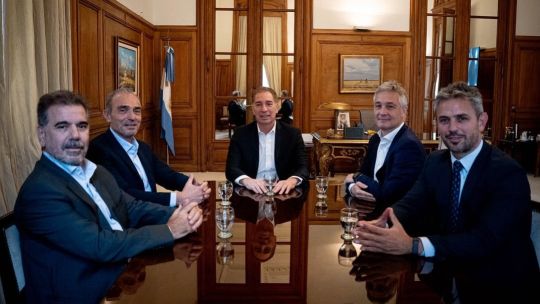
The President’s attempt to pass a land and private property reform bill resulted in a series of strategic defeats that blew wind into the sails of the beleaguered opposition. As the opposition Peronists puffed out their chests with pride, Mauricio Macri took the opportunity to position his right-wing PRO party for a potential team-up with La Libertad Avanza, Milei’s libertarian force, ahead of next year’s elections, but also with an eye on this year’s legislative agenda. Someone leaked news of a conversation with Karina Milei, President Milei’s sister and chief-of-staff, and before you knew it, a meeting was organised. A picture of Cabinet Chief Diego Santilli, together with his former PRO party colleagues, Cristián Ritondo and Fernando de Andreis, at the Casa Rosada was then released, along with cousins Martín and Eduardo ‘Lule’ Menem (Karina’s top aide).

Macri knows that Karina’s preferred bounty is Buenos Aires City, the nation’s capital which is currently ruled by his cousin, Mayor Jorge Macri. The ex-president also knows she’s got her sights set on several Buenos Aires Province municipalities held by PRO, and provincial administrations. Karina, on the other hand, must strike a balance between her intention of “painting the country purple” with pure libertarian candidates nationwide and using Macri’s structure where they can be synergetic. She and her brother do have a history of double-crossing Macri, as they did after taking office, when they swiped his presidential ticket, Patricia Bullrich and Luis Petri, and brought them into government. The Milei siblings then ended up colonising PRO through Luis ‘Toto’ Caputo and Federico Sturzenegger on the economic front, and finally by winning the Buenos Aires City legislative elections with Adorni, who already fancied himself as the next mayor. The former president, however, does hold an ace up his sleeve: a potential Macri candidacy could absorb up to 10 percent of the libertarians’ targeted electorate. In a fragmented political ecosystem that has a run-off system, that’s more than enough to tip the scales.
It’s not just the outsiders trying to rehash Milei’s surprise 2022 win. The traditional opposition to any government on the right is the pan-Peronist field, of course. There’s been a lot of movement, particularly after the legislative defeat of the libertarians with the land and property reform bill. One of those claiming credit is none other than Sergio Massa, the Frente Renovador leader who was the last presidential candidate for the Partido Justicialista (PJ). Massa telegraphed the message that he was working from behind the scenes, orchestrating the opposition to Milei through close contact and coordination with Peronist provincial governors; he was looking to distance himself from the civil war between Buenos Aires Province Governor Axel Kicillof and the space that responds to Cristina Fernández de Kirchner. Massa even brokered an encounter that had previously seemed impossible before the libertarian defeat in Congress: a face-to-face political meeting between Kicillof, Cristina’s son Máximo Kirchner, and senior Peronist leaders. While the diplomacy of the moment was overplayed, Peronists have a thing for unity when they smell power. Incredibly, Massa holds on to his dreams of becoming president.
While the election is still far out, campaigning is already in full swing – and nearly all of the candidates have high levels of public rejection or remain fairly unknown to a majority of the population. The latter is the case for provincial governors and outsiders. The former category responds to the traditional politicians plus Milei, who in his third year in power is feeling the strain on his public polling figures. A recent poll by political consultancy Rubikon regarding Peronist candidates put Kicillof’s rejection rate at 60.8 percent, Massa’s at 69.3 percent, and Cristina’s at 62.3 percent (even though she remains barred from running). Sergio Uñac, the former governor of San Juan Province, appeared as unknown to 53.5 percent of those polled, while La Rioja Province Governor Ricardo Quintela sat at 46.8 percent. Macri also sits on high rejection rates, while Milei’s are growing month after month.

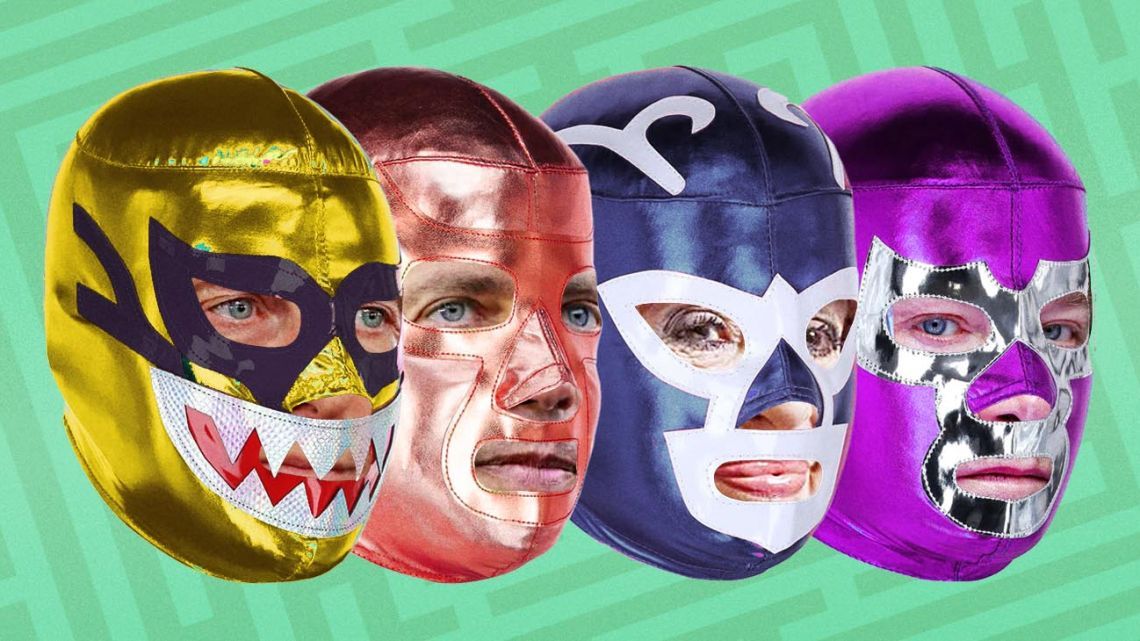
Political campaigns in Argentina have been governed by fragmentation, negative voting and thin results in the last few presidential bouts. There’s also been big surprises – from unexpected wins like Macri’s and Milei’s – to major comebacks, including the Fernández-Fernández ticket and Macri’s own surge between the PASO primaries and the elections in 2019. With the race underway, it seems as if there’s no fear of being dragged into the ring too early. It will be a battle royale and the bell has already rung.







Comments