
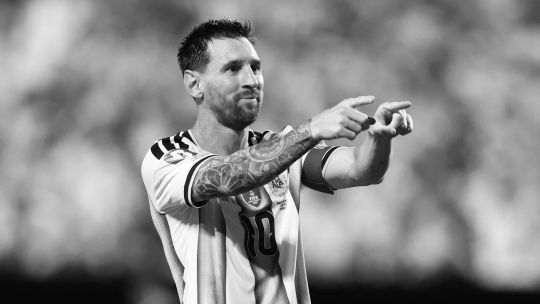
Ruby Tuesday in the evolution of this World Cup at the end of its first round – at least as seen by this columnist more akin to the perspective of geopolitical analysis than sports commentary. The first two columns of this series had been very much written around the theme of a Euro-American monopoly, based on a history of Europe and South America not only bagging each and every one of the 22 World Cups until now, but also supplying no less than 167 of the 176 quarter-finalists in the closing stages of the tournament. But until Tuesday that supremacy looked in tatters – of the 14 matches played by teams from the two champion regions, only three had ended in victory, two against Caribbean weaklings (although none of the group seeds actually lost in the first round). But then out came the big guns – France’s Kylian Mbappé, the Norwegian Viking Erling Haaland and, above all, Lionel Messi’s record-matching hat-trick – and things started reverting to form.
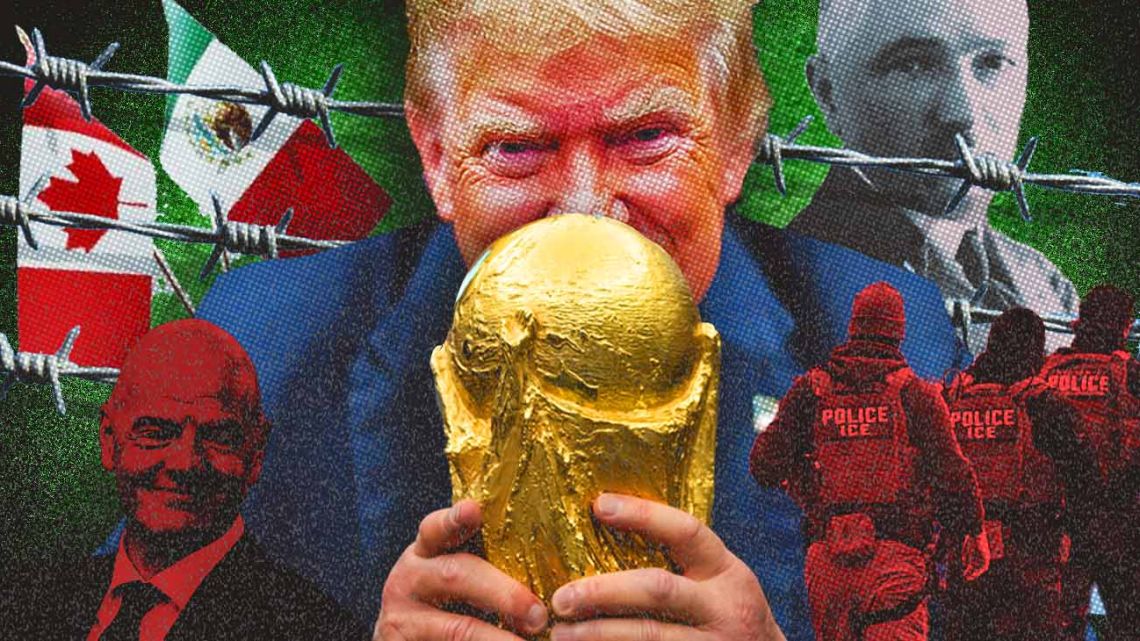
Yet enough on this World Cup with plenty in the rest of this newspaper. Instead this column will look behind the football to the power politics permeating the hosting of this event – to what has been called the “Trump Cup” (disrespecting both Mexican President Claudia Sheinbaum and Canadian Prime Minister Mark Carney, whose countries are staging a quarter of the matches) and its predecessors as from 1930.
FIFA Peace Prize winner Donald Trump (an award freshly minted on his behalf to salve his Nobel frustrations) in many ways breaks the pattern – instead of using the mega-event to sportswash his country, for which there are umpteen examples (not least Argentina in 1978), this is such a MAGA ego trip for him that he has no qualms about offending everybody else, both at home and abroad. This tournament is a happy hunting ground for the ICE immigration police with fans from Iran, Senegal, the Ivory Coast and Haiti, among others, denied visas. According to opinion polls, Trump’s popularity is at an all-time low nationwide, not least among United States team members, a disapproval compounded by the matches being largely played in blue America, despite The Donald’s repeated attempts to move the games from Seattle – of the 11 US venues, Dallas is the only city with a Republican mayor (not that this World Cup is going to be an electoral game-changer, even for the upcoming midterms, with gasoline prices far more decisive). Trump thus adds insult to the injury of overpriced tickets (with four-digit dollar sums being asked even for secondary matches) and hotel rooms.
The “FIFA Peace Prize” is repugnantly obsequious, waiving the leverage usually enjoyed by FIFA over host countries, but it is true to the tournament’s origins. The Fédération Internationale de Football Association was founded in Paris in 1904 while the World Cup was the brainwave of Jules Rimet (1873-1956), who became FIFA president in 1921 just over two years after returning from the Great War – not all was quiet on his Western Front with three years in the trenches implanting in him the idea that football was an infinitely more civilised way of duking out international rivalries than the horrors of war. Nothing unimportant is more important than football with its victories and defeats metaphors for life and death with nobody actually dying.

The choice of Uruguay for the first World Cup in 1930 might seem odd, given that there are almost 2,500 other people in the world for every Uruguayan, but the move had both its sporting and financial logic. Uruguay was the champion team in both the 1924 Paris and 1928 Amsterdam Olympics but perhaps more decisive was the timing of the tournament – the year after the Wall Street crash of 1929 when all the sponsors and FIFA itself went broke. Luckily for Rimet, the Uruguayan government stepped up to the plate to finance the stadiums, infrastructure, security and everything else. A blessing for the World Cup but also a curse because “the host pays” subsequently became the tournament’s operating principle, thus loading the dice in favour of choosing autocracies indifferent to the burdens on their citizenry or loaded with the petrodollars to pay for this costly prestige project.
Juan Campisteguy, the Uruguayan president in 1930, was a complete non-entity – something nobody would say about the next World Cup’s host, Benito Mussolini, who was to dominate that decade to a degree Trump might envy, FIFA president more than Rimet. Fascist times for football beyond Mussolini – Rimet’s cosy relationship with Vichy France was ambivalent enough to survive World War II but the first French World Cup captain, Alexandre Villaplane, was an outright Nazi collaborator shot in late 1944. Italy won the final in both 1934 (the second triumph running for the host country) and 1938 with Mussolini working strenuously towards that end – he not only subsidised the travel of foreign fans to Italy but co-opted four Argentines of peninsular origin (Luis Monti, Raimundo Orsi, Enrique Guaita and Atilio Demaría) into his winning team. In both cases kick-off was preceded by the fascist salute, which went down rather better at home in Italy than at the 1938 World Cup hosted by a France governed by a Popular Front headed by León Blum (not only Jewish but a Socialist allied to the Communist Party, he somehow survived five years in a Nazi concentration camp) – the fascist salute was greeted with a “barrage of whistles and insults,” as recalled by Italian manager Vittorio Pozzo. Mussolini told the team not to bother returning home if they did not defend the Cup (not quite the same pressures on Lionel Scaloni’s stars now).
Rather than try and squeeze 19 tournaments into a couple of paragraphs, this column will seek to conclude this history of the World Cup and its sometimes singular hosts next week, ranging from the 1950 “Maracanazo” in Brazil extending an Italo-Uruguayan monopoly to this century’s World Cups of Vladimir Putin and the Qatar petrocrats – preceded by whatever observations might arise from the second round of the ongoing 48-nation contest in North America, always from a geopolitical rather than sporting angle.




Comments