


The (alleged) end of the war in Iran is bad news for President Javier Milei’s administration. This may sound counterintuitive: higher fuel prices putting pressure on prices did not help the government's anti-inflation policies. But in the aggregate, counting costs and benefits, the fact that Argentina is now an oil-exporting country tilts the scale toward the notion that higher prices are good rather than bad.
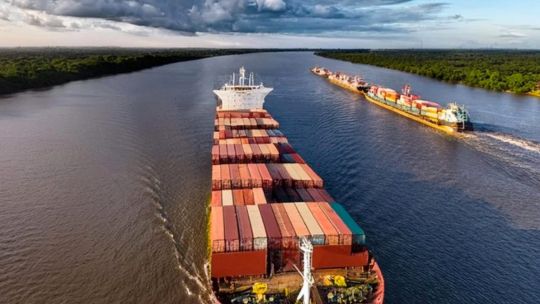
The key data point of that argument is that for the first time on record, energy (and subsidiarily mining) generated as much income for the country as farming in the first four months of the year: just over US$8 billion each. This explains two other data points that are crucial for the government's immediate future: Central Bank reserves are at their highest since 2019 and country risk ratings at their lowest since 2018. The math is simple: creditors see more cash available to pay them out.
This is formidable news for the Milei administration and most especially for Economy Minister Luis Caputo, who can brush aside one of his biggest fears: facing a run on the peso like the one he suffered – and almost succumbed to – in the run-up to the 2025 midterm elections. A lower oil price, closer to what it was before the Strait of Hormuz became a weapon of war, only partially offsets the new flow of US dollars into the country, which is now structural and here to stay.
It will only get better. YPF Chairman and CEO Horacio Marín is a former tennis pro and all-time fan, but he might go down in history as the Lionel Scaloni of Argentina's national energy sector. The massive Vaca Muerta geological formation continues to deliver impressive results – and it will only get better: YPF is leading other star players in the industry in a joint venture called Vaca Muerta Oil Sur (VMOS), a duct that will further increase the country's exporting capacity. The project is on time to be inaugurated early next year, just in time for Milei to get an extra handful of dollars to feed his re-election economy.

The next question is what can stop Milei? The answer is very simple: Milei's programmatic extremism and political clumsiness.
Extremism seems ingrained in the programme’s design. This week the government approved the petition from a major copper project called Vicuña in San Juan to enter Milei’s RIGI investment incentive scheme for major investors. RIGI gives the project lower taxes, full access to the FX market to repatriate funds and more liberty to import goods, among other perks, for a period of 30 years. Just as government bureaucrats were rubber-stamping the Vicuña application, the news broke in San Juan that the company was importing a 2,500-bed modular "city" to house its hundreds of workers near the mine site. This is a US$50-million expense in a US$18-billion project. Hiring a Chinese firm reportedly saved the company US$12 million.
These business calls are not going down well among local suppliers – and workers – and may sooner or later harm the licence to operate that mining or energy projects enjoy, both when assessed at provincial and national level. But the Milei administration is not there to steer capitalism in any particular direction.

Political clumsiness is also increasingly a liability for Milei. The Manuel Adorni ordeal is the tip of the latest example's iceberg, but the real risk is that it grows into something even more damaging, like a split in the already shaky ruling coalition – if there was ever even one. Milei is shedding chunks of his reputation by keeping in office a person that the entire country has seen lying to their faces for three months, trying to justify how he went from rags to riches while in office.
Some people close to the President say he often seems more focused on his future once out of office than the day-to-day destiny of his administration. Does this mean he is not sure about seeking re-election, as discussed here recently? Not necessarily, but it is difficult to explain why he would climb off a winning wave for no reason at all.








Comments