

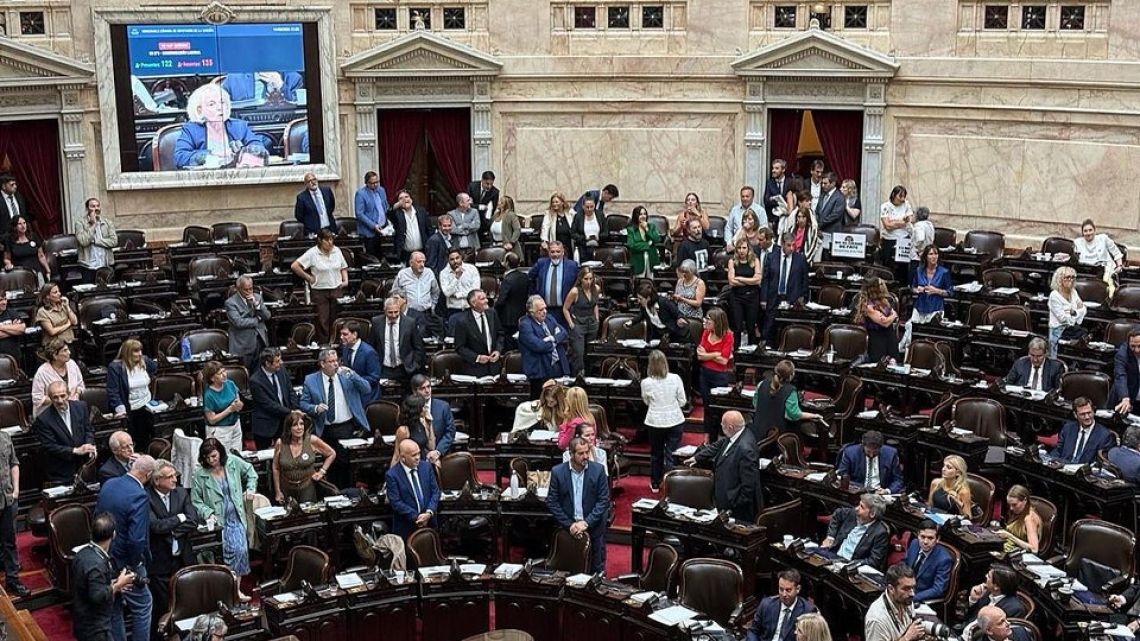
President Javier Milei’s government has sent a bill to Congress that would regulate lobbying activities and increase transparency around efforts by companies, consultants and intermediaries to influence public decision-making in Argentina.
The initiative, referred to by officials as the “Ley de Lobby” or “lobbying law,” was submitted to the lower house this week alongside the government’s proposed ‘Super RIGI’ investment incentives scheme, part of a broader package of economic and institutional reforms promoted by the La Libertad Avanza administration.
The lobbying bill seeks to establish rules governing the management of private interests before government officials and lawmakers, covering attempts to influence legislation, public tenders, concessions, subsidies and tax benefits.
According to the text, lobbying activity would have to be registered through a mandatory digital public registry. Individuals and companies engaging in lobbying would be required to disclose the interests they represent, while senior public officials and legislators would have to publish records of meetings and contacts with lobbyists.

The proposal was signed by Milei, Cabinet Chief Manuel Adorni, Interior Minister Diego Santilli and National Security Minister Alejandra Oliva. Although it was submitted over the weekend, it formally entered Congress on Wednesday and is now expected to be assigned to committee debate.
“The objective is to guarantee publicity and transparency in decision-making processes within the Executive and Legislative branches,” reads the draft text of the bill.
Since taking office in December 2023, President Milei has regularly voiced concerns about foreign interests and their activities in Argentina. He has linked such efforts to negative press, often criticising media coverage of his administration.

Government officials argue the changes would reduce conflicts of interest and provide clearer oversight of how private actors seek to shape public policy.
One of the central elements of the bill is the creation of a “Public Registry of Interest Management”, covering lobbying related to legislation, decrees, public procurement, concessions, permits, licences, subsidies, budget allocations and promotional tax regimes.
Lobbyists would be required to submit quarterly activity reports detailing meetings, clients and the issues discussed. The registry would include the date, time and format of each contact, the government department involved and a summary of the matters addressed.

The bill would apply to meetings involving the president, vice-president, ministers, secretaries of state and other senior officials with decision-making powers. In Congress, senators, deputies, senior administrative authorities and advisers involved in lobbying contacts would also be subject to disclosure obligations.
Former public officials would be barred from carrying out lobbying activities for two years after leaving office.
The proposal also introduces stricter requirements for companies and organisations acting as lobbyists, including proof of legal registration and disclosure of clients or beneficiaries where applicable. Foreign lobbyists would have to declare their status both when registering and during any official contacts.

Journalistic activities and general dissemination of information would be exempt from the regime provided they are not aimed at influencing a specific public decision, according to the bill.
The bill establishes sanctions ranging from fines equivalent to 500 minimum wages to permanent disqualification from lobbying activities. It also creates criminal penalties for clandestine representation of foreign interests, carrying prison terms of between six months and three years.
Argentina lacks a comprehensive national lobbying law, although some disclosure obligations exist through ethics and access-to-information regulations. Similar transparency systems operate in countries including the United States, Canada and several European Union member states.

The government has not yet indicated when it expects the bill to be debated in committee or brought to a vote on the floor.
– TIMES/NA/PERFIL













Comments