


The coming quarter will define the rest of Javier Milei’s administration. The President is enjoying a second political honeymoon after his unexpectedly large victory in the October midterms and both Argentines and investors are giving him a new, stronger lease of life, which he now has to turn into a more solid political and economic programme. And he needs to score.
This week, Milei’s economic team took an important step in that direction. Central Bank Governor Santiago Bausili announced tweaks to the foreign exchange regime. The substance of the change, which will require follow-up steps, is less important than the acknowledgment that the scheme needed change. It is a good sign.
Like any coach, Milei does not want to mess with a winning formula. He won the midterms thanks to inflation going down, even if consumer price hikes have been increasing for six consecutive months. Argentines see a leap of 1.5 percent in May to 2.5 percent in November as stability when you come from monthly double digits, as seen during the transition between former president Alberto Fernández’s government and Milei’s entrance in late 2023. The President does not say it, but he knows that a strong peso has been a major factor behind overall price stability.
The decision to increase the pace of devaluation of Argentina’s currency within the floating bands opens the door to a weaker peso that should, in turn, allow the Central Bank to start to accumulate international reserves. The choice for Milei was clear: short-term delivery of inflation close to zero for Argentines or pleasing the IMF and foreign investors who believe the economy needs more dollars in the Central Bank to be sustainable in the medium to long term. He appears to be picking the latter option.

Milei is used to getting away with swimming against the tide of the pool of economists that, from left to right, have been critical of certain aspects of his programme. He is a lone wolf who believes he can defy the gravity of Argentina’s economy as we have known it so far – his mission, as he sees it, is to revolutionise it. But he is not crazy – faced with the precipice in the run-up to the midterms, Milei took a lifeline from Donald Trump’s US Treasury. But everybody knows that such support will not be endless.
A libertarian but not a “libertidiot,” as he likes to say, Milei seems to have picked security rather than risk for the new stage of his administration. It is a good choice.
The same applies to politics. By most accounts, the ruling party is in a perfect position to carry out in Congress many of the things Milei could not do in his first two years in office. Namely, pass legislation. He faces the risk of getting carried away by this good moment: the Budget bill Congress started to debate this week is as much a fabrication as having no budget at all, which was the case for Milei in his first two years in office. It anticipates that annual inflation will be slashed to less than a third of what it is now – to 10 percent – and that the economy will grow another five percent in 2026. It also proclaims that the exchange rate will be 1,423 pesos per US dollar – lower than it is now.

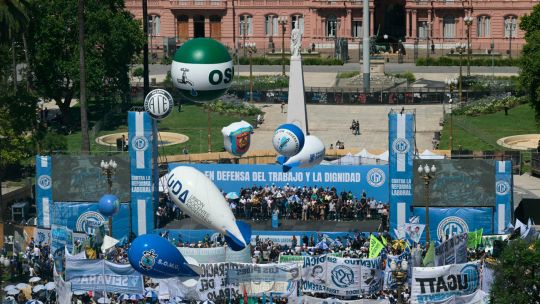
The most sensitive issue is Milei’s labour reform bill, which targets the heart of Argentina’s organised union movement, which is historically Peronist. It is a classic manoeuvre in national politics – debate labour reforms when economic activity is in decline. This is not a wise move. The UIA manufacturing business chamber, for instance, reported this week that only in the first nine months of 2025, the sector lost 21,190 jobs. Notably, even star sectors like energy and mining reported job losses of around 7,000 over the last year. The unions will fight back but there is only so much they can do. Some reform might pas but the employment equation will not change if the economy does not pick up.
A majority of good choices then but stubborn inflation and weak employment make for a complex combination in the coming months ahead. Milei needs to reinforce the virtuous circle that he inaugurated after the midterms. Passing legislation is crucial but it is not only about approval; pushing changes through by ample, convincing majorities is also a relevant factor.
The field is wide open for Milei – especially while the Peronist opposition continues to scratch its head and wastes time trying to extract meaning from former president Cristina Fernandez de Kirchner’s social media posts recalling how great her governments were. They ended more than a decade ago apparently, because 2019–2023 does not seem to count.














Comments