

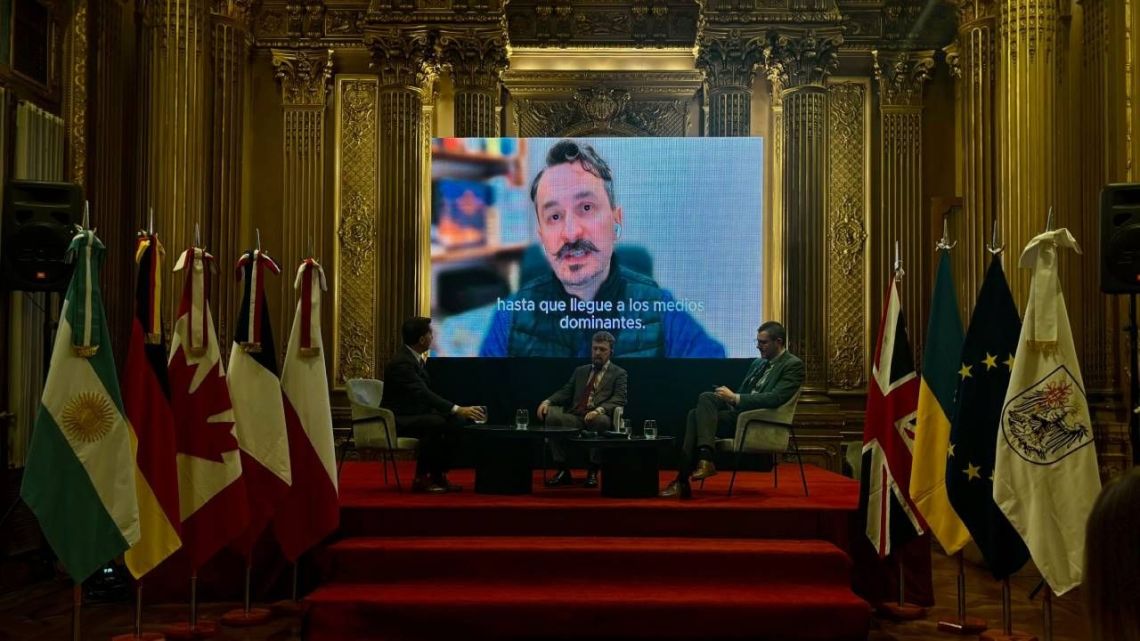
Academics, international experts, media professionals and diplomats met in Buenos Aires on Wednesday to highlight the challenges posed by disinformation and foreign interference in the information sphere.
Experts described these dynamics as part of broader “hybrid warfare” strategies, combining disinformation, cyber operations and political influence campaigns designed to shape public debate.
The gathering formed part of the third international conference on “Foreign Information Manipulation and Interference” (FIMI), a term used by European institutions to describe coordinated efforts to distort public debate across borders.
The event in Buenos Aires was organised and funded by a group of Western-aligned diplomatic missions, including the embassies of Ukraine, the European Union, France, Canada, the United Kingdom and Germany.

In an introductory video, EU Ambassador in Argentina Erik Høeg noted that all democracies “are facing increasingly complex challenges” and that no country today stands alone in the face of these threats.
German Ambassador Dieter Lamlé warned that “disinformation seeks to weaken institutions, divide society and erode public trust.”
“Europe and its partners remain firmly committed to upholding verifiable facts and strengthening democratic resilience,” he declared.

Proceedings were divided into three panels addressing key aspects of the issue. Discussions highlighted tactics such as the use of proxy media outlets, coordinated amplification on social networks and the placement of opinion content in local publications designed to appear organic or locally generated, rather than externally driven.
Several speakers noted that such campaigns are relatively low-cost yet capable of generating disproportionate political and social impact.
The opening session, moderated by Fernando Stanich, president of the Foro de Periodismo Argentino (FOPEA) press watchdog, examined the scope and strategic implications of information manipulation.

Philippe Bernès-Lasserre, head of the AFP news agency’s coverage in Argentina and Paraguay, explained how his employer tackles disinformation, noting that its global team of 2,500 journalists includes 150 fact-checkers.
In his contribution, Professor Jean Christophe Boucher of the University of Calgary, called on Western democracies to be more proactive in their approach. Proposing a policy of “disrupt, compete and defend,” he said nations needed to monitor their information space, be resilient and push back.
“Democratic governments have become shy in defending themselves,” he said. “We have values and we have to defend them.”

A second panel, led by journalist Gonzalo Aziz, focused on Russian informational interference and strategies to counter it.
The conference took place in the wake of an international investigative report raising concerns over a potential Russian-linked effort by a group called “The Company” to influence Argentine media outlets.
Leaked documents cited a projected budget of approximately US$283,000 for the publication of content in local platforms, though some details could not be confirmed.

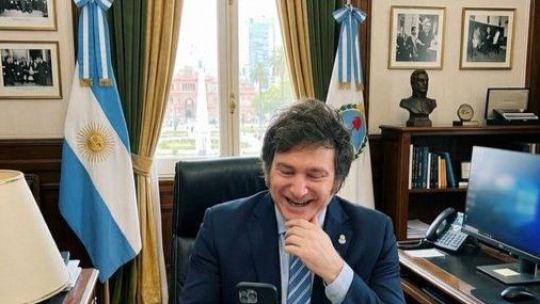
President Javier Milei has since used the issue to lambast various media outlets, many of whom he considers to be biased against him. He often declares that “we do not hate journalists enough.”
The final session, moderated by Olivia Sohr of Chequeado and elDiarioAR, considered the impact of such practices in Argentina and across Latin America, which experts described as particularly exposed due to fragmented media ecosystems, financial pressures and uneven levels of regulatory oversight.
Speakers included specialists in disinformation and geopolitics from Europe and Canada, alongside regional analysts and journalists. Several said disinformation operations are not limited to a single country, but reflect a growing global trend in which state and non-state actors exploit open information systems to advance strategic interests.

Experts warned that beyond shaping narratives, sustained disinformation campaigns risk distorting electoral processes and weakening democratic decision-making.
Participants underscored the importance of coordinated responses, media literacy and institutional transparency in addressing emerging risks in the global information environment.







Comments